
Jawhar

Jawhar

Perched on a scenic plateau of the Sahyadri hills in the newly formed Palghar district, Jawhar is affectionately called the “Mahabaleshwar of Thane/Palghar.” It is a beautiful hill station that seamlessly blends dense, misty forests and massive, thundering waterfalls with an exceptionally rich, living tribal heritage.

1. The Bullock-Hide Cleverness (1306)

​Before the 14th century, the densely forested territory of Jawhar was primarily governed by local Warli tribal chieftains. Around 1306, a bold and ambitious leader named Jayaba Mukne (belonging to the Mahadev Koli clan) took possession of a nearby fort.

According to legendary local lore, Jayaba approached the reigning Warli chief and made a seemingly humble request: he asked for only as much land as could be covered by the hide of a single bullock. The chief readily agreed. Jayaba then cleverly sliced the bullock’s hide into incredibly fine, thin strips and tied them together to enclose a massive boundary. Honoring the agreement, the territory was handed over, and Jayaba founded the Mukne Dynasty, establishing Jawhar as its grand capital.

​2. Delhi’s Recognition (1343)

​Jayaba’s elder son, Nemshah Mukne, vastly expanded the kingdom, eventually bringing 22 mountain forts under his control. On June 5, 1343, Sultan Muhammad bin Tughlaq of Delhi officially recognized Nemshah’s sovereignty, conferring upon him the hereditary title of Raja. This date was considered so monumental that it marked the beginning of a distinct Jawhar State calendar era that was used locally for over 600 years.

​3. The Encounter with Chhatrapati Shivaji Maharaj (1664)

​Jawhar played a fascinating, quiet role in Maratha history. In 1664, Chhatrapati Shivaji Maharaj was marching with his army toward the wealthy port city of Surat. En route, he camped on a high hillock in Jawhar. The reigning Mukne ruler, Raja Vikramshah I, met Shivaji Maharaj at this site—known today as Shirpamal—and welcomed the great Maratha king, even assisting his march.

​4. The Neo-Classical Era and Integration

​Under the British Raj, Jawhar was managed as a 9-gun salute princely state. The Mukne rulers were highly progressive; they built schools, roads through difficult mountain passes, and modern dispensaries.

The last official ruler, Maharaja Yeshwantrao Mukne, served in the Royal Indian Air Force during World War II. Shortly after independence in 1947, he signed the instrument of accession to join democratic India and later served his people directly as a Member of Parliament (MP).

FAQs

What is the historical significance of the Jai Vilas Palace?
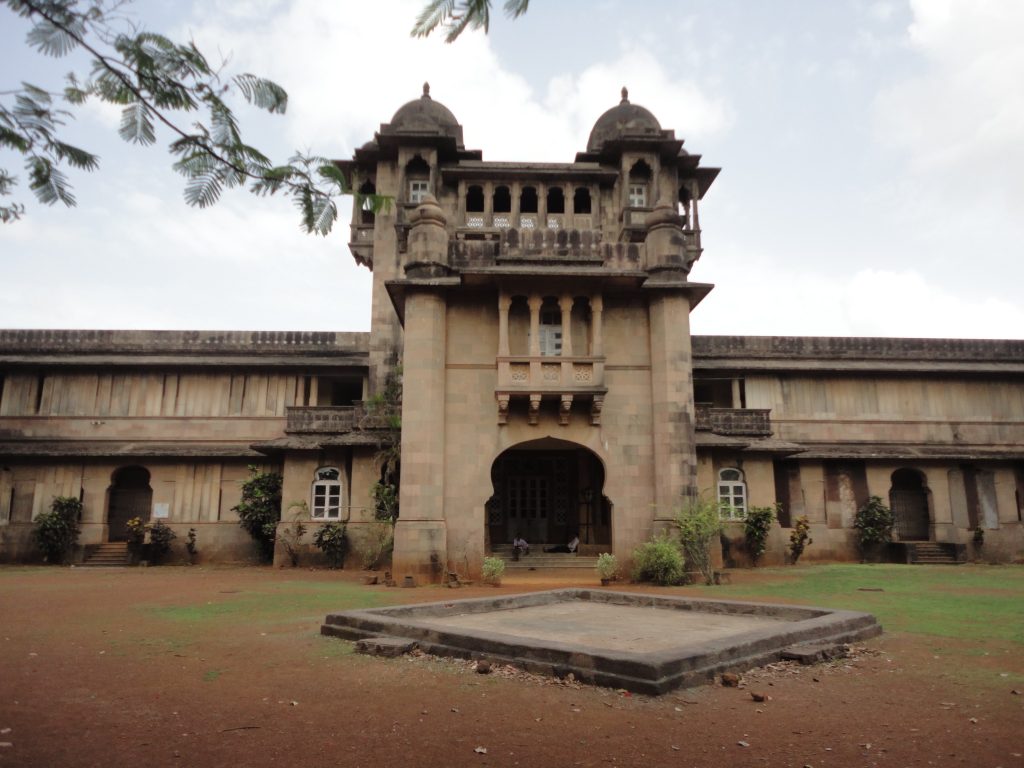
​The Jai Vilas Palace (also locally called Raj Bari) is the most prominent historical landmark in Jawhar. Built by Raja Yashwantrao Mukne, this architectural masterpiece is constructed entirely out of a unique pinkish stone called Syenite, which was quarried locally. The palace features grand neo-classical domes, beautiful manicured gardens, and extensive cashew plantations. Inside, it houses a museum displaying the antique furniture, weapons, and portraits of the Mukne dynasty.
Why is Jawhar globally famous for art?
​Jawhar is the undisputed cradle of Warli Painting, a world-famous indigenous tribal art form. The native Warli and Kokna tribes use basic geometric shapes—circles (representing the sun and moon), triangles (derived from mountains and trees), and squares (human enclosures)—to paint beautiful, rhythmic tapestries on mud walls. These paintings traditionally depict daily village life, community dances (Tarpa dance), harvests, and nature worship.
What is unique about the Dabhosa Waterfall?
​Dabhosa Waterfall is one of the highest and most spectacular perennial waterfalls in Maharashtra, plunging down a sheer cliff of nearly 300 feet (90 meters) into a flask-shaped natural rock crater. Located just 18 km from Jawhar, it flows heavily year-round and has become a major hotspot for extreme adventure sports like waterfall rappelling, valley crossing, and kayaking.
How do I reach Jawhar from Mumbai or Nashik?
​By Road: Jawhar is highly accessible by road. It is roughly 145 km from Mumbai (via the Mumbai-Ahmedabad Highway, turning off at Manor) and about 80 km from Nashik. The road up the mountain passes through beautiful valley curves. By Train: The closest railway stations are Igatpuri (~60 km) on the Central Line and Dahanu Road (~65 km) or Palghar on the Western Line. From these stations, state transport buses and private cabs ply regularly to Jawhar.
When is the best season to experience Jawhar?
​July to September (Monsoon): This is when Jawhar is at its most magical. The entire plateau gets wrapped in thick blankets of moving fog, the weather becomes cool and crisp, and hundreds of seasonal waterfalls burst out of the rocky rifts. October to February (Winter): Ideal for exploring historical sites like the Jai Vilas Palace and Shirpamal, trekking, and visiting tribal villages to experience authentic Warli art culture up close.

Price From : ₹4500/-

Address

Near Avaloormadam temple, thathampally po, pin code 688013, Alleppey, Kerala, india