
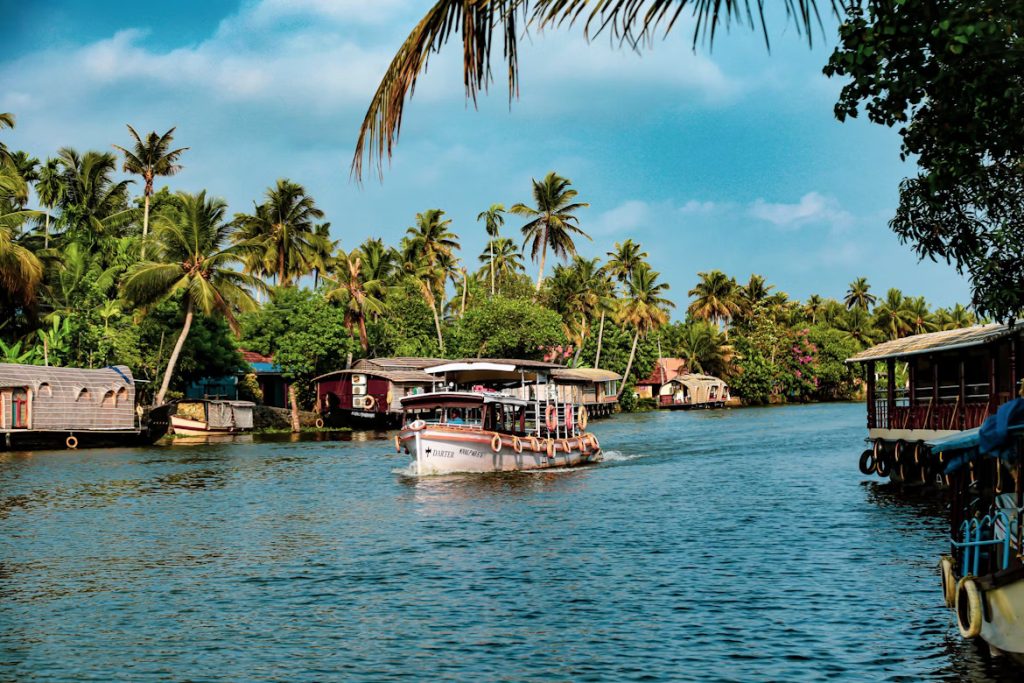
Kerala backwaters

Kerala backwaters

The Kerala backwaters form a vast, interconnected network of over 900 kilometers of brackish lagoons, lakes, and canals running parallel to the Arabian Sea coast. Geographically unique, this ecosystem is fed by 38 rivers and controlled by natural barriers, making it one of the most remarkable water highway systems in the world.
​The Historical Legacy of the Backwaters
​Long before they became a global tourism hotspot, the backwaters served as the economic arteries of ancient and medieval Kerala.

​1. The Ancient Spice Route Highway

​For centuries, these calm inland waters were the only way to transport bulky goods out of the interior forest regions down to the coastal ports. Foreign traders—including the Phoenicians, Romans, Greeks, Arabs, and Chinese—sailed into port cities like Muziris and ancient Alappuzha to trade for black pepper, cardamom, and coir. Because roads did not exist in the marshy terrains, the backwaters functioned exactly like a modern interstate highway system.

​2. Evolution of the Kettuvallam (Houseboat)

​The iconic houseboats seen today evolved directly from ancient cargo vessels known as Kettuvallams. The name translates to “boat held together by knots.”

  • The Construction: Remarkably, these massive wooden boats were constructed without using a single iron nail. Anji (jungle wood) or jackwood planks were stitched together tightly using coir ropes and then sealed with a thick black resin boiled out of cashew nut shells.
  • The Purpose: A standard Kettuvallam could carry up to 30 tons of rice and spices. They featured a curved thatched roof made of bamboo poles and palm leaves to shield the crew and cargo from rain and intense sun during long journeys across the lakes. When modern roads and trucks arrived in the mid-20th century, these boats faced extinction until they were cleverly redesigned into floating hotels in the early 1990s.

3. The History of Kuttanad Farming

​The backwaters are also home to Kuttanad, the “Rice Bowl of Kerala.” Historically, local farmers developed an ingenious indigenous engineering system to reclaim shallow lake beds for agriculture. By building ring dikes out of mud, coconut tree trunks, and mats, they created farming fields that sit 1.5 to 3 meters below sea level—a system strikingly similar to the famous Dutch polders, but built centuries ago using purely organic materials.

FAQs

What is the difference between Alappuzha (Alleppey) and Kumarakom backwaters?
​While both sit on the edges of the massive Vembanad Lake, they offer distinct experiences: ​Alappuzha: Characterized by narrow, bustling canals, village waterways, and an energetic atmosphere. It is the undisputed hub for houseboats and offers close-up views of local riverside life. ​Kumarakom: Located on the opposite eastern bank, it features broad, wide-open expanses of water, luxury lakeside resorts, a dedicated bird sanctuary, and a much quieter, tranquil environment.
Where does the water in the backwaters come from, and is it salty?
​The backwaters contain brackish water—a mix of fresh river water and salty seawater. Thirty-eight rivers flowing down from the Western Ghats empty fresh water into these lagoons. To prevent saltwater from intruding into the low-lying agricultural fields of Kuttanad during high tide, engineering structures like the Thanneermukkon Bund (saltwater barrier) were constructed, dividing the lake into a freshwater southern zone and a brackish northern zone.
What are the main types of boats available for rent?
​Depending on budget and travel style, visitors can choose from three main options: ​Houseboats (Kettuvallams): Ideal for overnight stays; include private bedrooms, attached modern bathrooms, a kitchen, and a dedicated crew (captain, engine driver, and chef). ​Shikara Boats: Smaller, open-air wooden boats with seating and a roof. They are powered by small outboard engines and are perfect for affordable 3-to-5-hour day village cruises through narrow canals. ​Traditional Canoes: Completely human-powered boats rowed using oars. They offer the quietest, most eco-friendly way to explore tiny, shallow village small canals where motorized boats cannot fit.
Do houseboats operate during the monsoon season?
​Yes, houseboats operate throughout the year. The monsoon seasons (June to September) offer a unique, lush green charm, and booking rates are often heavily discounted. However, if winds or rain become exceptionally heavy, the port authority may temporarily pause operations for a few hours for safety reasons.
​What is the eco-system protection policy for the backwaters?
​The Vembanad-Kol wetland system is designated as a protected Ramsar Site of international importance. To safeguard the water quality and marine life, the government enforces strict rules: houseboats must use approved bio-toilets, utilize eco-friendly waste disposal units at designated stations, and completely shut off engines by 5:30 PM to avoid disturbing the local fishing community and the natural ecosystem.

Price From : ₹400/-

Address

Near Avaloormadam temple, thathampally po, pin code 688013, Alleppey, Kerala, India