
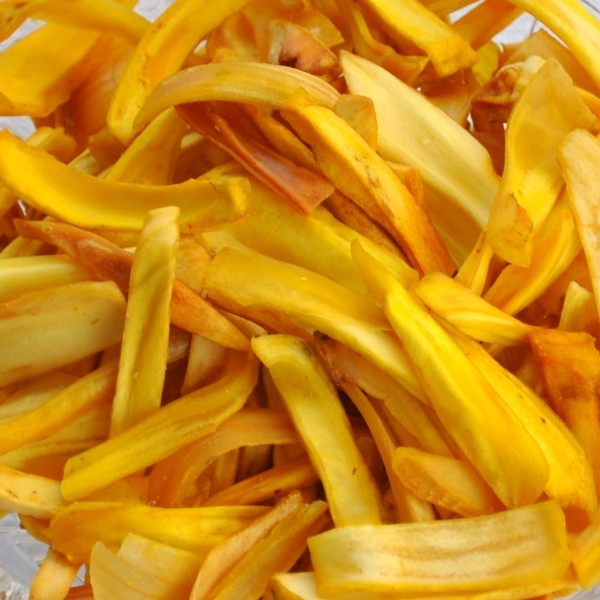
Kerala Jackfruit Chips (Chakka Varuthathu)
Kerala Jackfruit Chips (Chakka Varuthathu) are a iconic crispy delicacy made from raw, mature jackfruit (pacha chakka). Recognized for their natural yellow color, fiber-rich texture, and subtle sweet-salty crunch, they are one of Kerala’s most sought-after seasonal snacks.
1. Product Details & Processing Steps
Raw Material Selection: Firm, mature, raw jackfruit (ideally Varikka varieties) before the fruit ripens or softens.
Deseeding & Slicing: The outer spiky rind and central core are removed. The firm bulb segments (chakkasulakal) are sliced uniformly into long, thin strips.
Drying/De-moisturizing: Strips are briefly air-dried or sun-dried to eliminate excess surface moisture for optimal crispness.
Frying & Seasoning: Slices are deep-fried in pure coconut oil at high heat (160°C–180°C). A light splash of saltwater/turmeric water is added during frying to infuse flavor and produce a golden color.
2. Infrastructure & Manufacturing Facility Requirements
Setting up a small-to-medium scale jackfruit chip unit requires organized zones and specialized processing machinery:
A. Raw Material Handling & Preparation
Jackfruit Coring & Cutting Area: Heavy-duty SS 304 food-grade preparation tables equipped with pneumatic or mechanical fruit splitters and deseeding workstations.
Washing Vats: Food-grade stainless steel tanks with running water to rinse fruit latex (paal) and impurities.
Mechanical Shredders / Slicers: Variable-speed automated slicers designed to cut tough jackfruit bulbs into uniform thicknesses (1.5mm–2mm).
B. Frying & Processing Equipment
Deep Fryers / Continuous Fryers: Gas or steam-heated stainless steel deep fryers with built-in oil temperature controls.
Centrifugal Oil Extractors (De-oilers): High-speed spin-driers that remove up to 80% of excess surface oil, significantly extending shelf life and preventing greasy texture.
C. Packaging & Quality Control Infrastructure
Nitrogen-Flushed Pouch Sealers: Automatic Form-Fill-Seal (FFS) machines or multi-head weigh-filler machines with Nitrogen flushing to prevent rancidity.
Hygiene & Sanitation: Food-grade epoxied floors, stainless-steel drainage channels, insect killers, and air curtains to maintain FSSAI food-safety standards.
3. Frequently Asked Questions (FAQs)
Q1: What type of jackfruit is best for making chips?
A: Mature, unripe Varikka jackfruit (firm flesh) is preferred over Koozha (soft flesh). The fruit must be fully grown but completely green and hard inside.
Q2: Why is coconut oil typically used for frying jackfruit chips?
A: Coconut oil gives the chips their signature Kerala aroma and crisp bite. Its high smoke point makes it suitable for deep-frying without burning easily.
Q3: What is the average shelf life of jackfruit chips?
A: Standard airtight poly-packs last 30 to 45 days, while multi-layer foil-packed with Nitrogen flushing can last 3 to 6 months without losing crispness or developing oil odor.
Q4: How do commercial units handle the sticky latex (paal) from raw jackfruit?
A: Slicing blades and gloves are lightly coated with food-grade coconut oil, and peeled bulbs are soaked in a mild saltwater solution before processing.
Q5: Are jackfruit chips healthier than potato chips?
A: Yes, jackfruit is naturally higher in dietary fiber, low in glycemic load, and absorbs less oil compared to potatoes when properly de-oiled.