
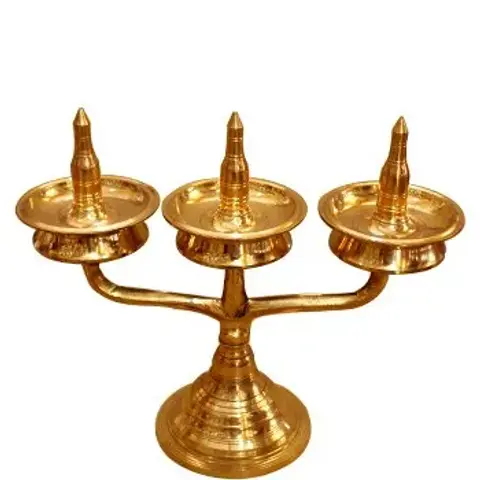
Kerala Traditional Kavara Vilakku – Home Decor
The Kavara Vilakku (meaning “branching lamp” in Malayalam) is one of the most visually striking multi-wick oil lamps in Kerala’s metalwork tradition. Unlike the classic single-column Nilavilakku, the Kavara Vilakku features three or more distinct curved metal arms branching out from a central stem, each holding its own oil bowl.
Historically central to temple Deeparadhana (lamp-offering rituals), it has become a high-end statement piece for traditional home decor and entrance foyers.
1. Cultural & Historical Context
Etymology: Derived from Malayalam “Kavara” (forked or branched) and “Vilakku” (lamp).
Symbolism of the Trinity: Most authentic Kavara Vilakkus are crafted with three primary branches. In Hindu philosophy, these three flames represent the Trimurti (Brahma, Vishnu, and Shiva) or the three primary energy channels (Nadis: Ida, Pingala, and Sushumna).
Temple Roots: Historically, temples used multi-branched lamps so priests could light a vast array of flames simultaneously during grand evening prayers without needing multiple individual lamps.
Sacred Offerings (Samarpanam): Devotees frequently donate a heavy bronze Kavara Vilakku to temple sanctums as a prestigious ritual offering to seek divine blessings or fulfill vows.
2. Infrastructure, Crafting & Structural Anatomy
The main centers for crafting authentic heavy brass and bell-metal Kavara Vilakkus are Mannar (Alappuzha), Nadavaramba (Thrissur), and Payyanur (Kannur). Master artisans use the ancient Cire Perdue (lost-wax casting) or sand-casting methods to achieve symmetrical branch alignment.
Key Components
Pedestal Base (Paadam): A broad, weighted circular base designed to maintain balance and withstand the top-heavy weight of the extended branches.
Central Stem (Thandu): A heavy, lathe-turned central column.
Branching Arms (Kavara): 3, 5, or 7 thick, elegantly curved metallic branches extending outward from the main stem.
Individual Oil Basins (Thattu): Each branch terminates in a shallow oil bowl with 3, 5, or more wick grooves.
Crown Finial (Koombu / Prabha): The central stem continues above the branching joint, topped with a decorative crown, peacock (Mayil), or lotus bud motif.
Materials
Brass (Pithala): Preferred for home decor, side-table accents, and domestic pooja spaces due to its bright golden luster and relative ease of upkeep.
Bronze / Bell Metal (Odu): Used for heavy temple lamps; extremely durable, heavy, and acquires a deep, rich patina over time.
3. Frequently Asked Questions (FAQs)
Q1: How many wicks should be lit in a Kavara Vilakku?
Each individual bowl on a branch typically features 5 grooves. For daily home rituals or evening decor, lighting wicks on all branches simultaneously creates an ambient, warm aura.
What is the best place to display a Kavara Vilakku in home decor?
Pooja Room / Altar: Placed at the center of the altar as a ceremonial main lamp.
Entrance Foyer / Living Room: Placed on a low wooden console table or a floor pedestal flanked by an Uruli (water bowl with floating flowers) to create an authentic Kerala ethnic entrance.
Q3: What is the main difference between a Nilavilakku and a Kavara Vilakku?
Nilavilakku: Features a single, central circular basin with wicks pointing outward in a 360-degree radius.
Kavara Vilakku: Features multiple distinct branches extending from the main trunk, each holding its own separate oil dish, offering a dynamic, tree-like silhouette.
How do I clean grease and soot from a multi-branched lamp?
Soaking: Because the branching curves catch falling oil or soot, soak the lamp briefly in warm water mixed with mild soap to loosen caked oil.
Polishing: Apply Pitambari powder or a traditional tamarind paste and salt mixture using a soft tooth-brush to reach inside the grooves and joint junctions of the branches. Rinse thoroughly and dry completely with a microfiber cloth.