
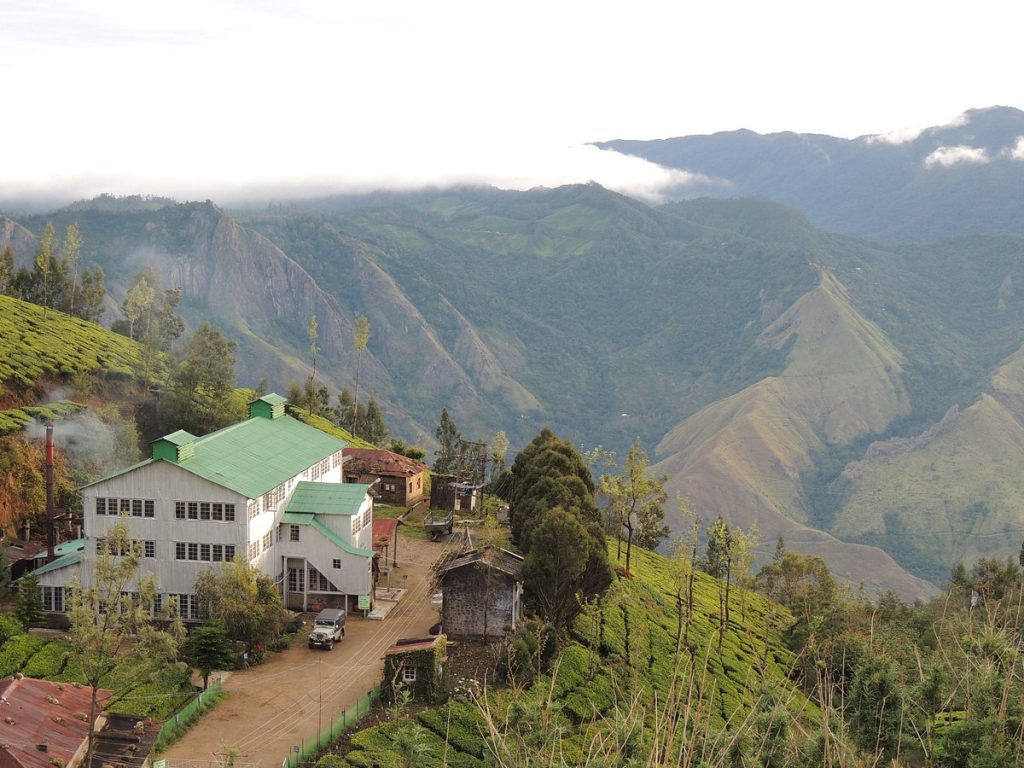
Kolukkumalai tea plantation
Historical & Geographic Context
Kolukkumalai is globally recognized as the highest organic tea plantation in the world, standing at an incredible altitude of nearly 7,900 feet (2,400 meters) above sea level.
1. The Colonial Setup (1920s – 1930s)
The estate was established in the late 1920s (around 1927) by British planters with the assistance of the Chettiar brothers from the nearby Theni district. The iconic, multi-storied timber and stone tea factory at the top was completed in the mid-1930s. Because of its remote, high-altitude location, transporting modern machinery up the steep ridges was nearly impossible. As a result, the British installed a specific set of mechanical rolling and withering equipment that has survived to this day.
2. Living History: The Orthodox Tea Method
Unlike modern factories that use the crushed, tear, curl (CTC) method, Kolukkumalai still produces tea using the traditional 7-step Orthodox process: Withering, Rolling, Fermentation, Drying, Sifting, Grading, and Fiber Extraction. The factory operates using the original 1930s British machinery, making it a living museum. Because no chemical fertilizers are used, the high altitude, intense sunlight, and low temperatures give Kolukkumalai tea a light, highly aromatic, and distinctively fruity flavor.
3. The Borderline Geography
Geographically, Kolukkumalai occupies a fascinating position. While it is located in the Bodinayakanur Taluk of the Theni District in Tamil Nadu, the only vehicular access route to reach it is via Suryanelli near Munnar, Kerala. It sits directly on the precipice of the Western Ghats, overlooking the vast plains of Tamil Nadu on one side and the rolling hills of Kerala on the other.