
Kumily
While travelers frequently associate Kumily with Kottayam—since Kottayam railway station is the major gateway to the region and Kumily was historically part of the greater Kottayam district—it officially became part of the newly formed Idukki district when it was carved out in 1972.
Because of these deep historical roots, its connection to Kottayam remains a core part of its story.
The Historical Journey of Kumily
1. The Ancient Capital of Kuzhumoor
Long before it became a bustling spice town, Kumily was known in ancient records as Kuzhumoor.
- Historians believe it may have served as a key mountain outpost or even a capital site during the early Chera Empire of the Sangam Age (around 3rd century BCE to 3rd century CE).
- In the medieval period, it was a vital territory of the independent Thekkumkoor Kingdom. The rajas (kings) of Thekkumkoor controlled these highland trade routes, trading high-value forest wealth like ivory, wild cardamom, and sandalwood with Portuguese and Dutch merchants.
The Travancore Annexation (1749)
In the mid-18th century, the legendary King of Travancore, Marthanda Varma, waged a military campaign to unify Kerala. He annexed the Thekkumkoor Kingdom after the Battle of Changanassery in 1749. Kumily and the surrounding Peermade high ranges were integrated into the princely state of Travancore, subsequently managed by the local Poonjar lords.
The British Plantation Era & Migration
Up until the 19th century, Kumily was an dense, inaccessible forest inhabited only by indigenous tribes like the Mannans and Muthuvans. The real transformation began with British enterprise:
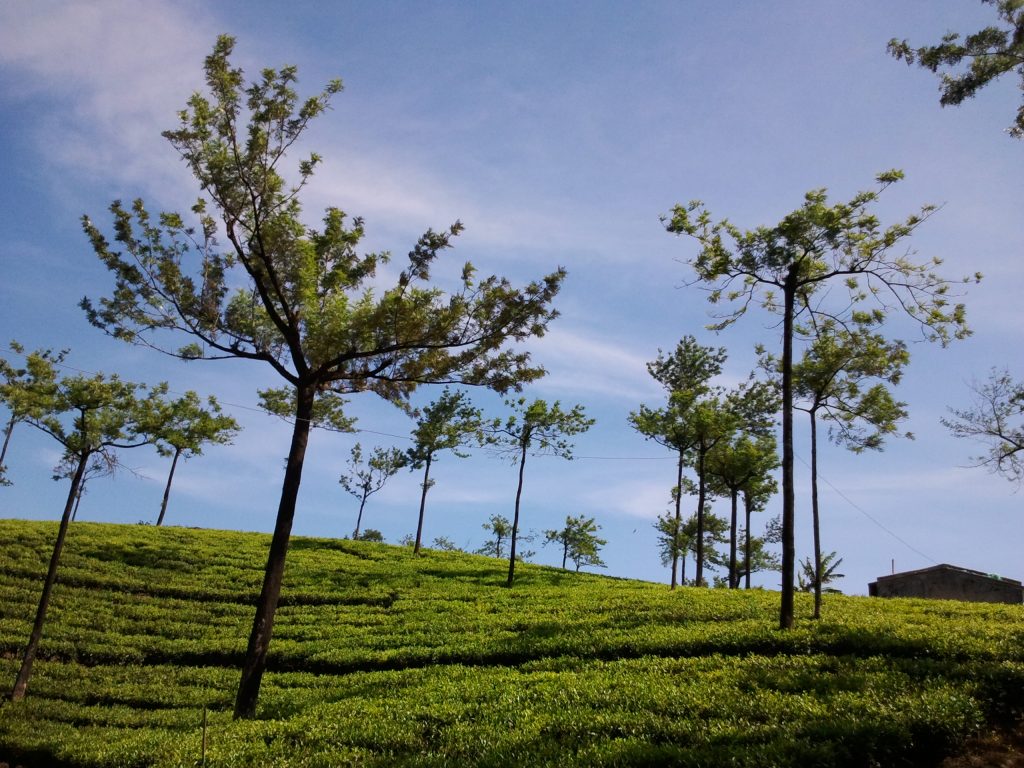
- The Pioneer Planters: In the mid-to-late 1800s, British explorers and missionaries (most notably Henry Baker Jr.) realized the high-altitude climate was perfect for cash crops. They cleared forest tracts to experiment first with coffee, and later with tea and cardamom.
- The Great Influx: Because the local tribal populations chose to remain deep in the forests, the British brought in large numbers of plantation laborers from neighboring Tamil Nadu. This created the distinct, beautiful blend of Malayali and Tamil cultures that defines Kumily today.