
Latur
Latur, situated on the scenic Balaghat Plateau in the Marathwada region of Maharashtra, possesses a deep historical lineage. Long before it grew into a major modern educational and commercial hub, it served as the cradle of one of ancient India’s most powerful empires.
Historical Highlights
1. The Cradle of the Rashtrakutas (Ancient Era)
Latur’s history is rooted in deep antiquity, originally known as Lattalura (or Lattalut).
- Historical inscriptions and copper plates prove that Latur was the ancestral home and birthplace of the mighty Rashtrakuta Dynasty, which ruled vast portions of the Deccan from the 8th to the 10th centuries.
- King Dantidurga, the founder of the empire, hailed from here. Later, King Amoghavarsha I famously developed the city and described Lattalura in ancient texts as the “best of cities.”
2. Centuries of Dynastic Shifts
Following the decline of the Rashtrakutas, Latur’s strategic location on the Deccan trade routes attracted successive empires. Over the centuries, it was governed by:
- The Western Chalukyas (who maintained it as a center of immense learning).
- The Yadavas of Deogiri.
- The Delhi Sultanate and the Bahmani Rulers.
- The Mughals and eventually the Princely State of Hyderabad under the Nizams in the 19th and early 20th centuries.
3. Freedom Struggle & Modern Identity
During the mid-20th century, Latur was an active epicenter for the Hyderabad Liberation Movement to break free from the Nizam’s rule. After integrating into independent India, Latur remained a part of the Osmanabad district. Recognizing its rapid growth, the government officially carved out Latur as an independent district on August 16, 1982.
Key Historical & Structural Sites to Visit
- Kharosa Caves: Located about 45 km from Latur city, this is a spectacular group of 12 rock-cut caves dating back to the 6th century (Gupta-Chalukya era). They feature beautifully carved sculptures of mythological events, seated Jain Tirthankaras, ancient paintings of Buddha, and a massive idol of Lord Shiva and Parvati.
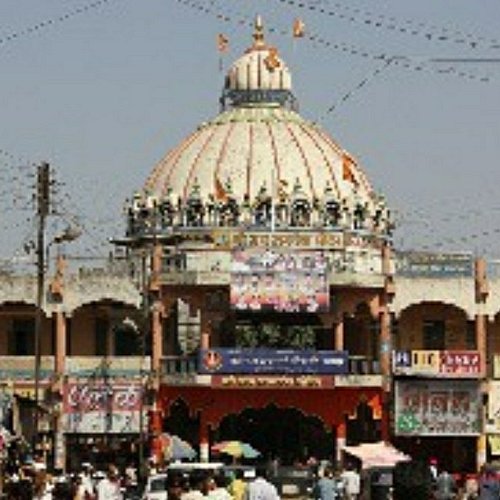
- Ganj Golai (1917): Located right in the heart of Latur city, this architectural masterpiece was designed by town planner Faiyajuddin during the Nizam era. It is a stunning example of radial urban planning—a huge circular, two-story structure housing an Ambabai temple in the middle, from which 16 systematic market roads radiate outward like sunbeams.
- Udgir Fort (12th Century): A highly significant medieval fort famed for the historic Battle of Udgir (1760), where the Marathas under Sadashivrao Bhau decisively defeated the Nizam of Hyderabad. The fort features deep underground tunnels, Persian inscriptions, and the burial shrine (Samadhi) of Rishi Udaygiri Maharaj.
- Ausa Fort: Built in a natural depression to strategically conceal it from incoming enemy armies, this medieval fort features multi-tiered defensive stone ramparts, intricate animal motifs (like lions) carved into the walls, and extensive ruins from the Bahmani and Deccan Sultanate eras.
- Siddheshwar Ratneshwar Temple: A magnificent 12th-century temple built by King Tamradwaj, dedicated to Lord Shiva. It features stunning historic stone carvings and hosts a massive, vibrant fair every year during Mahashivratri.