
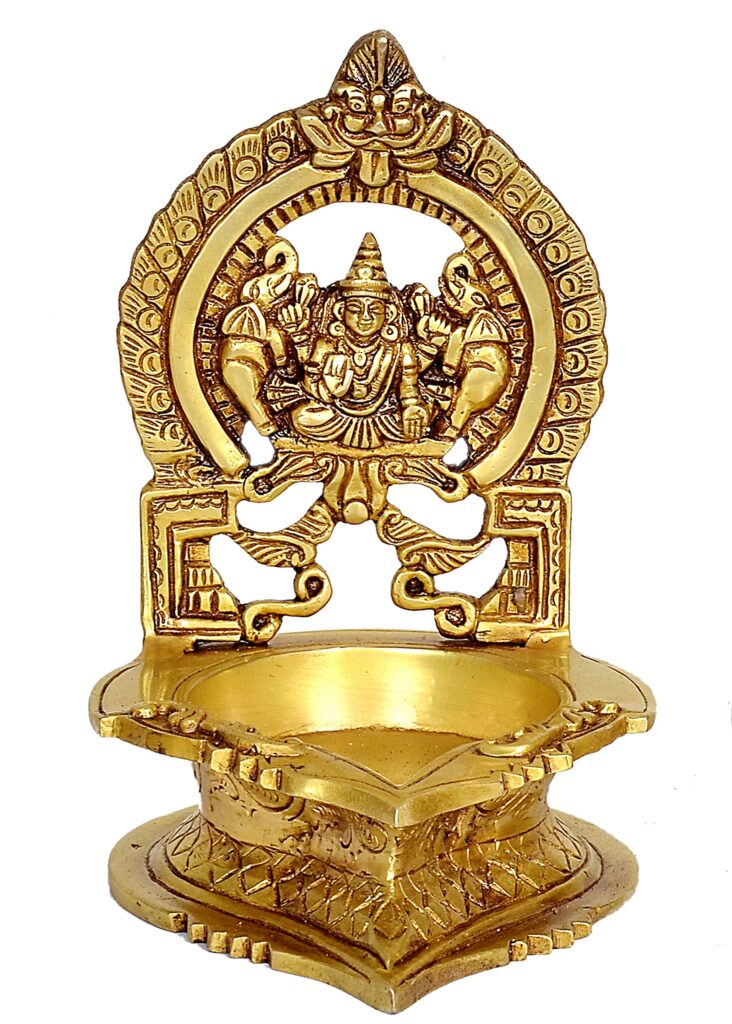
Lekshmi Vilakku – Home Decor
The Lakshmi Vilakku (also known as Lekshmi Vilakku or Gajalakshmi Vilakku) is one of the most sacred brass and bronze oil lamps in Kerala’s rich metalworking heritage. Instantly recognizable by the intricate relief sculpture of Goddess Lakshmi sculpted above the oil basin, this lamp embodies prosperity, wealth, and auspiciousness (Aishwarya).
1. Cultural & Historical Context
Etymology & Form: Named after Goddess Lakshmi, the deity of wealth, light, and fortune. It traditionally takes the form of a Gajalakshmi, where the Goddess is depicted seated on a blooming lotus, flanked by two elephants (Gajas) bathing her with holy water from elevated pots (Kalasas).
Symbolism of Abundance: Historically, lighting a Lakshmi Vilakku in a household or business setup is believed to usher in financial stability, dispel poverty, and attract positive spiritual energy.
Heritage in Kerala Homes: In ancient Tharavads (ancestral estates) and business houses across Kerala, a dedicated Lakshmi Vilakku was kept inside the Pooja room, near the threshold (Padi), or in wealth-storage vaults (Sreekovil / cash chests) to ensure ongoing prosperity.
2. Structural Anatomy, Crafting & Materials
Crafting a traditional Lakshmi Vilakku demands high precision because it combines functional lamp casting with fine iconographic metal sculpting. The prominent centers for casting these lamps in Kerala include Mannar (Alappuzha), Nadavaramba (Thrissur), and Payyanur (Kannur).
Structural Components
Prabhavali (Arch / Aureole): An ornate horseshoe-shaped or floral halo surrounding the deity, symbolizing divine protection and cosmic light.
Iconographic Crest (Gajalakshmi Motif): The central figure of Goddess Lakshmi flanked by elephants, lotus blossoms, and traditional motifs.
Thattu (Oil Basin): A shallow, projecting oil container positioned directly below the feet of the Goddess. It typically features 1, 3, or 5 wick spouts (Mookku).
Base or Hanging Ring:
Standing Lakshmi Vilakku: Rests on a weighted pedestal base (Paadam) for tabletop or floor placement.
Thookku Lakshmi Vilakku: Features a heavy brass chain connected to the top loop of the Prabhavali for hanging at entrances or verandas.
Materials
Brass (Pithala): Most popular for modern home altars and interior wall/table decor due to its warm golden glow and fine detail retention.
Bronze / Bell Metal (Odu): Favored for heirloom lamps and temple altars; heavier, highly durable, and develops a rich antique patina with age.
3. Frequently Asked Questions (FAQs)
Q1: When and where should a Lakshmi Vilakku be lit in a home?
Pooja Room & Altars: Lit during daily morning and evening prayer hours (Sandhyavela).
Fridays & Festivals: Lighting the lamp on Fridays (Velliyaazhcha), Onam, Vishu, and Deepavali is considered particularly auspicious for invoking Goddess Lakshmi’s blessings.
Business Entrances: Placed near the main cash counter or office entry foyer to promote business growth and success.
Q2: What direction should the flame face?
The wick flame should ideally point toward the East (for spiritual growth and well-being) or North (associated with Kuber and financial wealth). Avoid directing the main flame directly toward the South.
Q3: What type of oil and wick gives the best results?
Oil: Pure sesame/gingelly oil (Nallenna) or ghee (Neyyu) is traditionally recommended for spiritual rituals and a clean, long-lasting burn. Coconut oil is also widely used in Kerala households.
Wicks: Cotton wicks (Pautthu Thiri) provide a clear flame that enhances the illumination on the Goddess figure behind the basin.
Q4: How do you clean and maintain a detailed Lakshmi Vilakku?
Detail Cleaning: Because the deity sculpture and Prabhavali have intricate carvings where oil soot can settle, use a soft toothbrush dipped in a mild Pitambari paste or a tamarind-and-salt paste.
Rinsing & Drying: Wash thoroughly with lukewarm water to remove all residue and dry completely with a soft cloth. Do not use harsh steel pads, which can scratch the fine facial details of the sculpture.