
Lonavala

Lonavala

Lonavala, a highly popular weekend getaway from Mumbai and Pune, has a vibrant history rooted in ancient trade routes, fierce Maratha defense, and British railway expansion. Its geographic location as a gateway at the top of the Bhor Ghat pass made it a crucial strategic prize for centuries.
​The Historical Timeline of Lonavala
​Lonavala’s history transitions from a major ancient Buddhist spiritual center to a highly contested military highway, and finally into a popular colonial resort.

Ancient Buddhist Trade Route
2nd Century BCE – 5th Century CE
Lonavala sat right alongside the ancient trade routes connecting the ports of Konkan to the Deccan plateau. To serve traveling merchants, massive rock-cut Buddhist monastery complexes were carved directly into the nearby mountains, creating the famous Karla and Bhaja Caves.

Maratha Fortifications
17th Century – 1818 CE
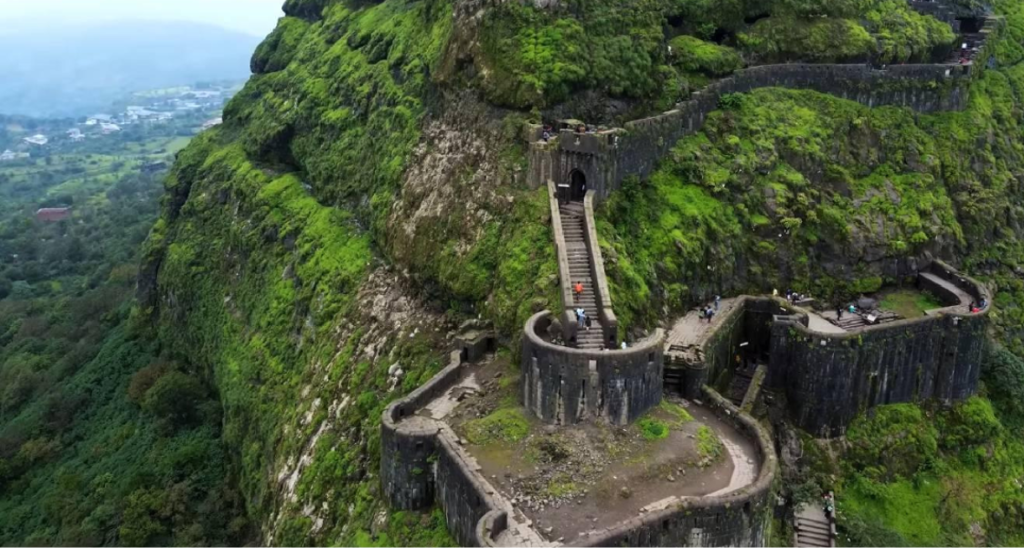
The region became highly militarized under Chhatrapati Shivaji Maharaj. Forts like Rajmachi, Lohagad, and Visapur were heavily reinforced to guard the strategic Bhor Ghat pass against Mughal and British advances. The Peshwas later used the valley as a defensive stronghold.

The British Discovery & Railway Hub
1871 CE
Lord Elphinstone, the Governor of the Bombay Presidency, officially “discovered” Lonavala as a hill station in 1871. The British built extensive infrastructure and the landmark railway line through the steep Bhor Ghat incline, linking Mumbai to Pune and cementing Lonavala as a major railway holiday destination.


FAQs

What does the name "Lonavala" mean?
​The name Lonavala is derived from the Sanskrit word Lonavli, which translates directly to "a series of caves". This is a direct historical nod to the dense network of ancient rock-cut caves like Karla, Bhaja, and Bedse that surround the entire hill station.
What is the historical secret behind Lonavala's famous Chikki?
​Lonavala’s signature sweet, Chikki (a hard jaggery and nut candy), owes its birth to the railway expansion of the 1870s. A local shopkeeper named Maganlal Agarwal started selling cheap, high-energy jaggery-and-peanut bars (gud dani) to the hundreds of laborers working hard to lay the railway lines through the steep Bhor Ghat. The railway workers loved it, and when the line opened, passengers passing through the station started buying it up—giving rise to the iconic "Maganlal Chikki" brand.
Why are the Karla Caves historically unique?
​The Karla Caves host the largest and best-preserved Hinayana Buddhist Chaitya (prayer hall) in India. Carved around the 1st century BCE, the grand hall features a massive arched roof supported by ancient, genuine 2,000-year-old wooden beams that have miraculously survived intact without rotting.
What is the historical story behind "Tiger's Leap" cliff?
​Tiger's Leap (or Vagdari) is a famous cliffside viewpoint with a sheer drop of over 650 meters. It gets its name because the unique shape of the cliff resembles a tiger leaping forward into the valley. Historically, local Maratha scouts used these massive vantage points to monitor troop movements moving up through the Konkan plains below.
Who built the famous Bhushi Dam?
​The Bhushi Dam was constructed by the Great Indian Peninsula Railway (GIPR) in the late 19th century. It was built specifically to secure a reliable source of water for the British steam engines running along the newly laid railway line between Mumbai and Pune. Today, it is famous for its cascading water steps during the monsoon.

Price From : ₹4500/-

Address

Near Avaloormadam temple, thathampally po, pin code 688013, Alleppey, Kerala, India