
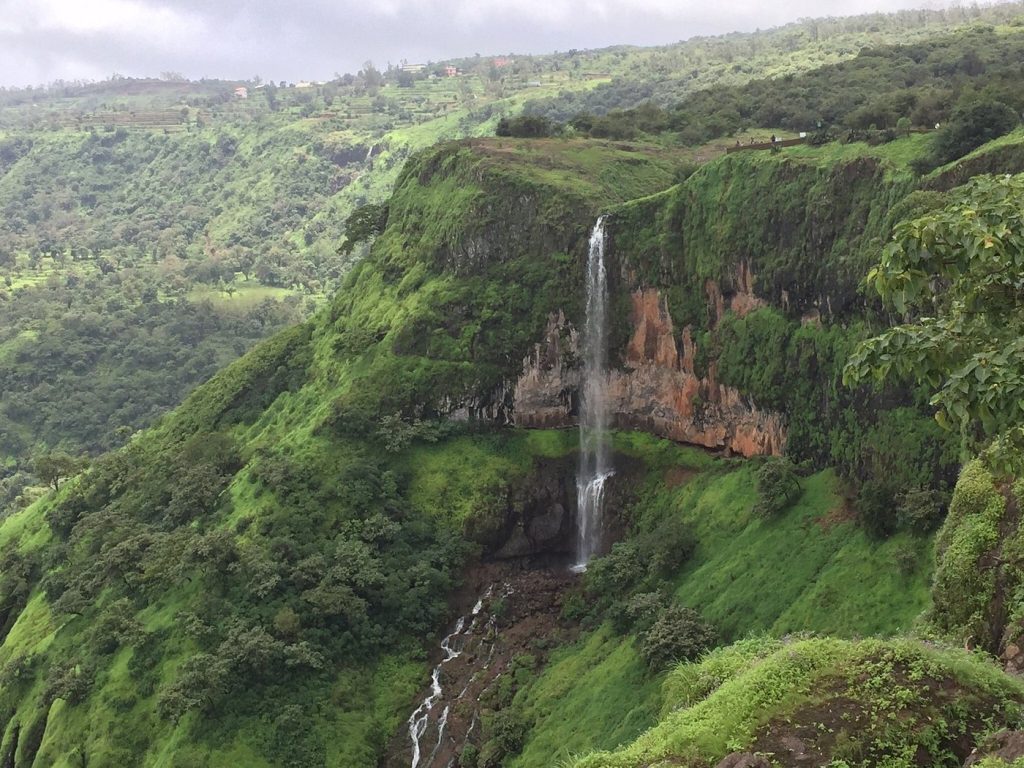
Mahabaleshwar

Mahabaleshwar

Nestled in the Western Ghats at an altitude of 4,439 feet, Mahabaleshwar is famed today for its cool weather and strawberry fields. However, its history is a fascinating mix of ancient Hindu lore, fierce Maratha battle strategy, and British colonial planning.
​The Historical Timeline of Mahabaleshwar
​Mahabaleshwar’s identity was built in three distinct historical phases:

Ancient Myth & The Yadavas
1215 CE
The recorded history begins when King Singhan of the Yadava dynasty visited the highlands. He built a small temple and a water tank at the source of the Krishna River, establishing “Kshetra Mahabaleshwar” (Old Mahabaleshwar) as a sacred pilgrimage site.

The Maratha Era & Pratapgad
1656 CE
Chhatrapati Shivaji Maharaj seized the region from the More family (vassals of the Bijapur Sultanate). Recognizing the strategic, heavily forested terrain of the Javali valley, Shivaji commissioned the construction of the mighty Pratapgad Fort nearby. In 1659, this fort became the site of the legendary Battle of Pratapgad, where Shivaji defeated the giant general Afzal Khan.

The British Summer Capital
1824 CE – 1829 CE
General P. Lodwick became the first European to scale the hills in 1824. Captivated by its climate, the British established a sanatorium for sick soldiers. In 1828, the Governor of Bombay, Sir John Malcolm, fell so in love with the place that he struck a land-exchange deal with the Raja of Satara to develop it into the official Summer Capital of the Bombay Presidency.

FAQs

What does the name "Mahabaleshwar" actually mean?
​The name translates to "God of Great Power" in Sanskrit (Maha = Great, Bala = Power, Ishwar = God). It is named after Lord Shiva, who is worshipped in the ancient 500-year-old Hemadpanti-style Mahabaleshwar Temple located in the old part of the town.
Why is the town center of Mahabaleshwar called "Malcolm Peth"?
​When Governor Sir John Malcolm developed the area in the late 1820s, the local Raja of Satara insisted on naming the newly settled market bazaar Malcolm Peth (Malcolm's Market) in his honor. The name is still used today for the bustling main market area.
What is the historical significance of the "Panchganga Temple"?
​Located in Old Mahabaleshwar, this ancient temple is famous because it is the holy confluence and point of origin for five distinct rivers: the Krishna, Koyna, Venna, Savitri, and Gayatri. Inside the temple, water from all five subterranean streams flows out cleanly through a carved stone spout shaped like a cow’s mouth (Gomukh).
Who brought strawberries to Mahabaleshwar?
​The British introduced strawberries to the region during the 19th century! Looking for familiar English fruits to grow in the cool climate, they brought saplings from Australia. The local soil and weather proved so perfect that Mahabaleshwar and neighboring Panchgani now produce over 85% of India's total strawberry crop.
Who is Arthur's Seat viewpoint named after, and what is its tragic backstory?
​Arthur's Seat—popularly called the "Queen of All Points"—is named after Arthur Malet, a prominent British officer. Tragically, Malet lost his wife and his one-month-old daughter in a catastrophic boat capsizing accident on the Savitri River below. He used to sit at this exact cliff edge for hours, staring down at the river gorge in grief.

Price From : ₹4500/-

Address

Near Avaloormadam temple, thathampally po, pin code 688013, Alleppey, Kerala, India