
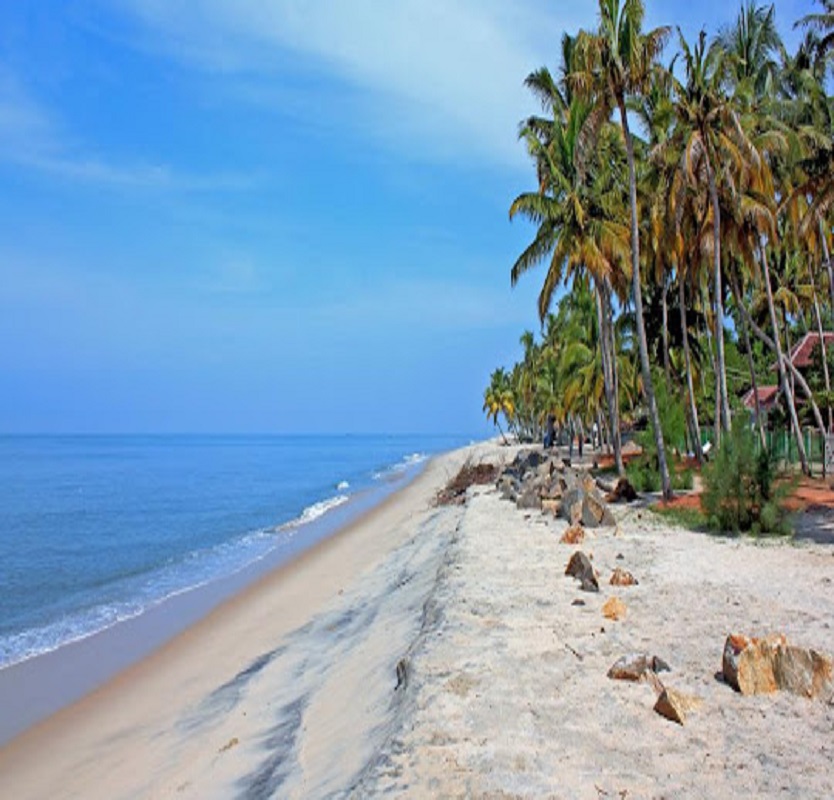
Marari Beach
Marari Beach, located in the quiet fishing village of Mararikulam under the Cherthala Taluk of Alappuzha, is widely celebrated as one of India’s most pristine, unhurried, and idyllic beach destinations. Unlike heavily commercialized beaches, Marari offers a sleepy, eco-friendly getaway characterized by sprawling white sands, vast coconut groves, and traditional coastal life.
Historical & Cultural Background
The name Marari is a shortened, colloquial evolution of Mararikulam, which carries a deep-rooted connection to local geography and spirituality:
- The Etymology: The village gets its name from the historic Mararikulam Mahadeva Temple, an ancient shrine dedicated to Lord Shiva. In Malayalam, “Marari” translates to “The Enemy of Mara” (Mara being the God of Passion/Desire, whom Lord Shiva famously destroyed with his third eye). “Kulam” refers to the sacred temple pond.
- The Traditional Fishing Heritage: For centuries, Marari was entirely insulated from mainstream tourism. It existed strictly as a traditional fishing village inhabited by the Kadalkkodath (coastal communities). The rhythms of the village were entirely dictated by the Arabian Sea—men heading out in traditional catamarans or dugout canoes at dawn, and women weaving coir mats from coconut husks along the shore.
- The Rise of Eco-Tourism: In the late 20th and early 21st centuries, international travelers seeking an alternative to the crowded beaches of Kovalam or Goa discovered Marari’s untouched beauty. The local community and hospitality developers consciously chose a sustainable path, introducing low-impact boutique resorts, homestays, and Ayurveda wellness retreats that preserved the original village ecosystem.