
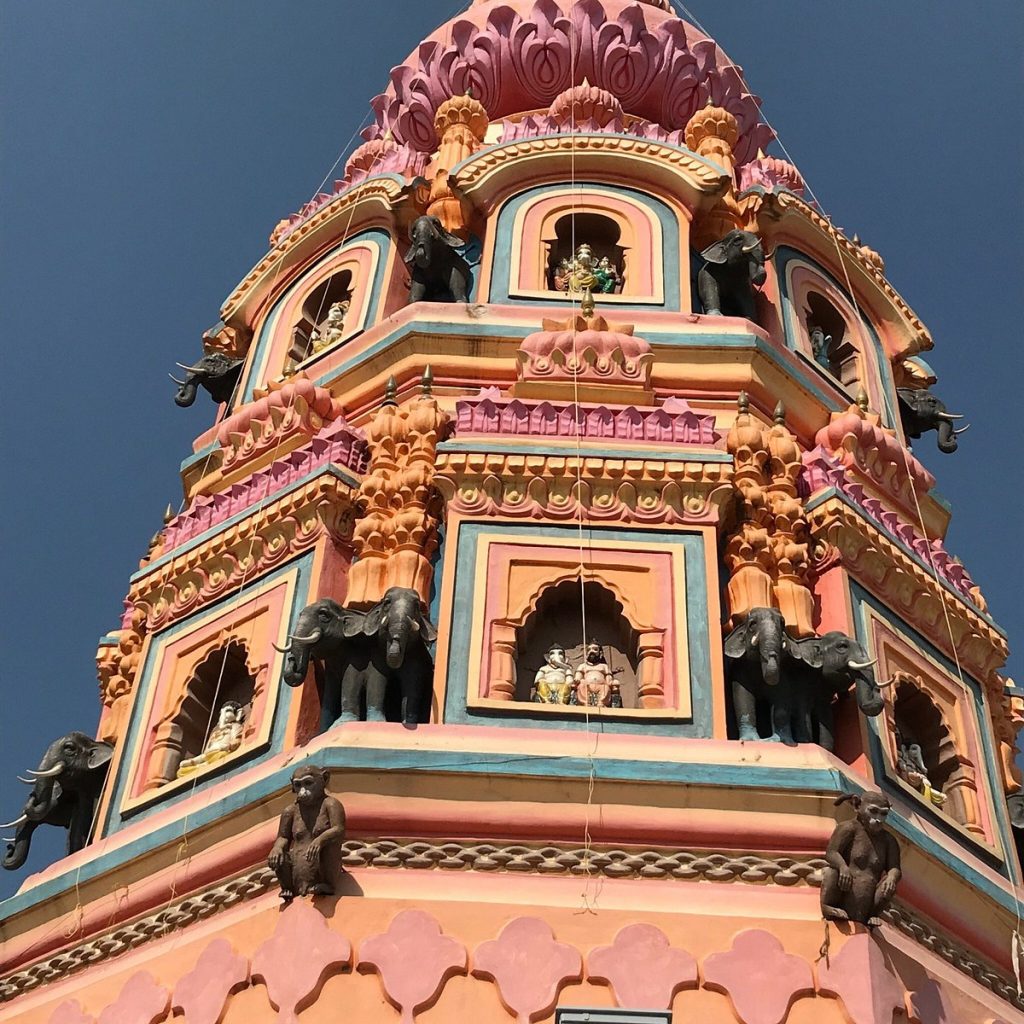
Morgaon
Situated on the banks of the Karha River in the Pune district of Maharashtra, Morgaon is the absolute spiritual epicenter of the Ganesha-worshipping Ganapatya sect. It is home to the Shree Mayureshwar Temple, which stands as the foremost and starting destination of the sacred Ashtavinayak pilgrimage.
The town gets its name from the shape of the region, which historically resembled a peacock (Mayur in Sanskrit, More in Marathi), and was once populated by a vast number of these birds.
Historical & Mythological Heritage
The Slaying of Sindhurasura
According to the Ganesha Purana, a powerful demon named Sindhu (or Sindhurasura) secured a boon of immortality from Lord Surya, packed inside a bowl of divine nectar held in his stomach. Gaining absolute power, he imprisoned the gods and terrorized the three worlds.
Answering the prayers of the gods, Lord Ganesha incarnated in the Treta Yuga as Mayureshwar (the Lord of the Peacock), riding a magnificent, divine peacock. He waged a fierce war against the demon at this very site, ultimately piercing Sindhu’s stomach with an arrow to empty the nectar of immortality and vanquishing him. In celebration, the gods established the primary shrine here, declaring it Bhusananda—a place of cosmic joy.
Cultural Evolution & Islamic Influence
The modern structure of the temple possesses a highly intriguing architectural history that mirrors the political shifts of medieval Maharashtra:
- The Fortified Design: To shield the sacred shrine from religious iconoclasm during the rule of the regional Sultanates, the temple was built to resemble a miniature Mughal fortress. It features high stone boundary walls, four prominent minaret-like towers at each corner, and a black stone exterior.
- Morya Gosavi’s Awakening: The 14th-century saint Morya Gosavi, the chief propagator of the Ganapatya sect, lived and meditated here before moving to Chinchwad. His intense devotion brought Morgaon into the spiritual spotlight across Western India.
- Peshwa Support: The Prime Ministers of the Maratha Empire, who revered Ganesha as their state guardian, added the massive stone assembly hall (Sabhamandap) and provided permanent royal grants (Inams) to sustain the temple’s daily operations and grand festivals.
Architectural Anomalies
- The Nandi Mystery: Standing directly in front of the main temple entrance is a massive stone sculpture of Nandi (the bull), which is traditionally found exclusively in front of Lord Shiva temples. Local folklore states that the stone Nandi was being transported to a nearby Shiva shrine on a cart when the axle snapped right outside Morgaon. The heavy bull fell off and could not be budged by any force, which was taken as a divine sign that it wished to stay and guard Ganesha.
- The Ancient Deepmalas: The courtyard is dominated by tall stone lamp-towers (Deepmalas). During major festivals like Ganesh Jayanti, hundreds of oil lamps are lit across these towers, illuminating the fortress-like structure beautifully against the night sky.