
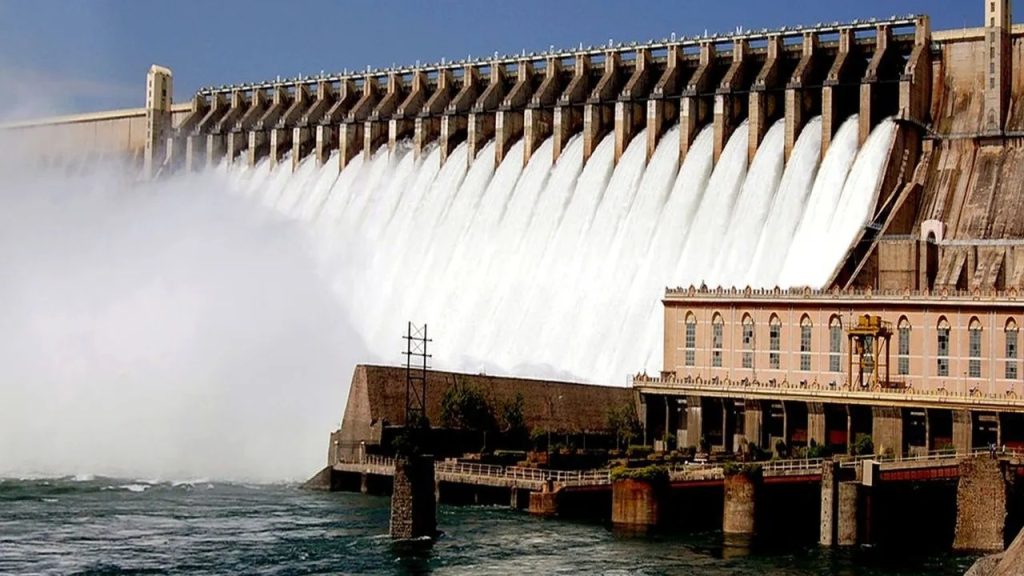
Nagarjuna Sagar Dam
Nagarjuna Sagar Dam, built across the mighty Krishna River, is one of India’s earliest and most iconic multi-purpose river valley projects. Straddling the border between Nalgonda district in Telangana and Palnadu district in Andhra Pradesh, it stands as the largest masonry dam in the world, constructed entirely out of stone blocks rather than poured concrete.
🌊 Historical & Engineering Background
The dam represents a monumental feat of post-independence Indian engineering, championed by India’s first Prime Minister, Jawaharlal Nehru, who famously termed such large-scale projects the “temples of modern India.”
Chronology of Construction
December 1955: Prime Minister Jawaharlal Nehru officially laid the foundation stone for the project.
1967: The project reached functional completion, and the first irrigation water was released into its main canals by Prime Minister Indira Gandhi.
Power Generation: The hydro-electric power generation facilities were fully commissioned in subsequent stages through the late 1970s and early 1980s.
Here are the details for the Nagarjuna Sagar Dam, covering its engineering infrastructure, key features, and answers to frequently asked questions.
Overview & Infrastructure Features
The Nagarjuna Sagar Dam is one of the world’s largest and tallest masonry dams. Built across the Krishna River on the border of Telangana and Andhra Pradesh, it stands as a monumental engineering marvel of modern India.
- Construction Period: 1955 to 1967 (completed fully for irrigation and power generation by 1969).
- Height: ~124.66 meters (409 feet) from its deepest foundation.
- Length: Total masonry length is about 1,449 meters (4,756 ft), complemented by earth-fill dams stretching the total length to over 3,413 meters.
- Spillway & Crest Gates: It features 26 massive radial crest gates (each measuring roughly 45 x 44 feet) designed to discharge heavy floodwaters during the monsoon season.
- Reservoir Capacity: Creates the Nagarjuna Sagar Lake (one of the largest man-made artificial lakes in the world) with a gross storage capacity of roughly 312 TMC.
- Canal Network: Feeds two major networks—the Right Canal (Jawahar Canal) and the Left Canal (Lal Bahadur Shastri Canal)—supplying extensive irrigation to vast agricultural tracts in both states.
- Hydroelectric Power Generation: Features multiple power houses including a Main Power House (mix of conventional and reversible units) and canal-head power stations, generating substantial hydroelectric energy.
Frequently Asked Questions (FAQs)
1. When is the best time to visit Nagarjuna Sagar Dam?
- August to February (Monsoon & Winter): The absolute best time is during or immediately after the monsoon season (typically August to October) when the reservoir fills up and the crest gates are opened. The gushing water provides a spectacular sight. Winter offers pleasant weather for general sightseeing and boating.
2. What are the main tourist attractions around the dam?
- Nagarjunakonda Island Museum: An island in the middle of the reservoir housing excavated Buddhist artifacts, ruins, and relics from an ancient civilization that were relocated prior to submergence.
- Buddhavanam: A massive Buddhist theme park and heritage center nearby, featuring a giant stupa, meditation areas, and representations of key Buddhist pilgrimage sites.
- Ethipothala Waterfalls: A scenic cascading river waterfall located about 11 km away from the dam.
- Amrabad Tiger Reserve / Wildlife Areas: Located nearby along the hilly terrain bordering the reservoir.
3. Is boating available at Nagarjuna Sagar?
- Yes. Telangana Tourism (TSTDC) operates boat cruises and rides on the reservoir waters, especially to the Nagarjunakonda Island Museum.
4. How do I reach Nagarjuna Sagar?
- By Road: It is well-connected by road, located approximately 165 km from Hyderabad. Frequent TSRTC buses and private vehicles run daily from Hyderabad.
- By Train: The nearest major railway station is Nalgonda (~70 km away), from where buses and taxis are easily available to reach the destination.
5. Are there entry fees or timings to visit the dam?
- Timings: Generally open to visitors from 8:30 AM to 5:30 PM daily.
- Entry Fee: There is typically no entry fee to view the dam structure itself, though nominal charges apply for parking, boating, and museum entry.