
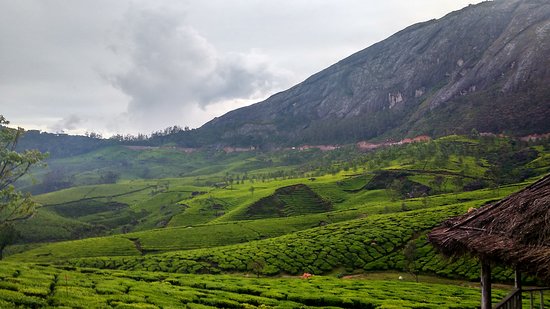
Nallathanni
Nallathanni (often spelled Nullatanni) holds a highly significant place in the geography, economy, and heritage of Munnar in the Idukki district of Kerala.
Historical Context & Background
1. Etymology and The “Three Rivers” Confluence
The word Nallathanni literally translates to “Good Water” or “Sweet Water” in the local dialects of Malayalam and Tamil (Nalla meaning good/pure, and Thanni meaning water).
Historically, the name carries immense weight because it forms the literal identity of Munnar. The name “Munnar” is derived from the words Munnu (three) and Aaru (river). Nallathanni is one of the three sacred mountain streams—alongside the Muthirapuzha and Kundaly rivers—that converge in the heart of the town. Before the late 19th century, this pristine water confluence was a spiritual and resource sanctuary for the indigenous Muthuvan tribal community.
2. The Colonial Tea Boom (1880s)
The modern history of Nallathanni shifted dramatically in the late 1870s and 1880s when British explorer John Daniel Munro leased the Kanan Devan hills from the Poonjar Royal Family. European planters quickly realized the mist-drenched valleys surrounding the Nallathanni river offered perfect acidic soil and drainage for tea cultivation.
The Nallathanni Estate was cleared and planted, quickly growing into one of the most productive pockets of South India’s tea industry. Thousands of Tamil laborers were brought from neighboring districts to work the slopes, forming a distinct, enduring cultural heritage that defines the region today.
3. The 1924 Great Flood and Reconstruction
Nallathanni was central to the tragic historic milestone known across Kerala as the Great Flood of 99 (occurring in the Malayalam era year 1099, or July 1924). Unprecedented torrential monsoons caused the Nallathanni and adjacent rivers to swell violently, resulting in massive landslides that completely redrew the landscape.
The flood obliterated the historic Kundala Valley Monorail/Railway system that ran nearby and destroyed massive stretches of estate property. However, the resilient British planters and estate workers painstakingly rebuilt the Nallathanni infrastructure, shifting focus to road transport and large-scale tea replanting.
4. Corporate Evolution & The Tata Legacy
Following India’s independence, control of the vast estates transitioned away from British hands. In the 1960s and 70s, the corporate giant Tata Group (initially Tata-Finlay, later Tata Tea) took over operations. Today, the Nallathanni Estate operates under the unique worker-shareholder model of the Kanan Devan Hills Plantations (KDHP) Company.