
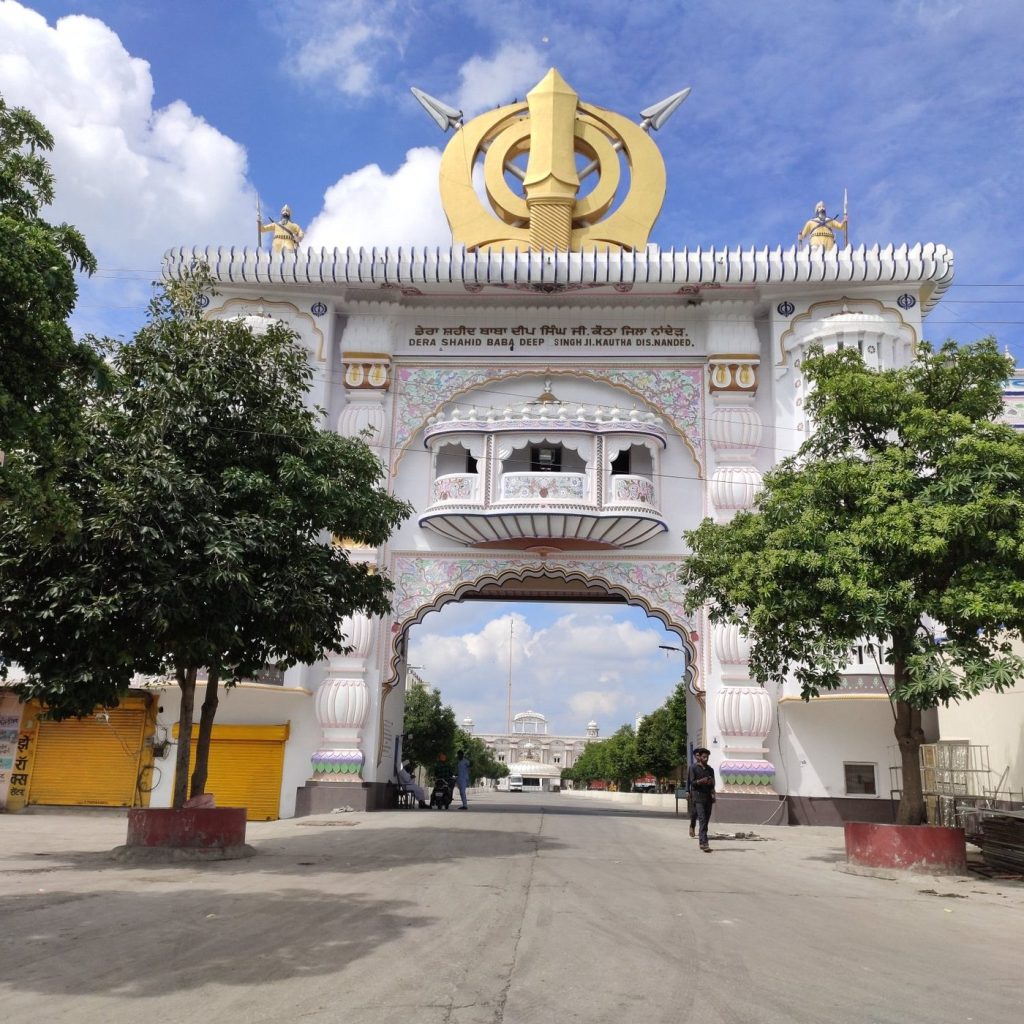
Nanded

Nanded

Nanded, beautifully situated on the banks of the sacred Godavari River in the Marathwada region of Maharashtra, is a city where deep antiquity meets immense spiritual devotion. Globally revered as one of the holiest destinations in Sikhism, it also holds a sprawling history that stretches back over two millennia.

Nanded, beautifully situated on the banks of the sacred Godavari River in the Marathwada region of Maharashtra, is a city where deep antiquity meets immense spiritual devotion. Globally revered as one of the holiest destinations in Sikhism, it also holds a sprawling history that stretches back over two millennia.

Historical Highlights

​1. Ancient Origins & The Nanda Dynasty

​Nanded’s roots extend deep into ancient Indian history.

  • The Etymology: The name is believed to have evolved from “Nanditat” (the banks of the Nanda).
  • The Legends: One local tradition links the name to Lord Shiva’s mount, Nandi, who is said to have performed penance on the banks of the Godavari. Historically, it was part of the territory ruled by the Nanda Dynasty in the 4th–5th Century BCE, before being absorbed into Emperor Ashoka’s Mauryan Empire.
  • ​Over the centuries, control successively shifted through powerful southern dynasties including the Satavahanas, Chalukyas, Rashtrakutas, and the Yadavas of Devgiri.

​2. A Pivotal Turning Point in Sikh History (1708)

​Nanded is permanently etched into world history because of events in 1708 involving Guru Gobind Singh Ji, the tenth and final living Sikh Guru. After the passing of Mughal Emperor Aurangzeb, Guru Gobind Singh traveled south and made Nanded his permanent abode.

​It was right here in Nanded, just before his departure from the mortal world, that he instituted a foundational pillar of Sikhism: he ended the lineage of human Gurus and proclaimed the holy book, the Guru Granth Sahib Ji, as the eternal, living Guru for all time.

​3. Nizams, Freedom Struggle & Modern Integration

​In 1725, Nanded became a prominent part of the Princely State of Hyderabad under the Nizams. During India’s independence era, it was a major epicenter for the Hyderabad Liberation Movement, a fierce resistance led by Swami Ramanand Teerth to liberate the region from the Nizam’s rule. Following police action in 1948, it joined independent India and was seamlessly integrated into Maharashtra when states were linguistically reorganized in 1960.

Key Historical & Spiritual Places to Visit

  • Takht Sachkhand Sri Hazur Abchalnagar Sahib: One of the Five Takhts (seats of highest temporal authority) in Sikhism. Built between 1832 and 1837 by the orders of Maharaja Ranjit Singh, this magnificent marble-and-gold complex is constructed on the site of Guru Gobind Singh Ji’s cremation. Its inner sanctum houses the Guru’s personal weapons and historic artifacts.
  • Kandhar Fort: Located about 35-40 km from the city center, this massive architectural marvel was built by King Krishna III of the Rashtrakuta Dynasty. It features a unique architecture style, a defensive moat, and a famous 60-foot stone sculpture of a Yaksha.
  • Mahur (Renuka Devi Temple): Perched atop a hill grid, this ancient shrine is highly revered as one of the three-and-a-half Shakti Peethas in Maharashtra. It is believed to be the birthplace of Lord Dattatreya.
  • Hottal Siddheshwar Temple: A magnificent stone temple located within the district that serves as a pristine example of Chalukyan art and architecture, featuring incredibly detailed stone relief carvings.
  • Nanded Fort: Bordered by the Godavari River on three sides, this ancient fort (now mostly in ruins) offers wonderful panoramic views of the riverfront landscapes.

FAQs

Why is Nanded considered the second holiest city in Sikhism?
It ranks second in spiritual significance only to Amritsar (home of the Golden Temple) because it is the exact site where Guru Gobind Singh Ji spent his final 14 months, established the Guru Granth Sahib as the eternal spiritual guide, and passed away in 1708.
What major festivals draw the biggest crowds to Nanded?
The Hola Mohalla festival (celebrated with traditional Sikh martial arts displays), Gurta Gaddi (commemorating the day the Guru Granth Sahib became the eternal Guru), and the birth anniversaries of Guru Nanak Dev Ji and Guru Gobind Singh Ji bring millions of global travelers to the city.
What languages are commonly spoken in Nanded for tourists?
Marathi is the official and most widely spoken local language. However, due to the continuous influx of pilgrims from Punjab and across the world, Hindi, Punjabi, and English are exceptionally well-understood and spoken by local businesses and transport operators.
When is the best time of year to plan a trip to Nanded?
The winter window from October to March is ideal. Temperatures range comfortably between 15°C and 30°C, making it pleasant for sightseeing. Summers (April to June) can get extremely scorching, often breaching 43°C, while the monsoons (July to September) see heavy downpours that can disrupt outdoor travel.
Tell me about the various historic Gurdwaras located in Nanded apart from the main Hazur Sahib. ?
While Takht Sachkhand Sri Hazur Sahib is the main center of devotion in Nanded, the city is surrounded by a sacred cluster of several other historic Gurdwaras. Each of these sites marks a specific event, meeting, or miracle from the 14 months that Guru Gobind Singh Ji spent in Nanded in 1707–1708. Together, they form a popular pilgrimage circuit known as the Gurdwara Yatra. ​Here are the most significant historic Gurdwaras located in and around Nanded apart from the main Takht: ​1. Gurdwara Shikar Ghat Sahib ​Perched beautifully on a hilltop on the banks of the Godavari River, this Gurdwara is located about 6 km from Hazur Sahib. ​The History: It is built on the site where Guru Gobind Singh Ji used to go hunting (Shikar). ​The Legend: According to Sikh tradition, it was here that the Guru emancipated the soul of a planet-dwelling creature (historically referred to as a rabbit or a deer) that had been a contemporary in a previous life, granting it Mukti (salvation). The architecture is pristine white and offers sweeping views of the river. ​2. Gurdwara Nagina Ghat Sahib ​Located just a short walk from the main Takht on the riverbanks, this Gurdwara features a beautiful three-story white structure with a striking golden dome. ​The History: It marks the spot where a wealthy, arrogant merchant named Raja Bhartrihari came to meet the Guru and offered him a highly valuable, priceless gem (Nagina). ​The Lesson: To break the merchant's ego and demonstrate the vanity of material wealth, Guru Gobind Singh Ji casually tossed the priceless gem straight into the rushing waters of the Godavari River. When the shocked merchant looked down into the water, he saw the entire riverbed shimmering with countless identical gems, making him realize the spiritual wealth of the Guru. ​3. Gurdwara Banda Ghat Sahib (Banda Bahadur) ​Situated right on the riverbank, this site holds massive political and historical significance for the trajectory of the Sikh Empire. ​The History: This was the hermitage of an ascetic sorcerer and warrior named Madho Das Bairagi. When Guru Gobind Singh Ji visited his hut and sat on his couch, Madho Das tried to use his occult powers to overturn the couch but failed. ​The Transformation: Recognizing the Guru's supreme spiritual power, Madho Das fell at his feet and declared himself the Guru's Banda (slave/servant). The Guru baptized him into the Khalsa fold, renaming him Banda Singh Bahadur, and gave him five arrows to lead the Sikh armies north to fight oppression in Punjab. ​4. Gurdwara Sangat Sahib ​Tucked inside the old city of Nanded, this Gurdwara marks a place of congregational gathering (Sangat). ​The History: Before the main Takht was established, this site served as a storage area for the provisions and cash offerings brought by devotees. The Guru would sit here to distribute salaries to his soldiers and spend time in deep spiritual discourse with the local and traveling congregation. ​5. Gurdwara Hira Ghat Sahib ​Located about 9 km downstream from the city center in a highly serene, rural landscape. ​The History: This is the precise spot where the Guru first pitched his tents when he arrived in Nanded. ​The Legend: Emperor Bahadur Shah, who was traveling through the region, visited the Guru here and gifted him a magnificent diamond (Hira). Similar to the incident at Nagina Ghat, the Guru tossed the diamond into the river, teaching the Emperor that spiritual giants have no attachment to earthly jewels. ​6. Gurdwara Mata Sahib Kaur Ji ​Located near Hira Ghat, this shrine is dedicated to Mata Sahib Kaur Ji, the wife of Guru Gobind Singh Ji and the revered "Mother of the Khalsa". She stayed at this peaceful campsite, running the Langar (community kitchen) for the thousands of devotees who arrived daily to catch a glimpse of the Guru. ​🧭 Traveler Guide: The Local Pilgrimage Circuit ​Most of these Gurdwaras are located within a 10 km radius of the main town. ​How to Visit: Local auto-rickshaws and custom tour buses operate consistently from outside the main Hazur Sahib complex, offering a complete "Darshan" tour that covers all these peripheral Gurdwaras in about 4 to 5 hours. ​Best Time for Photography: Visiting Gurdwara Shikar Ghat Sahib and Gurdwara Nagina Ghat Sahib during sunrise or sunset offers breathtaking views as the golden light reflects off the white marble and the Godavari River.

Price From : ₹4500/-

Address

Near Avaloormadam temple, thathampally po, pin code 688013, Alleppey, Kerala, India