
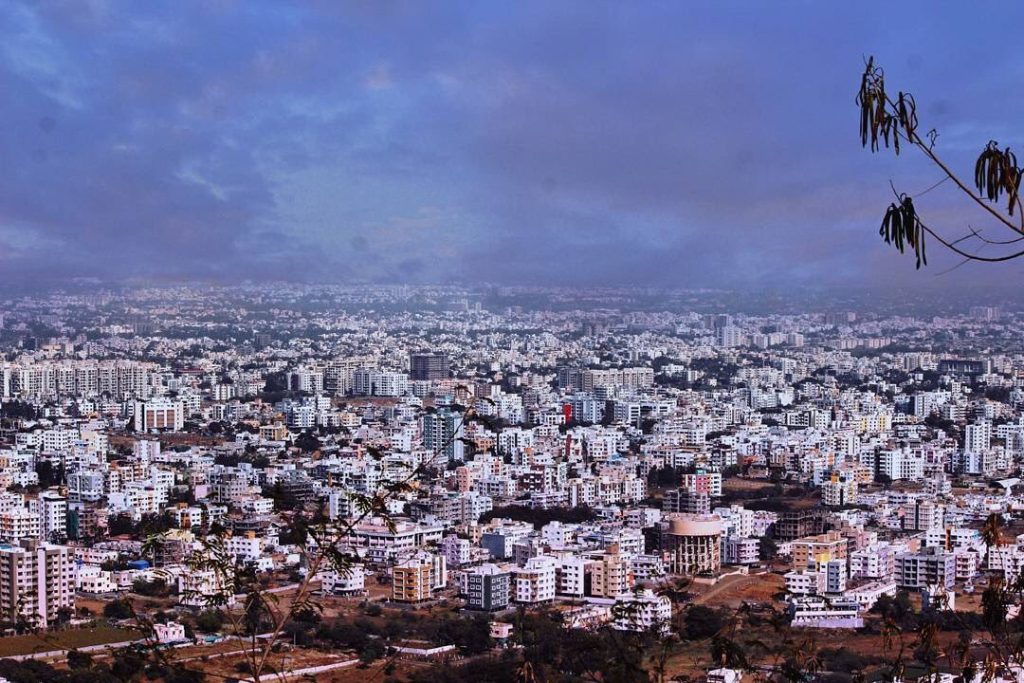
Nashik
Nashik, nestled along the holy banks of the Godavari River in northwestern Maharashtra, is a unique city where multi-layered political history converges with ancient spiritual heritage.
The Mythological Roots
The very name Nashik is deeply tied to the Hindu epic Ramayana.
- The Etymology: It is widely believed that the word originates from the Sanskrit Nasika, meaning “nose.” According to legend, during their 14-year exile, Lord Rama, Goddess Sita, and Lakshmana stayed in the Panchavati area (named after five ancient banyan trees). It was here that Lakshmana cut off the nose (nasika) of the demoness Shurpanakha when she tried to attack them.
- The Four Yugas: Hindu traditions suggest that Nashik bore a different name in each cosmic era:
-
- Satya Yuga: Padmanagar
- Treta Yuga: Trikantak
- Dvapara Yuga: Janasthana
- Kali Yuga: Navashikh or Nashik
k
⏳ Historical Timeline of Nashik
From ancient Buddhist monastic life to Maratha rulers and British collectors, Nashik has shifted across multiple hands through the centuries.
Ancient Era: Satavahana Dynasty
2nd Century BCE – 2nd Century CE
Following Emperor Ashoka’s reign, the Satavahanas brought Nashik into prominence. They heavily patronized Buddhism, which led to the creation of the Pandavleni Caves—a complex of 24 rock-cut monastic caves carved straight into the Trirashmi Hills.
The Islamic & Mughal Rule
1487 – Early 18th Century
The province fell under the Nizam Shahi Sultanate and later the Mughal Empire. During Emperor Akbar’s reign, the city was extensively documented in the Ain-i-Akbari. It was colloquially referred to as Gulshanabad (the “City of Roses”).
The Maratha & Peshwa Zenith
1734 – 1818
The Marathas reclaimed the city and formally restored its name to Nashik. Under the Peshwas, the city underwent massive architectural expansion. Prominent structures, bathing ghats, and grand temples—including the reconstruction of the Trimbakeshwar Shiva Temple—were established.
British Rule & Freedom Struggle
1818 – 1947
The British captured Nashik in 1818. By the early 20th century, Nashik became a hotbed for India’s freedom struggle. In 1909, the young revolutionary Anant Kanhere assassinated the British Collector, Mr. Jackson, at the Vijayanand Theatre.
The Kalaram Temple Satyagraha
1930
Dr. B.R. Ambedkar led a historic civil rights movement in Nashik, launching a peaceful satyagraha demanding entry for Dalits into the prominent Kalaram Temple, shaping modern social reform in Maharashtra.