
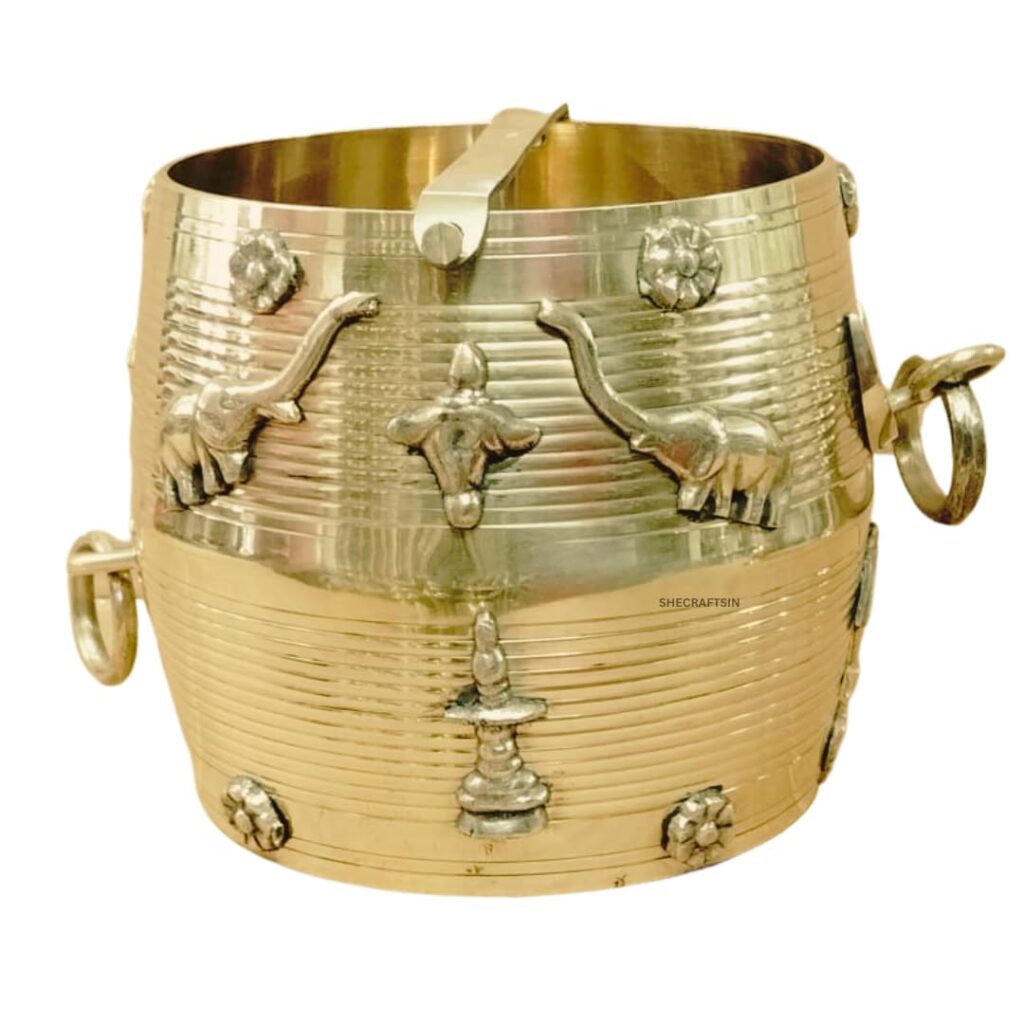
Nirapara – Home Decor
A Nirapara (literally meaning “a overflowing measuring vessel”) is one of Kerala’s most cherished symbols of prosperity, wealth, and abundance. Originally designed as an agrarian volumetric measurement container for harvested paddy (rice), it has transformed over centuries into a staple of Kerala home decor, temple offerings (Para Veyppu), weddings, and festive celebrations like Onam and Vishu.
1. Etymology & Historical Context
Etymology: Derived from two Malayalam words: “Nira” (filled to overflowing) and “Para” (a traditional grain measuring vessel).
Agrarian Beginnings: Before standard metric units (liters and kilograms) were introduced, agrarian Kerala used wood and brass vessels to measure grain harvests. The hierarchy of traditional volumetric units included:
Nazhi: Smallest basic household measuring unit.
Idangazhi: 4 Nazhis = 1 Idangazhi.
Para: 10 Idangazhis = 1 Para (roughly equivalent to 10–12 kg of unhusked paddy).
Cultural Symbolism: An empty Para represented poverty or loss, whereas a Nirapara (brimming with freshly harvested rice grain and topped with golden coconut palm blossoms called Thengin Poo) symbolized an overflowing harvest, divine blessing, and financial security.
2. Infrastructure, Crafting & Materials
The craft of casting traditional Para containers is concentrated in historical metallurgy hubs of Kerala like Mannar (in Alappuzha district) and Nadavaramba (in Thrissur district).
Structural Materials
Traditional Teak / Jackfruit Wood Base: Historically, daily-use Paras were carved from durable hardwoods (Marappara) and bound with iron or brass bands to prevent cracking.
Bell Metal & Brass Alloys: Decorative and ritualistic Paras are cast out of high-grade brass (Pithala) or bell metal (Odu) using lost-wax or sand-casting techniques.
Anatomical Components
Cylindrical/Barrel Body: Tapered slightly in the center or crafted straight up with thick metallic walls.
Horizontal Metallic Rings (Bands): Raised circular ridges running along the top, middle, and bottom circumferences for structural strength and aesthetic symmetry.
Ring Handles (Kanni): Sturdy brass side ring handles riveted onto the body, allowing it to be easily lifted during rituals.
Engravings & Motifs: Modern decor Paras often incorporate traditional motifs around the rim—such as miniature Gaja (elephants), Mayil (peacocks), or lotus petals.
Modern Decor Adaptations: Today’s home decor Niraparas range from miniature 3-inch brass desk pieces up to massive 18-inch floor accents. They are often lacquered to prevent oxidation and maintain a polished golden finish indoors without tarnishing.
3. Frequently Asked Questions (FAQs)
Q1: How should a Nirapara be arranged for home decor or ceremonies?
For auspicious display during housewarmings (Pudava Kodu / Grihap प्रवेश), weddings, or festivals:
Fill the Para up to the brim with raw paddy or polished rice.
Insert a blooming coconut palm flower (Thengin Poo) into the center.
Surround it with a traditional Nilavilakku (brass oil lamp) and fresh flowers (Mulla or marigold) for an authentic Kerala ethnic aesthetic.
Q2: Which direction should a decorative Nirapara face in a house?
According to Vastu Shastra principles, a filled Nirapara should ideally be placed in the Northeast (Ishan Kon) corner or directly facing the Main Entrance / Living Room foyer. This setup is believed to welcome positive energy, good health, and wealth into the household.
Q3: What is the difference between a Marappara and a Pithala Para?
Marappara (Wooden Para): Crafted from wood bound with metal, historically used for actual grain storage and farm measurements.
Pithala Para (Brass Para): Made entirely of cast brass, offering a shiny golden appearance, lighter maintenance, and higher durability for modern home decor and indoor mandirs.
Q4: How do I clean and maintain a brass Nirapara?
Routine Dusting: Use a clean, dry microfiber cloth to wipe away dust from the metallic grooves.
Tarnish Removal: If unlacquered brass oxidizes over time, clean it using a mild paste of Pitambari powder or a natural mix of tamarind paste and salt, followed by a dry wipe. Avoid harsh steel wool scrubbers to protect the polished surface finish.