
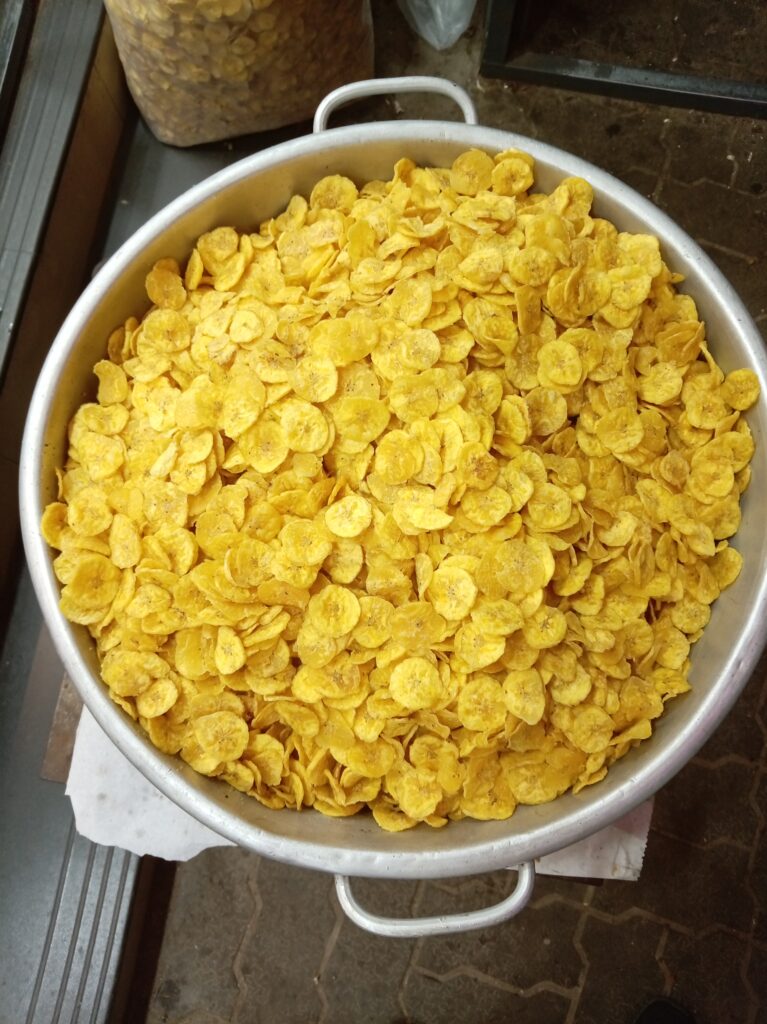
Onam Upperi (Kerala Banana Chips)
Onam Upperi (Kerala Banana Chips) is the iconic crispy centerpiece of the traditional Onam Sadya feast. Placed at the top-left corner of the banana leaf, these snacks represent Kerala’s agricultural heritage, centered around the indigenous Nendran plantain.
1. Types of Onam Upperi
TypeKey IngredientsCharacteristics
Kaya Upperi / Ethakka UpperiRaw Nendran plantain, coconut oil, salt water, turmericWafer-thin golden round disks, crisp and lightly salted.
Sharkara Upperi / Sarkara VarattiThick-cut plantain chunks, jaggery syrup, dry ginger (chukku), cardamom, cumin, rice flourThick, crunchier crescent/cube chips coated in a hardened, spiced jaggery shell.
Nalukanda UpperiRaw Nendran plantain cut length-wise into quartersThicker, extra-crunchy plain salted chips served in traditional Sadya meals.
2. Infrastructure & Production Facility Requirements
Whether setting up a traditional cottage unit (e.g., Kudumbashree / artisanal bakery) or a commercial manufacturing facility, the unit requires specific infrastructure zones:
A. Raw Material & Prep Area
Raw Plantain Handling Yard: Well-ventilated storage space for fresh, raw green Nendran plantains.
Washing & Soaking Vats: Food-grade stainless steel (SS 304) tanks with running water and turmeric solution to wash off banana latex (paal) and prevent oxidation/browning.
Peeling & Slicing Workstations: Ergonomic SS preparation tables equipped with high-capacity mandoline slicers (for thin chips) or mechanical rotary dicers/cutters (for uniform Sharkara Upperi cubes).
B. Frying & Processing Line
Deep Frying Station: Heavy-duty traditional brass/bronze Urulis or SS continuous deep fryers fitted with LPG/biomass burners or steam heating coils.
Temperature Controllers: Digital oil temperature monitors to maintain precise frying heat (160°C–180°C) without burning the coconut oil.
De-oiling Centrifuge: Centrifugal oil extractors to spin off excess coconut oil, ensuring longer shelf life and low-grease texture.
C. Jaggery Coating & Seasoning Line (For Sharkara Upperi)
Steam-Jacketed Tilting Kettles: Used to melt dark cane jaggery (pahu vellam) to a 1-string/ball consistency.
Coating Drums & Cooling Conveyors: Motorized SS rotating drums to evenly toss fried plantain cubes into hot jaggery syrup, followed by a dusting of roasted rice flour and powdered spices.
Cooling Trays: Large perforated SS cooling tables to allow the jaggery shell to set hard without clumping.
D. Packaging & Quality Infrastructure
Nitrogen-Flushing Band Sealers: Form-fill-seal (FFS) or pouch sealing machines equipped with Nitrogen gas flushing to prevent oil oxidation and maintain freshness for 3–6 months.
Hygiene & Storage Zone: Epoxied food-safe flooring, fly-catchers, air curtains, and climate-controlled storage for packaged goods.
3. Frequently Asked Questions (FAQs)
Q1: Why is the Nendran banana variety mandatory for authentic Kerala chips?
A: Unlike standard table bananas, raw Nendran plantains have a high starch content and low moisture density. This structural firmness ensures maximum crispness during deep frying without turning soggy.
Q2: Why is coconut oil essential for frying Onam Upperi?
A: Coconut oil provides the distinct traditional aroma and smoke point suited for South Indian frying. Its medium-chain fatty acids also stabilize the chips, giving them their characteristic crunch and flavor profile.
Q3: How is Sharkara Upperi prevented from becoming sticky during storage?
A: Three factors keep it dry and crunchy: boiling the jaggery syrup to a “hard ball” consistency, frying the banana cubes until thoroughly crisp prior to coating, and dusting the coated pieces with roasted rice flour and dry ginger powder to absorb remaining moisture.
Q4: What is the standard shelf life of traditional Onam Upperi?
A: Homemade or non-nitrogen-packed upperi stays fresh in an airtight container for 2 to 4 weeks. Commercial nitrogen-flushed packages have a shelf life of 3 to 6 months.
Q5: Where are chips served on the Onam Sadya leaf?
A: They are placed on the top-left corner of the plantain leaf alongside Pappadam and small banana (Rasakadali) before any rice or curries are served.