
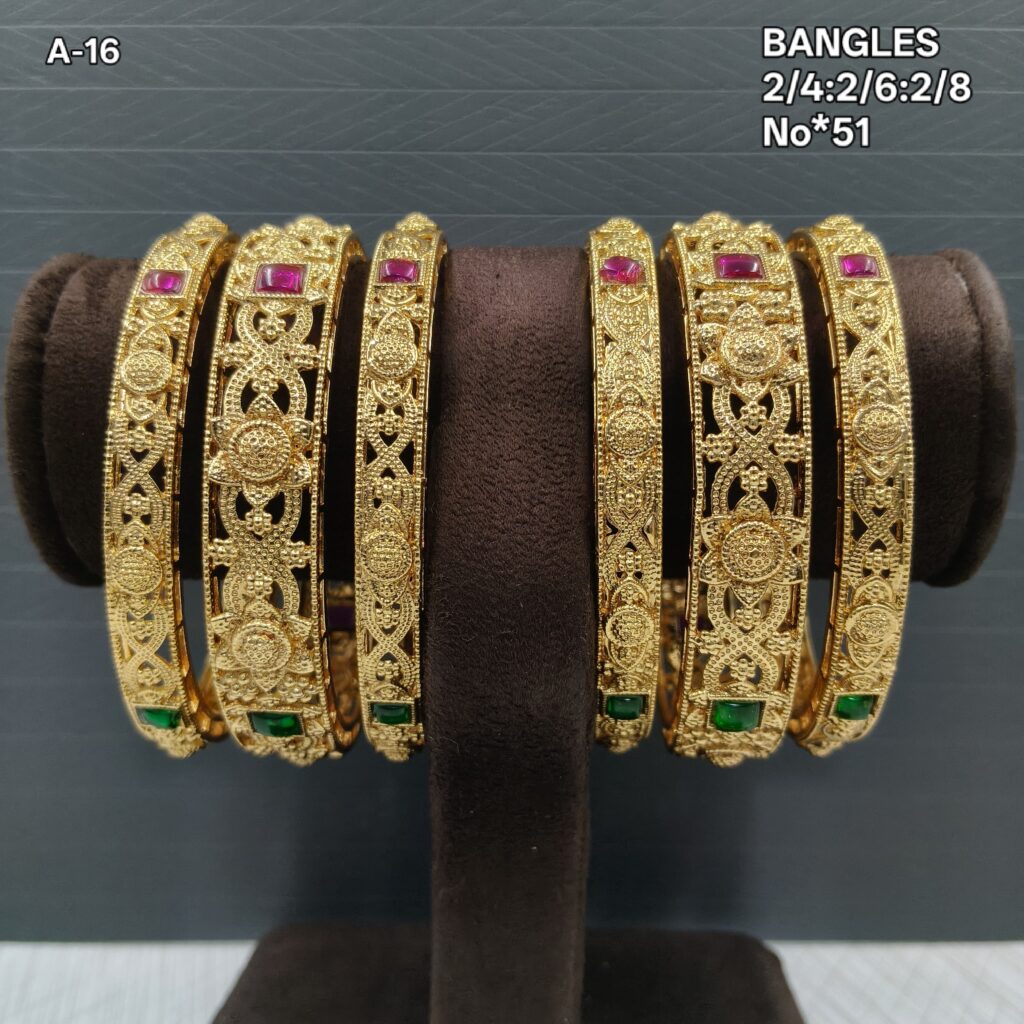
Oxidized gold coating bangles – antique gold finish or vintage bridal collections
Oxidized gold coating bangles (also known as antique gold finish or vintage gold polish bangles) offer an understated, regal aesthetic for brides. Unlike high-shine polished yellow gold, oxidized gold bangles feature deliberate dark undertones in the recesses of their carvings, accentuating intricate craftsmanship like Temple motifs, Kundan settings, and filigree work.
Bridal Collection Highlights
Temple Motif Kadas: Featuring carved depictions of deities (Goddess Lakshmi, Lord Ganesha) or sacred symbols (peacocks, elephants) with dark, antique recesses that highlight 3D detailing.
Kundan & Unki Studded Bangles: High-grade oxidized gold coating paired with Kundan or polki stones, creating a vintage royal aesthetic.
Dual-Tone Antique Sets: Blends oxidized gold plating with subtle black polish or antique silver accents for a contemporary, multi-dimensional look.
Ghungroo & Latkan Bridal Sets: Statement bangles lined with small hanging gold-plated ghungroos or tassel latkans that add graceful movement and sound.
Manufacturing & Plating Process
Base Metal: High-grade brass, copper, or silver alloys are used as the structural core.
Gold Plating: A thick layer of gold (often 18k or 22k gold polish) is electroplated over the base metal.
Oxidization Treatment: A chemical aging or antique wash process is applied selectively to low-lying crevices to create deep contrast and a vintage look.
Protective Anti-Tarnish Seal: A clear, skin-safe micro-lacquer layer is baked over the finish to lock in the color and prevent sweat or environmental tarnishing.
Frequently Asked Questions (FAQs)
Q1: How do oxidized gold bangles differ from standard high-shine gold bangles?
Standard gold bangles are polished to a bright, reflective sheen. Oxidized gold bangles undergo an antique finishing process where dark shading is added into the carved details, providing a rustic, heritage look that photos exceptionally well under wedding lighting.
Q2: Will the oxidized gold coating rub off or fade over time?
With proper care, high-quality micro-plated oxidized gold bangles maintain their antique finish for years. However, direct contact with perfumes, harsh chemicals, or continuous friction can wear down the top lacquer coating.
Q3: How should bridal oxidized gold bangles be cleaned and stored?
Storage: Keep bangles in individual, airtight ziplock pouches lined with soft cotton or tissue. Avoid velvet boxes, as moisture trapped in velvet can degrade metal plating over time.
Cleaning: Wipe gently with a dry, soft microfiber cloth after use. Never use liquid jewelry cleaners, alcohol, or soap water, as these dissolve the protective antiquing layer.
Q4: Can brides pair oxidized gold bangles with bright yellow gold or Kundan jewelry?
Yes. Oxidized gold bangles contrast beautifully with traditional Kundan, Polki, and antique temple necklaces. Because of their darker undertones, they complement deep-toned bridal lehengas (maroon, royal velvet, emerald green, and deep red) particularly well.
How do you build a traditional Indian bridal bangle stack using oxidized gold bangles, glass bangles, and Kundan kadas?
Building a bridal bangle stack (often called a chooda or churi set) is an art of symmetry, texture, and color balance. Combining oxidized gold bangles, glass bangles, and Kundan kadas gives a rich, heritage look that photos exceptionally well under wedding lighting.
1. Structural Blueprint of the Stack
A complete bridal stack follows a symmetrical layout that tapers outward from the middle to the ends of the wrist:
[Outer Kada] ➔ [Oxidized Gold Bangle] ➔ [Glass Bangles] ➔ [Kundan Bangle] ➔ [Center Kundan Kada] ➔ (Mirror for inner half)
The Core Components:
- The Anchors (End Kadas): Two thick, broad Kundan or temple-work kadas at both ends (closest to the forearm and hand) to lock the set securely in place.
- The Base / Contrast (Glass Bangles): Thin glass bangles matching your bridal outfit color (e.g., deep red, maroon, emerald green, or royal blue). Glass bangles add traditional musical tinkling (chhan-chhan) and rich color depth.
- The Texture Fillers (Oxidized Gold Bangles): Slim, textured oxidized gold bangles placed between glass clusters to break up solid colors with warm, vintage metallic tones.
- The Highlights (Kundan / Polki Accents): Slim single-line Kundan bangles scattered into the stack to add sparkle that catches the light.
2. Step-by-Step Stacking Guide (Per Arm)
Here is a balanced 18-to-24 piece arrangement per arm:
- Position 1 (Wrist End): 1 Heavy Kundan Kada with latkan/hanging ghungroos.
- Position 2: 2 Slim Oxidized Gold Bangles.
- Position 3: 4 Glass Bangles in main bridal color (e.g., Maroon).
- Position 4: 1 Single-line Kundan Bangle.
- Position 5: 2 Slim Oxidized Gold Bangles.
- Position 6 (Center Divider): 1 Medium-width Kundan/Temple Kada.
- Position 7: 2 Slim Oxidized Gold Bangles.
- Position 8: 1 Single-line Kundan Bangle.
- Position 9: 4 Glass Bangles.
- Position 10: 2 Slim Oxidized Gold Bangles.
- Position 11 (Forearm End): 1 Heavy Kundan/Temple End-Kada.
3. Pro Tips for Color Harmony & Fit
- Ratio Rule (60-30-10): Keep 60% glass bangles for color, 30% oxidized gold for texture/heritage aesthetic, and 10% Kundan for sparkle and focal points.
- Sizing Differences: Your forearm is wider than your wrist. Use slightly larger bangle sizes (e.g., size 2.6 or 2.8) toward the elbow end and smaller sizes (e.g., size 2.4) near the wrist to ensure comfort without slipping.
- Fabric Safety: Ensure the back pins and claw settings of the Kundan kadas are smooth so they don’t snag on delicate silk sarees, dupattas, or embroidered lehengas.