
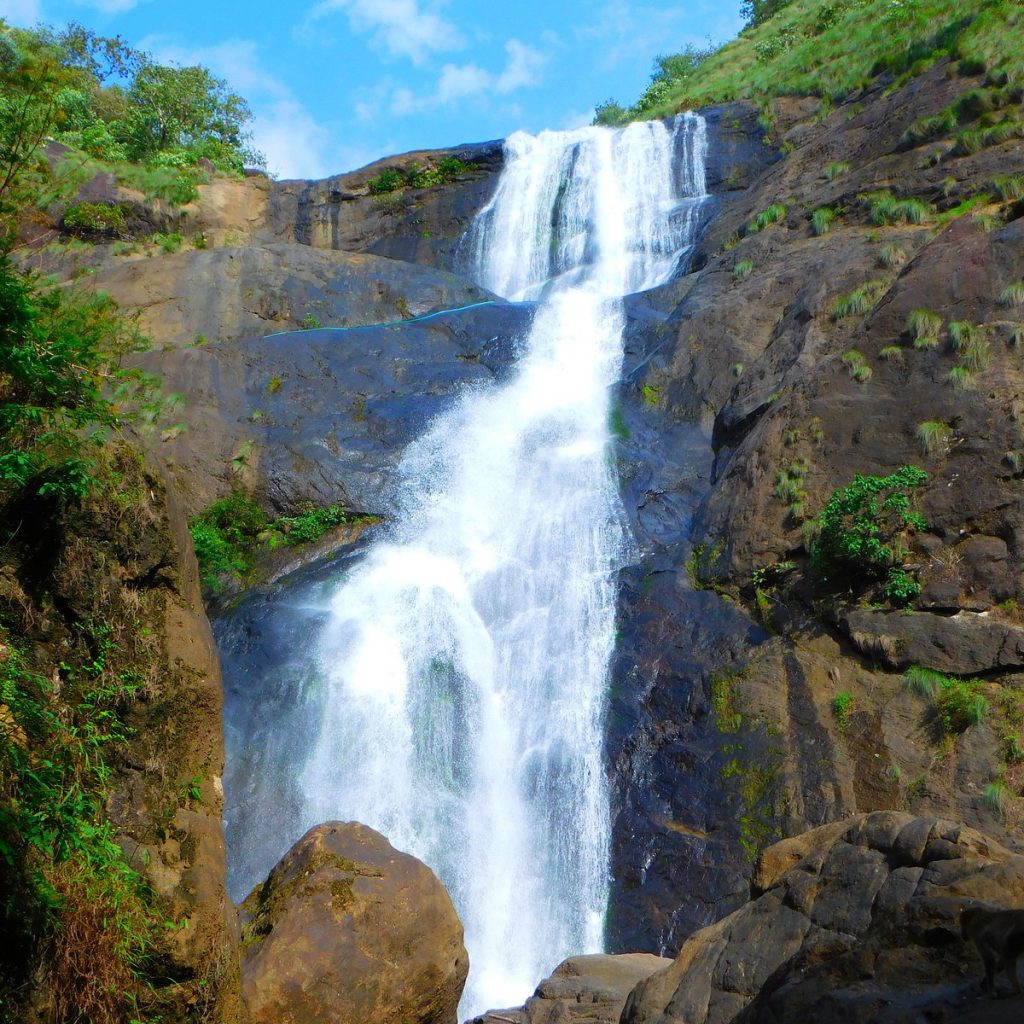
Palaruvi Waterfalls

Palaruvi Waterfalls

Palaruvi Waterfalls, standing tall at an impressive 300 feet (91 meters), is the 32nd highest waterfall in India. Located near Aryankavu in the Kollam district of Kerala, its name literally translates to “Stream of Milk” in Malayalam—a perfect description of the frothy, creamy white torrents that crash down its single-tier rocky cliff face.

Historical & Cultural Significance

​1. Royal Patronage of the Travancore Kings

​Long before it became a premier eco-tourism destination managed by the Kerala Forest Department, Palaruvi was a highly prized private retreat for the royals of the Kingdom of Travancore.

  • The Kalmandapams: Scattered near the forested pathways surrounding the waterfalls, you can still spot historical stone structures and mandapams (pavilions).
  • ​These were intentionally constructed in the 17th and 18th centuries by the Travancore kings to serve as resting quarters and private changing zones when members of the royal family visited the woods specifically to enjoy the rejuvenating qualities of the natural cascade.

​2. The Healing Ayurvedic Waters

​Local history and oral traditions are deeply tied to the natural healing properties of the waterfall. The stream that forms Palaruvi (part of the Kallada River system) originates deep within the untouched, high-altitude evergreen forests of the Thenmala range in the Western Ghats.

  • ​As the water cuts through these dense woods, it flows over and naturally leaches the extracts of thousands of rare indigenous Ayurvedic medicinal plants and herbs.
  • ​Historically, local communities and ancient sages treated a bath under Palaruvi as a therapeutic, purifying ritual to cleanse the body, soothe skin ailments, and relieve physical fatigue.

FAQs

Why is Palaruvi called a "No-Plastic" zone, and what are the strict rules there?
Because Palaruvi functions as a pristine eco-tourism spot and its downstream waters provide drinking water for local villages, the Forest Department enforces rigid ecological rules: ​Strict Plastic Ban: Absolutely no plastic bottles or disposable covers are allowed beyond the entry point. ​No Chemicals: Visitors are strictly forbidden from using soaps, shampoos, or body oils while bathing in the pool to protect the aquatic ecosystem and water purity.
When does the waterfall completely dry up?
There is a common misconception that it dries up entirely, but it is actually a perennial stream. However, the water flow drops drastically to a very faint, thin trickle during the peak summer months of March to May. The absolute best time to experience its iconic "milky" thunderous volume is during the monsoon saga from June to September.
Can anyone access the waterfall, and is there a trek involved?
Yes, it is highly accessible for families, but it does require a short trek. After parking at the main highway gate, forest department vehicles ferry visitors up a bumpy forest road. From that drop-off point, you must complete a scenic 15-to-20-minute uphill hike through the woods and bamboo clusters to reach the main viewing platform and the designated natural bathing pool.
What are the entry fees and timings?
​Timings: The waterfall area is open to the public daily from 8:00 AM to 4:00 PM. ​Entry Fee: The base entry ticket is very nominal—approximately ₹25 per adult (above 13 years) and ₹10 for children, though supplementary charges apply for the internal forest bus shuttle and camera equipment.

Price From : ₹400/-

Address

Near Avaloormadam temple, thathampally po, pin code 688013, Alleppey, Kerala, India