
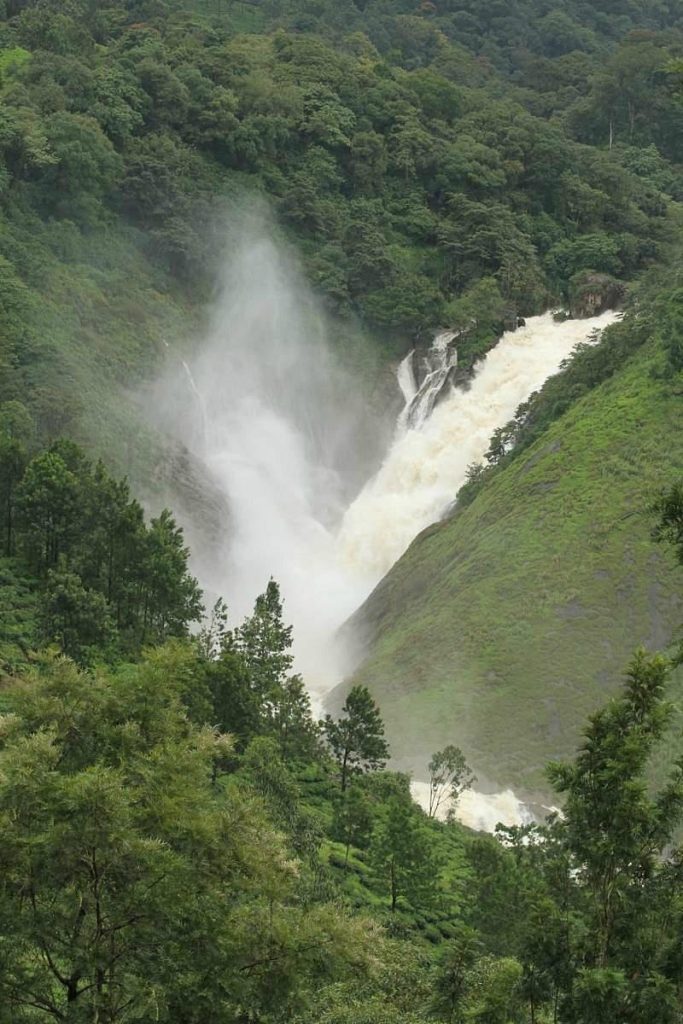
Pallivasal
Located just about 8 kilometers before you reach Munnar town, Pallivasal is a scenic, sloping village that occupies an extraordinarily important place in the modern history of Kerala. While millions of tourists pass through it to admire its dramatic, mist-covered tea gardens, it is fundamentally celebrated as the birthplace of industrial development and electricity in the state.
Historical Context
The history of Pallivasal marks the transition of Kerala from an isolated agrarian kingdom into an industrialized, self-reliant modern society.
- The Dawn of Kerala’s Industrialization: In the early 20th century, the princely state of Travancore faced severe power shortages that hindered economic progress. Under the visionary leadership of Maharajah Sree Chithira Thirunal Balarama Varma and his astute Diwan (Prime Minister), Sir C.P. Ramaswamy Iyer, the government decided to harness the state’s torrential rivers—what they called “white coal”—to generate clean, low-cost electricity.
- The Inauguration (1940): Surveying for the project began as early as 1925 under electrical engineer K.P. P. Menon along the Muthirapuzha River (a major tributary of the Periyar). Construction commenced in 1933, and on March 19, 1940, Sir C.P. Ramaswamy Iyer officially commissioned the Pallivasal Hydroelectric Project, making it the very first public hydroelectric power station in Kerala.
- Engineering the High Range: The project was an engineering marvel for its time, operating with a massive static head drop of over 600 meters. To store and regulate the water flow to the Chithirapuram powerhouse, the government eventually constructed the iconic Kundala Dam and Mattupetty Dam further upstream.
- Colonial Tea Roots: Paralleling the power project was the establishment of the Pallivasal Tea Estate in 1905 by British planter A.H. Sharp. The massive availability of electricity from the Pallivasal grid transformed the region, allowing the early tea factories of the Kannan Devan Hills to transition from erratic water wheels and wood-fired steam to efficient, heavy electric machinery.