
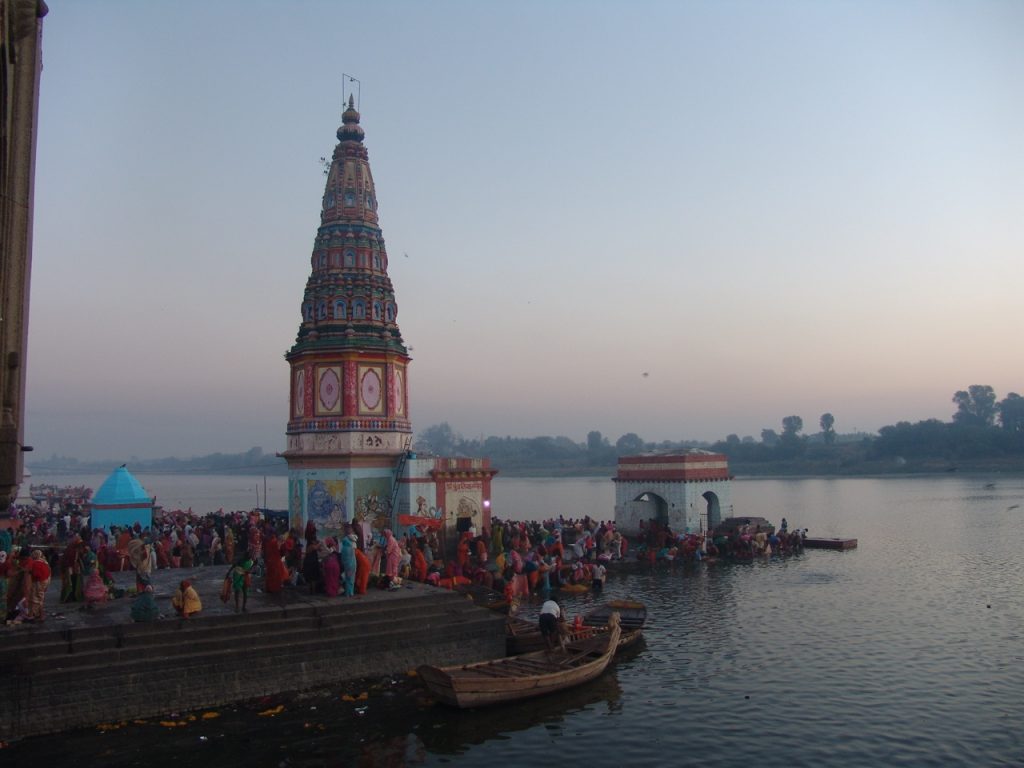
Pandharpur
Pandharpur, situated on the banks of the Chandrabhaga River in the Solapur district of Maharashtra, is the spiritual heartbeat of the state. It is home to the Vithoba Temple (Shri Vitthal-Rukmini Mandir), dedicated to Lord Vitthal (a manifestation of Lord Vishnu/Krishna) and his consort, Rukmini.
Pandharpur is famously recognized as the epicenter of the ancient Bhakti movement in Western India, defined by equality, devotion, and soul-stirring poetry.
Historical & Cultural Evolution
The history of Pandharpur is intertwined with stone inscriptions, royal patronage, and the voices of Maharashtra’s greatest saint-poets.
1. Antiquity and Royal Inscriptions
- Early Records: Copper plate inscriptions from the Rashtrakuta dynasty dating back to the 6th century CE mention Pandharpur as a small village (‘Panduranga-palli’), proving the site’s ancient origins.
- Yadava Dynasty Expansion: The temple underwent massive expansions during the 12th and 13th centuries under the Hoysala and Yadava rulers of Devagiri. A famous stone inscription dated 1273 CE lists the names of various donors who contributed funds to rebuild or expand the temple complex.
2. The Legend of Pundalik
According to Hindu tradition, the temple exists because of a devotee named Pundalik. He was intensely devoted to serving his elderly parents. When Lord Krishna came to visit him, Pundalik was busy serving his mother and father. Not wanting to neglect his duty, he tossed a brick (Vit in Marathi) toward the Lord, asking Him to stand on it and wait. Moved by Pundalik’s filial devotion, the Lord stood on the brick with his hands on his hips—the iconic posture in which Vitthal is worshipped today.
3. The Bhakti Movement and Warkari Sect
Pandharpur became a democratic spiritual center where caste barriers dissolved. Between the 13th and 17th centuries, the Warkari tradition flourished here, championed by legendary saint-poets:
- Sant Dnyaneshwar and Sant Namdev (13th Century)
- Sant Eknath (16th Century)
- Sant Tukaram and Sant Chokhamela (17th Century)
These saints wrote and sang Abhangas (devotional poems) in Marathi, making spirituality accessible to the masses.
The Wavari Pilgrimage (Pandharpur Yatra)
The most distinctive historical tradition of Pandharpur is the Wari—an annual 21-day walking pilgrimage that has been practiced for over 800 years.
Twice a year (during Ashadhi Ekadashi in June–July and Kartiki Ekadashi in October–November), millions of pilgrims called Warkaris walk hundreds of kilometers from different parts of Maharashtra to Pandharpur. They carry Padukas (footprints) of the saint-poets in elaborately decorated palanquins (Palkhis), chanting “Vithal Vithal Jai Hari Vithal.”