
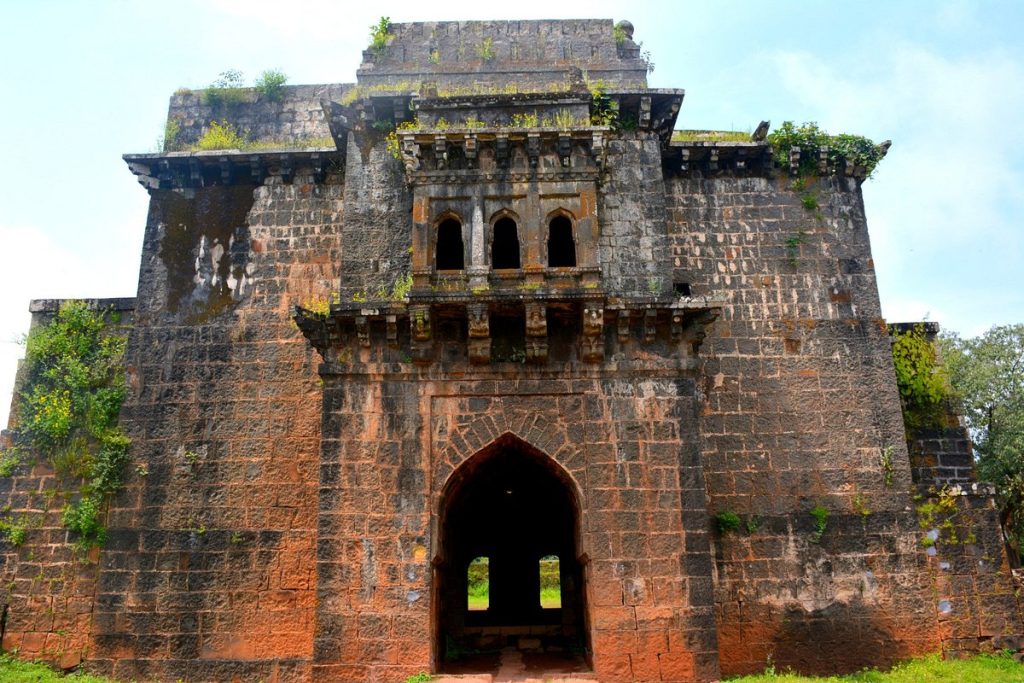
Panhala
Panhala, located just 22 km northwest of Kolhapur, Maharashtra, is completely different from a modern, custom-built township like Lavasa. Perched at an altitude of over 3,100 feet in the Sahyadri Mountain Range, Panhala is a massive, ancient military stronghold that dates back nearly a millennium.
It is best known as a majestic hill station tightly woven into the legendary exploits of Chhatrapati Shivaji Maharaj.
The History of Panhala: The Fort of Snakes
1. Origins and Early Rulers (1178 – 1489 CE)
Panhala Fort (historically called Panhalgad, meaning “Home of the Serpents” due to its zigzagging, defensive structure) was built between 1178 and 1209 CE by Raja Bhoja II of the Shilahara dynasty. Over the centuries, due to its highly strategic location commanding the trade routes from Bijapur to the Arabian Sea coast, it became a prized trophy for various empires. It passed from the Shilaharas to the Yadavas of Devgiri, and eventually to the Bahamani Sultanate in the late 1400s.
2. The Adil Shahi Upgrades (1489 – 1659 CE)
When the Adil Shahi dynasty of Bijapur established itself, they turned Panhala into an impenetrable outpost. They spent nearly a century fortifying its ramparts, building massive stone gateways, and constructing strong interior structures like hidden water systems and massive granaries to survive prolonged military sieges.
3. Shivaji Maharaj’s Daring Escape & Pavan Khind (1660 CE)
In 1659, following the defeat of the Bijapur general Afzal Khan, Chhatrapati Shivaji Maharaj successfully captured Panhala. Infuriated, Adil Shah II sent a massive army led by Siddi Johar to lay siege to the fort in May 1660.
The siege lasted five brutal months, cutting off all supplies to the Marathas. On a stormy, rainy night in July 1660, Shivaji Maharaj executed one of history’s greatest escapes. He slipped out of the fort with a small band of loyal soldiers.
The Ultimate Sacrifice: While Shivaji Maharaj was fleeing toward Vishalgad fort, the enemy caught up. A local barber named Shiva Kashid, who bore a striking resemblance to Shivaji, dressed up as the King and allowed himself to be captured to buy time. Meanwhile, commander Baji Prabhu Deshpande and 300 soldiers held off thousands of enemy troops at a narrow mountain pass (Ghod Khind, later renamed Pavan Khind or “The Sacred Pass”), sacrificing their lives so their King could reach safety.
4. The Capital and British Era (1700s – 1947 CE)
After Shivaji Maharaj’s era, Panhala became the de facto capital of the Maratha Empire under Queen Regent Tarabai, who established an autonomous throne here before the seat of government moved to Kolhapur in 1782. In 1844, during a localized rebellion against the British East India Company, the British stormed the fort, breached its walls, and permanently dismantled its heavy fortifications, leaving a garrison to guard it until India’s independence.
Major Historical Spots Inside the Fort
- Sajja Kothi: A multi-storied viewing pavilion built in 1008 AD by the Muslims and later used by the Marathas. This is the exact structure where Shivaji Maharaj imprisoned his rebellious son, Sambhaji, and from where Shivaji planned his legendary escape.
- Teen Darwaza: The main triple-layered gateway to the fort. It features intricate Indo-Islamic architecture, hidden chambers for soldiers, and a Persian inscription over the outer gate alongside an image of Lord Ganesha on the inner side.
- Ambarkhana Granary: A massive, solid stone granary capable of holding thousands of tons of grain. It featured three separate buildings (Ganga, Yamuna, and Saraswati) and was built specifically to survive months-long enemy sieges.
- Andhar Bhavadi (The Hidden Well): A highly sophisticated, three-story structural well built so that invaders couldn’t find or poison the fort’s primary water source during war. It includes hidden residential quarters for soldiers inside the well structure.