
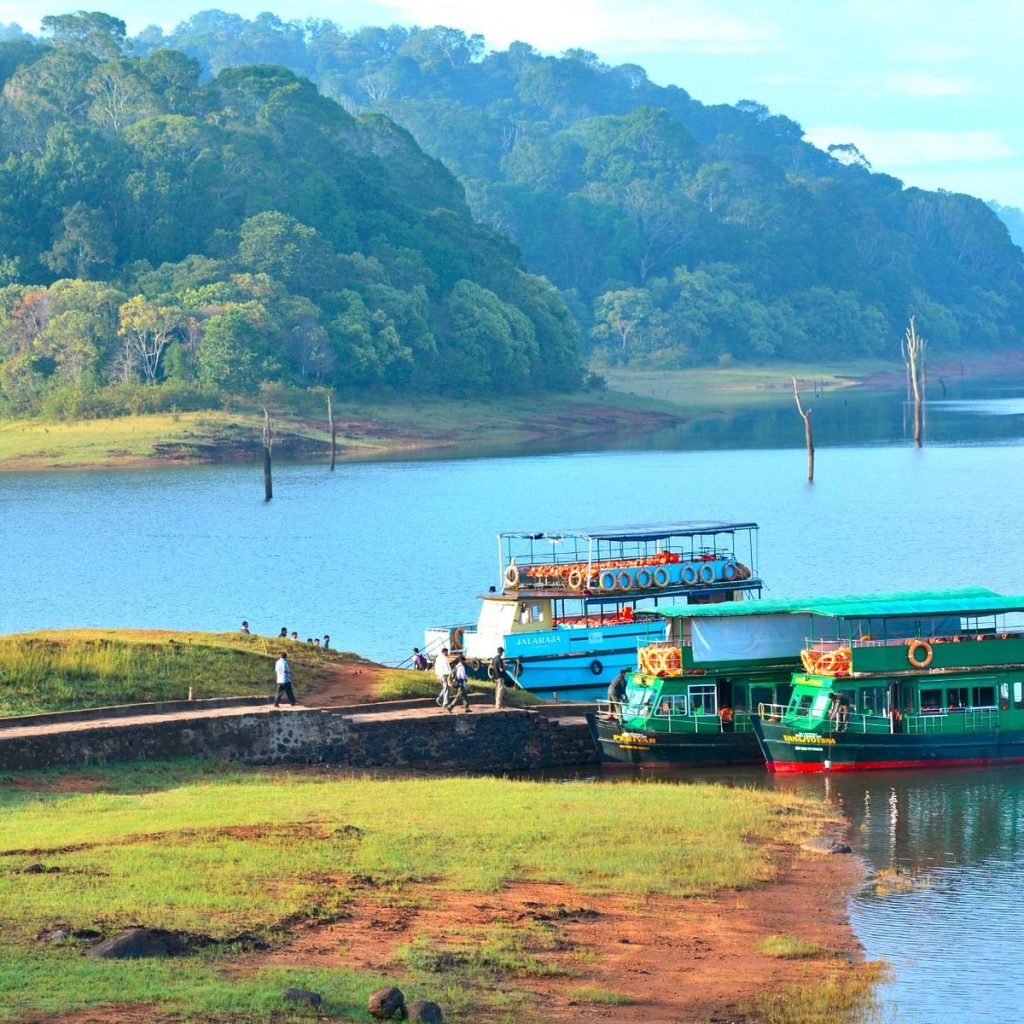
Periyar Lake
Prior to this, the local communities relied heavily on forest exploitation, illegal cinnamon bark harvesting, and poaching.
The forest department successfully turned these local poachers and woodcutters into reformed eco-guides. By giving the local tribal communities ownership over tourist programs, Periyar became a globally celebrated model for community-driven conservation.
The Historical Evolution of Tourism in Periyar
1. The Royal and Colonial Retreat Era (Early 1900s)
Long before regular travelers set foot in Periyar, it was the exclusive playground of kings and colonial rulers. In the early 20th century, the Maharaja of Travancore constructed a royal summer retreat, the Edapalayam Lake Palace, situated on a secluded island-like promontory deep inside the lake reservoir.
- This palace hosted royal hunting parties and served as a quiet, isolated escape for British Viceroys and Governor-Generals.
- Guests would spend their days observing herds of elephants and wild gaurs right from the palace windows. Today, this historic property is managed by the Kerala Tourism Development Corporation (KTDC) as the ultra-exclusive Lake Palace Resort, accessible only by a 20-minute boat ride.
The Birth of Organized Public Tourism (1950s–1970s)
After independence, the transition from royal exclusivity to public tourism began:
- The KTDC Initiative: To showcase Kerala’s unique water-based wildlife viewing, KTDC launched public boat safaris on Periyar Lake.
- Landmark premium properties like Aranya Nivas were established right at the water’s edge inside the sanctuary gates to cater to the first wave of international nature enthusiasts.
3. The Eco-Development Revolution (1996)
The defining moment for Periyar’s tourism occurred in 1996 with the launch of the India Eco-Development Project (IEDP).
- Prior to this, the local communities relied heavily on forest exploitation, illegal cinnamon bark harvesting, and poaching.
- The forest department successfully turned these local poachers and woodcutters into reformed eco-guides. By giving the local tribal communities ownership over tourist programs, Periyar became a globally celebrated model for community-driven conservation.