
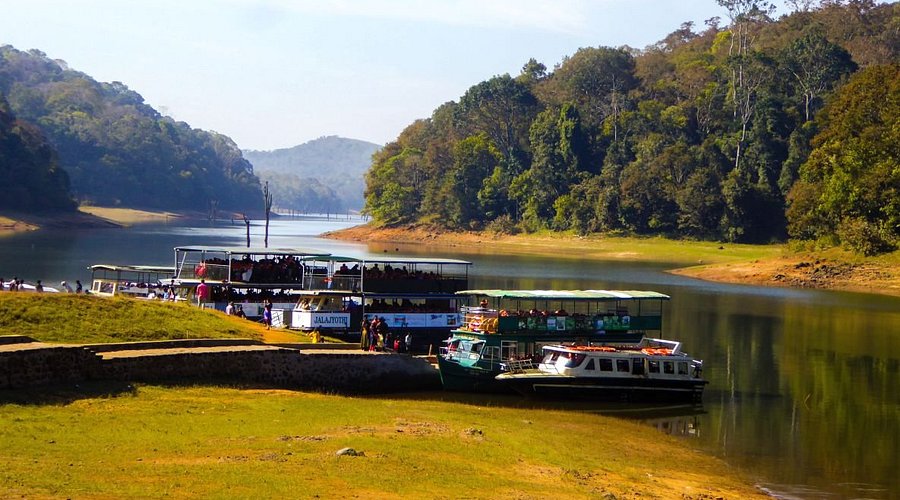
Periyar National Park
While Periyar is the heartbeat of Thekkady’s geography, its identity as a river, a lake, and a world-renowned tiger reserve carries a deep historical legacy of its own.
The Historical Heritage of Periyar
1. The Lifeline of Kerala (Ancient History)
The name “Periyar” translates literally to “Big River” in Malayalam. Stretching over 244 kilometers, it is the longest river in Kerala.
- In ancient times, it was a crucial trade route connecting the spice-rich Western Ghats to the ancient port of Muziris, where Phoenician, Egyptian, Greek, and Roman merchants traded for black pepper and cardamom.
- A massive flood in 1341 CE altered the river’s mouth, destroying Muziris but creating the natural harbor at Kochi.
2. The Great Engineering Feat (1887–1895)
The modern history of Periyar shifted from a free-flowing river to a structured sanctuary due to the construction of the Mullaperiyar Dam.
- Engineered by British officer Pennycuick, the dam was built using limestone and surki mortar (a traditional mix of burnt clay, sugar, and lime) to withstand the massive water force.
- The reservoir created by the dam flooded 26 square kilometers of low-lying forest. The iconic dead tree stumps standing out of the water today are the resilient remains of the old forest that was submerged over 130 years ago.
3. Transition to World-Class Conservation
What started as a way to control water quickly became a sanctuary for flora and fauna fleeing human encroachment.
- 1934: The visionary Maharaja of Travancore, Chithira Thirumal, designated the area around the lake as the Nellikampathy Game Reserve, stopping unchecked hunting.
- 1978: Under the Government of India’s environmental push, it officially became a core part of Project Tiger, gaining stringent legal protections against poaching and timber logging.
- 2001: Recognizing its critical elephant populations, it was officially declared part of Project Elephant (Elephant Reserve No. 10).