
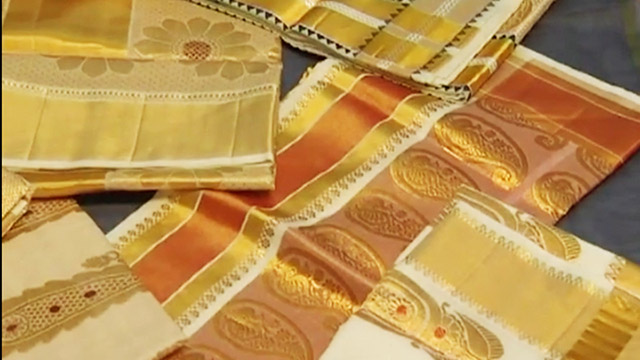
Popular Kuthampully Handloom zari Items – Kerala Kasavu Sarees
Kuthampully (located near Thiruvilwamala in Thrissur district, Kerala) is renowned for its centuries-old handloom weaving heritage. Originating over 500 years ago when the Devanga weaving community migrated from Mysore at the invitation of the Kochi Royal Family, Kuthampully handlooms hold an official Geographical Indication (GI) tag.
Known for fine cotton counts, off-white fabrics, and intricate golden/silver Kasavu (zari) borders, the craft represents a major pillar of Kerala’s traditional textile identity
1. Popular Kuthampully Handloom Items
Kuthampully Kasavu Sarees: Fine-count cotton sarees (80s to 100s count) featuring off-white bases with Kasavu borders and Jacquard/Dobby woven pallus. Modern variants include temple-border prints, hand-painted motifs, and embroidery.
Set Mundu / Mundum Neriyathum: The iconic two-piece traditional garment worn by women in Kerala, featuring matching Kasavu borders.
Single & Double Dhotis (Mundu): Fine cotton 4-meter dhotis for men with gold, silver, or copper zari borders (Kara).
Veshti & Melmundu: Traditional upper and lower body cloths woven for ceremonial and temple wear.
Tissue Sarees & Designer Wear: Blended metallic tissue sarees, handloom kids’ wear (Pattu Pavada), and pre-stitched traditional attire.
2. Infrastructure & Manufacturing Facilities
The production network in Kuthampully relies on a mix of cottage-industry setups and cooperative infrastructure:
Infrastructure FacilityEquipment & Technical SetupRole in Processing
Yarn Preparation & SizingStreet-sizing setups, charkhas, and starch immersion vats.Cotton yarn (brought mainly from Coimbatore/Salem) is wound and treated with rice starch (kanji vellam) to give it strength and a smooth finish.
Weaving UnitsTraditional pit looms, wooden frame looms, Dobby, and Jacquard attachments.Pit and frame looms allow precise manual tensioning. Jacquards create intricate extra-weft zari patterns (butis, peacocks, elephants) on borders and pallus.
Cooperative SocietiesKuthampully Handloom Industrial Cooperative Society (est. 1972) and private master weaver sheds.Provides raw yarn, zari threads, and standardized wages to member weavers, while managing centralized sales and distribution.
Post-Weaving ProcessingPrinting tables, screen frames, and calendering roller machines.Used for designer variations involving hand-block prints, screen prints, and roller smoothing for market readiness.
Quality & CertificationIndia Handloom Brand (IHB) & GI Tagging Verification.Ensures products use genuine 100% handloom cotton and tested zari, distinguishing original handloom from power-loom imitations.
3. Frequently Asked Questions (FAQs)
Q1: What makes Kuthampully handloom different from Balaramapuram or Chendamangalam handlooms?
A: While all three produce traditional Kerala off-white Kasavu wear, Kuthampully is particularly famous for its heavy, intricate Jacquard zari work on borders and pallus (featuring motifs like peacocks, swans, and temple structures). It also relies on a unique “street sizing” technique that gives the yarn a smooth, uniform finish.
Q2: How can I distinguish between genuine Kuthampully handloom and a power-loom copy?
A: Genuine handloom products feature consistent texture on both sides of the border/pallu design, a soft and breathable cotton weave without excessive artificial stiffness, and official Handloom Mark / GI Tag certificates. On power-loom knockoffs, the reverse side of the zari border often has loose, untidy threads.
Q3: How should Kuthampully Kasavu sarees and mundus be washed?
A: Dry cleaning is recommended for rich Kasavu (zari) items, especially those with real metallic threads. For light cotton dhotis and set-mundus, hand-wash gently in cold water with mild detergent or soap nuts. Avoid hard wringing, bleaching, or hanging in direct harsh sunlight to protect the zari finish.
Q4: Can tourists visit Kuthampully village to buy directly from weavers?
A: Yes. Kuthampully operates as a dedicated handloom village. Visitors can walk through the weaving streets, observe pit looms in action inside home-workshops, and purchase directly from local weaver sheds or the Cooperative Society outlet at direct producer prices.