
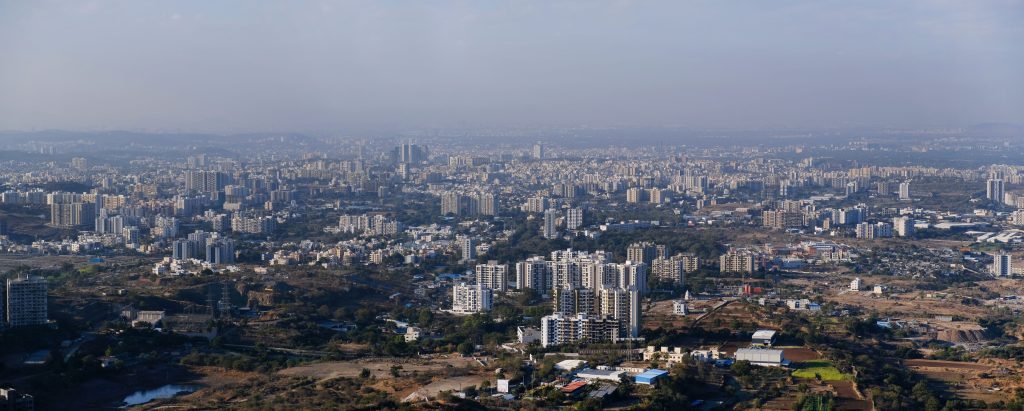
Pune
Pune, historically referred to as the “Queen of the Deccan” and the “Oxford of the East,” is the cultural soul of Maharashtra. While it is a massive IT and automobile hub today, its roots are deeply tied to the rise of the Maratha Empire, revolutionary social reforms, and India’s freedom struggle.
Chronological History
Pune’s transformation from a tiny agricultural settlement into the powerhouse of the Indian subcontinent is a thrilling historical journey.
The Ancient Origins (Punnaka)
8th Century CE
The earliest recorded history of Pune appears on Rashtrakuta dynasty copper plates, naming the agricultural settlement Punnaka (meaning a holy confluence, referencing the Mula and Mutha rivers). The rock-cut Pataleshwar Cave Temple was carved right in the heart of the modern city during this era.
The Shivaji Era & Lal Mahal
1630s – 1660s CE
Shahaji Bhosale was granted the fiefdom of Pune. He sent his wife, Jijabai, and young son, Shivaji, to reside here. Jijabai rebuilt the town after it was razed by rivals, constructing the Lal Mahal. It was here that a young Chhatrapati Shivaji Maharaj grew up and famously ambushed the Mughal general Shaista Khan in 1663.
The Peshwa Golden Age
1720 – 1818 CE
Chhatrapati Shahu appointed Bajirao I as Peshwa (Prime Minister). Bajirao shifted the administrative base of the Maratha Empire to Pune and built the majestic Shaniwar Wada. Under the Peshwas, Pune grew exponentially, functioning as the de facto political center of the Indian subcontinent.
British Rule & Social Reform
1818 – 1947 CE
Following the defeat of the Peshwas in the Third Anglo-Maratha War (1818), the British took control, turning Poona into the “monsoon capital” of the Bombay Presidency. The late 19th century saw Pune become a hotbed for social reform led by Mahatma Jyotirao Phule and Savitribai Phule (who opened India’s first indigenous school for girls here in 1848), alongside freedom fighters like Lokmanya Tilak.
Iconic Historical Sites to Visit
- Shaniwar Wada: The iconic, fortified seat of the Peshwas. Though a massive fire in 1828 destroyed the interior palaces, the towering stone walls, the massive Dilli Darwaja (Delhi Gate) studded with anti-elephant spikes, and the foundations remain.
- Sinhagad Fort: Perched on a cliff 30 kilometers outside the city, this fort was the site of the legendary 17th-century battle where Maratha commander Tanaji Malusare recaptured the fort but lost his life. Shivaji Maharaj famously lamented, “Gad aala, पण sinh gela” (“The fort is won, but the lion is gone”).
- Aga Khan Palace: Built in 1892, this beautiful Italianate-arched palace took on massive historical significance during the freedom struggle. The British imprisoned Mahatma Gandhi, Kasturba Gandhi, and Mahadev Desai here during the Quit India Movement in 1942.
- Shinde Chhatri: An architectural marvel in Wanowrie, this is the elaborately carved memorial of Mahadji Shinde, the commander-in-chief of the Maratha army under the Peshwas. It features a stunning blend of Rajasthani and Anglo-Indian design elements.