
Pushkar
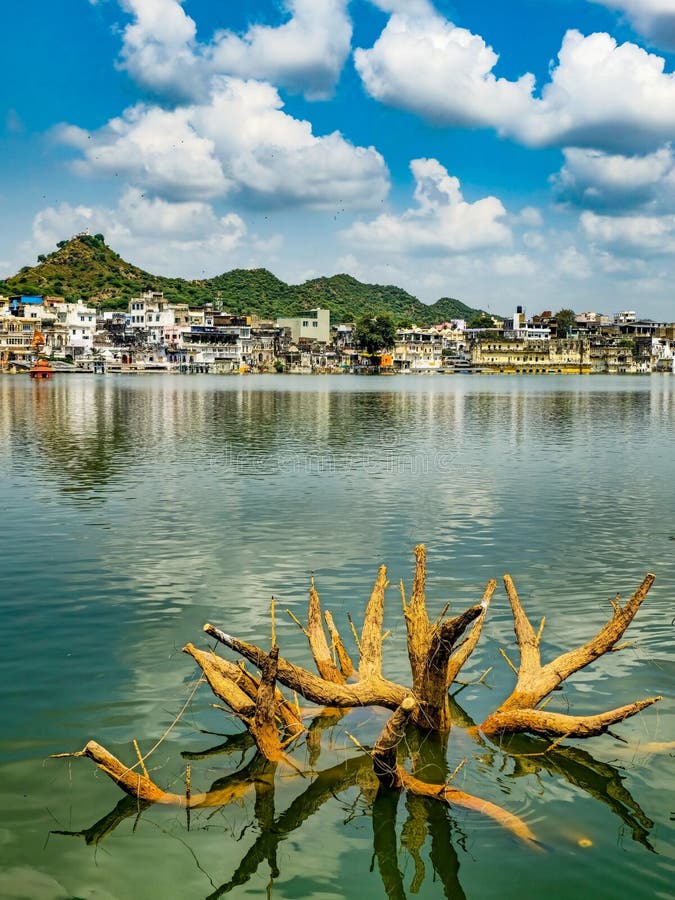
Pushkar is a sacred pilgrimage town in the Ajmer district of Rajasthan, nestled along the edge of the Thar Desert and surrounded by the Nag Pahar (Snake Mountain) range. Famous for its holy lake, ancient temples, vibrant culture, and annual camel fair, it is one of India’s most iconic travel destinations.
Overview & Key Highlights
- Spiritual Significance: Considered one of the five sacred pilgrimage sites (Panch Tirth) for Hindus. According to mythology, Pushkar was created when Lord Brahma dropped a lotus flower (pushpa) from his hand (kar) to the earth.
- Pushkar Camel Fair (Pushkar Mela): Held annually around Kartik Purnima (October–November), it is one of the world’s largest camel and livestock fairs, featuring folk dance, music, camel races, and vibrant handicraft bazaars.
- Cultural Vibe: Unlike many bustling temple towns, Pushkar has a laid-back, bohemian atmosphere popular among backpackers, offering rooftop cafes, sunset drum circles, and traditional Rajasthani street art.
- Local Delicacies: Renowned for Malpua (sweet fried pancakes dipped in syrup) from Halwai Gali, fresh Rabri, Gulkand (rose petal preserves made from local Pushkar roses), and Lassi.
Key Attractions in Pushkar
Jagatpita Shri Brahma Mandir
Dating back to the 14th century, this structure stands as one of the very few temples in the world dedicated to Lord Brahma.
- Built with marble and stone slabs, featuring a distinctive red spire (shikhara) and a hamsa (swan) motif.
- Located right near the main market area, accessible via a short flight of steps.
Pushkar Lake
The central focus of the town, surrounded by 52 bathing ghats where devotees gather for ritual dips.
- Major ghats include Brahma Ghat, Varaha Ghat, and Gau Ghat.
- Evening aarti ceremonies at Varaha Ghat offer a serene experience with oil lamps, bells, and chanting.
Shree Savitri Mata Mandir
A hilltop temple dedicated to Lord Brahma’s first wife, Goddess Savitri, positioned on Ratnagiri Hill.
- Reached via a steep trek of around 650 steps or a swift ropeway (cable car) ride.
- Offers sweeping panoramic views of Pushkar Lake, the town, and the desert landscape, especially at sunrise and sunset.
Varaha Temple(Swayam Vyakta Kshetra)
One of the oldest temples in Pushkar, dedicated to Lord Vishnu’s Varaha (boar) incarnation.
- Showcases traditional stone carvings and ancient architectural pillars.
- Represents the historic defense of Pushkar’s sacred sites over centuries.
Frequently Asked Questions (FAQs)
Q1: Where is Pushkar located?
Pushkar is located in the Ajmer district of Rajasthan, about 15 km northwest of Ajmer city and approximately 145 km southwest of Jaipur.
Q2: What is the best time to visit Pushkar?
The best time to visit is between October and March when the weather is cool and pleasant. Visiting during October or November allows you to experience the Pushkar Camel Fair and Kartik Purnima festivities.
Q3: How do I reach Pushkar?
- By Train: The nearest major railway station is Ajmer Junction (AII), located ~15 km away, which has direct connectivity to major Indian cities.
- By Road: Pushkar is connected to Ajmer by road via the Nag Pahar pass. Regular buses and taxis run between Ajmer, Jaipur, Jodhpur, and Udaipur.
- By Air: The nearest airport is Kishangarh Airport (KQH) (~45 km) for regional flights, or Jaipur International Airport (JAI) (~150 km) for domestic and international flights.
Q4: Are non-vegetarian food and alcohol allowed in Pushkar?
Due to its religious status as a sacred pilgrimage town, consumption of meat, eggs, and alcohol is strictly prohibited within the main city limits and near the lake ghats. Pure vegetarian food and street snacks are widely available.
Q5: What are the main rules/etiquette when visiting Pushkar Ghats?
- Footwear must be removed before stepping onto any of the sacred ghats surrounding the lake.
- Photography is restricted at certain bathing ghats out of respect for pilgrims taking ritual baths.
- Be cautious of informal priests or individuals offering flowers (Pooja) at the ghats and demanding large donations; buy offerings only from fixed, authorized stalls if desired.