
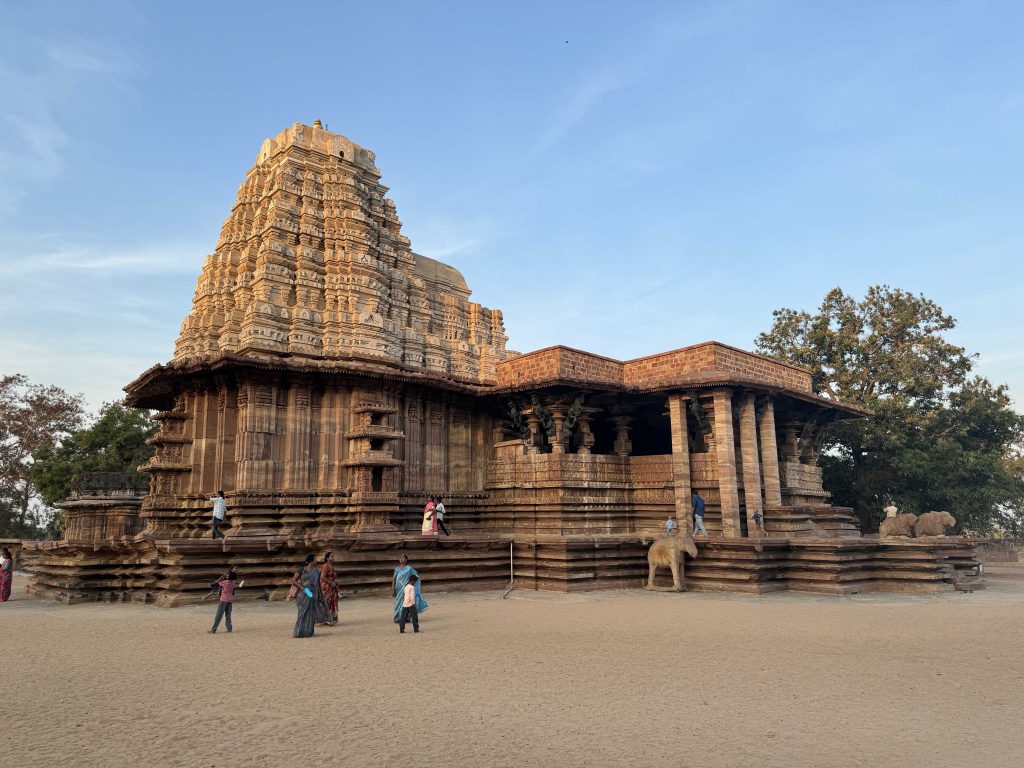
Ramappa Temple
Ramappa – Ramalingeshwara Temple, also known historically as the Rudreshwara Temple, is an architectural masterpiece located in Palampet village in the Mulugu district of Telangana, India. Standing proudly within a valley surrounded by green hills, this magnificent monument is a glorious tribute to the artistic and engineering genius of the medieval Kakatiya dynasty. It holds the distinct honor of being inscribed as a UNESCO World Heritage Site, a recognition it achieved for its outstanding architectural craftsmanship and brilliant engineering innovations.
Historical Overview
The construction of the temple dates back to 1213 CE, during the golden rule of the Kakatiya King Ganapati Deva. The temple was commissioned by the king’s military commander, Recharla Rudra (also known as Rudra Samani), who chose to dedicate the shrine to Shiva under the name Ramalingeshwara.
A unique historical attribute of this monument is its name: it is perhaps the only major ancient temple in India named after its chief architect or sculptor, Ramappa, rather than the presiding deity or the royal patron. Ramappa spent roughly 40 years executing the construction, meticulously detailing every pillar, bracket, and lintel.
The temple remained a vibrant center of worship and royal gatherings for decades until the decline of the Kakatiya Empire. Despite being subjected to subsequent regional conflicts, neglect, and a devastating major earthquake in the 17th century, the core structure remarkably survived largely intact while surrounding pavilions crumbled—a true testament to its ahead-of-its-time structural design.