
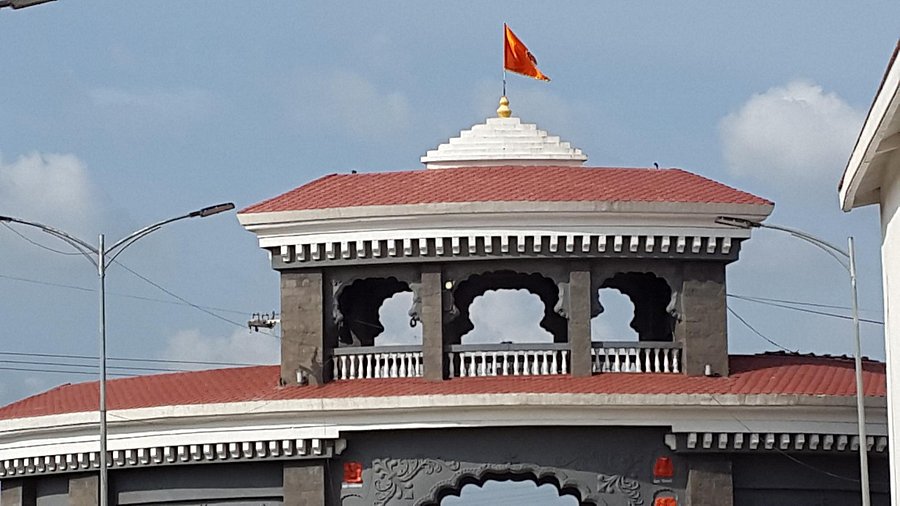
Ranjangaon
Located about 50 kilometers from Pune, Maharashtra, Ranjangaon holds deep spiritual and historical significance. It is primarily celebrated as the home of the Shree Mahaganapati Temple, which is traditionally visited as the final stop in the sacred Ashtavinayak pilgrimage circuit.
Historical & Mythological Heritage
The Divine Legend of Tripurasura
According to the Ganesha Purana, a demon named Tripurasura obtained a boon from Lord Shiva granting him three massive citadel cities made of iron, silver, and gold. The boon dictated that these cities could only be destroyed by a single arrow shot by Shiva himself.
As Tripurasura grew arrogant and began terrorizing the universe, the gods appealed to Shiva to intervene. However, Shiva initially faced setbacks in battle. Realizing he had forgotten to invoke Lord Ganesha—the remover of obstacles—before going to war, Shiva meditated at this site and chanted the Shadakshar Mantra.
Ganesha appeared in his most powerful, majestic form as Mahaganapati. Empowered by Ganesha’s blessings, Shiva launched a single arrow that destroyed Tripurasura and his citadels on the night of Tripurari Purnima. In gratitude, Lord Shiva established the Mahaganapati idol at this very location, which was originally called Manipur and later renamed Ranjangaon (meaning “the place of the delighted one”).
Royal Maratha & Peshwa Patronage
While the foundation of the original temple architecture dates back to the 9th and 10th centuries, its modern grandeur is largely due to the rulers of the Maratha Empire:
- **Madhavrao Peshwa I: The great Peshwa ruler frequently stopped here to seek blessings on his way to military campaigns. He constructed the stone Garbhagriha (sanctum sanctorum) and a hidden basement vault to protect the sacred deity from external invasions.
- Maratha Sardars: High-ranking commanders like Sardar Kibe of Indore built the grand wooden assembly hall, while Sardar Pawar and Mahadji Shinde funded the stone pathways and surrounding residential apartments (owaris) for visiting pilgrims.
Unique Architectural Features
- The Solar Alignment: The temple is uniquely designed facing east so that during Dakshinayan (the southern movement of the sun), the first rays of the morning sun fall directly onto the feet of the Mahaganapati idol.
- The Hidden Deity (Mahotkat): Local tradition holds that the original Swayambhu (self-manifested) idol—featuring 10 trunks and 20 hands—is safely preserved in the locked basement vault beneath the main sanctum to keep its immense energy hidden. The idol worshipped today in the main hall features a broad forehead with its trunk turned to the left.