
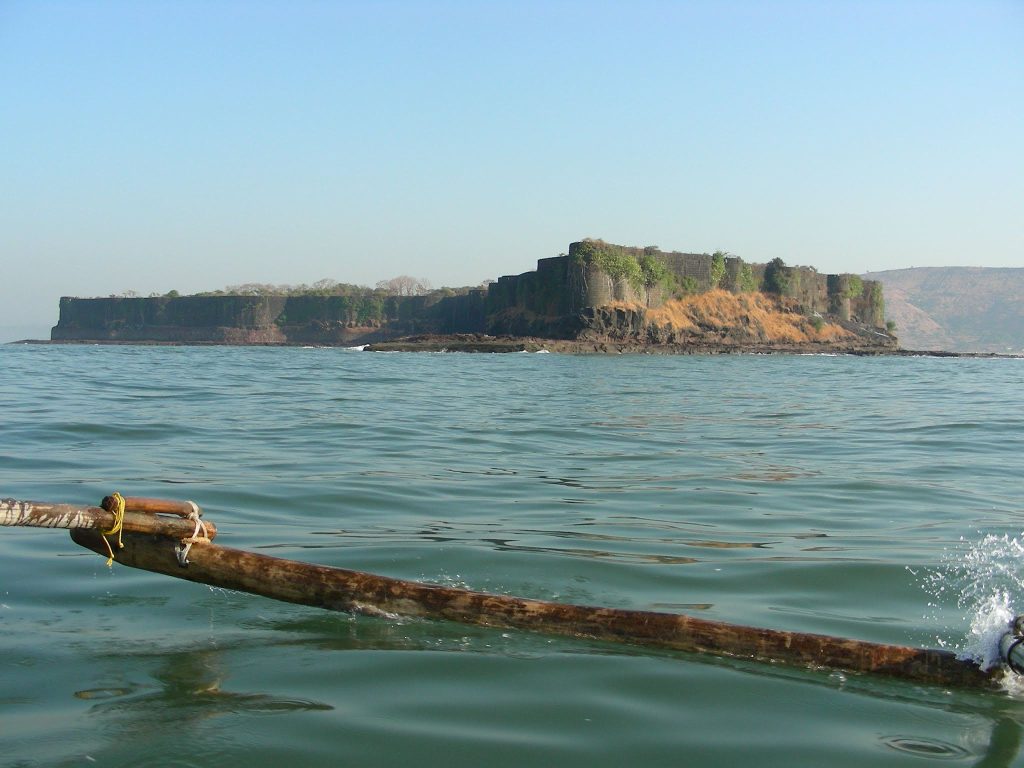
Ratnagiri
Just north of Sindhudurg lies Ratnagiri, another spectacular jewel of the Konkan coast. While Sindhudurg is largely celebrated for its maritime military might, Ratnagiri holds a uniquely diverse historical profile—ranging from ancient prehistoric rock art and Maratha conquests to British colonial exile and the birthplace of prominent freedom fighters.
Historical Background
Ratnagiri’s history is a rich blend of ancient dynasties, fierce naval battles, and deep political significance.
1. Prehistoric & Ancient Era (The Dawn of Human Life)
Ratnagiri is home to some of the oldest traces of human civilization in Western India. Archaeologists have discovered petroglyphs (prehistoric rock carvings) etched into the red laterite plateaus of Ratnagiri, dating back to the Mesolithic era (roughly 10,000 to 12,000 years ago).
Over the centuries, it was ruled by powerful empires including the Mauryas, Satavahanas, Chalukyas, and the Silaharas. During the Satavahana period, the nearby Panhalakaji caves served as a massive center for Buddhist study.
2. The Sultanates & Chhatrapati Shivaji Maharaj (16th–17th Century)
In the late medieval period, Ratnagiri became a vital trade port under the Bahmani and Bijapur Sultanates. To guard this prosperous port against growing European naval threats, the early foundations of Ratnadurg Fort (also known as Bhagwati Fort) were laid during the Bahmani era.
In 1670, Chhatrapati Shivaji Maharaj successfully captured the fort from Adil Shah of Bijapur. Recognizing its panoramic view over the Arabian Sea, he heavily fortified it, building massive sea-facing bastions and defensive towers to integrate it into the Maratha Empire’s defensive shield.
3. The Royal Exile of the King of Burma (1885)
One of Ratnagiri’s most unusual historical chapters unfolded in 1885. Following the Third Anglo-Burmese War, the British Empire dethroned King Thibaw Min, the last reigning monarch of Burma (now Myanmar).
To ensure he could not spark a rebellion back home, the British exiled King Thibaw and his family to the remote coastal town of Ratnagiri. In 1910, a beautiful three-story red laterite structure known as the Thiba Palace was built for him. He lived out the remainder of his life there under house arrest until his death in 1916.
4. Cradle of the Indian Freedom Struggle
Ratnagiri played a monumental role in India’s independence movement:
- Lokmanya Bal Gangadhar Tilak: One of the main leaders of the Indian independence movement (famous for the slogan “Swaraj is my birthright, and I shall have it!”), Tilak was born in Ratnagiri in 1856. His ancestral home, the Tilak Ali Museum, is preserved here.
- Veer Savarkar: The controversial freedom fighter Vinayak Damodar Savarkar was confined to the district by the British government from 1921 to 1937, making Ratnagiri a hotspot for socio-political reforms during those years.