
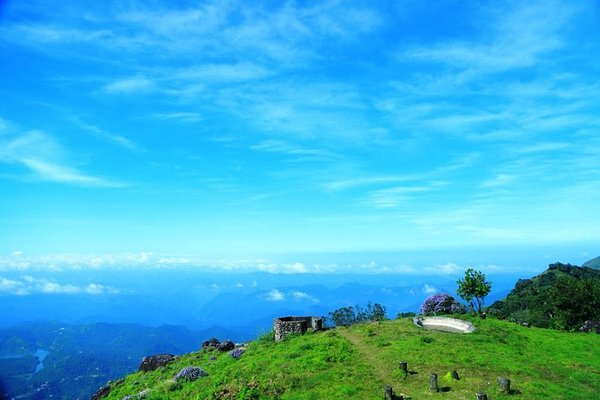
Santhanpara
Santhanpara is a visually striking, high-altitude village located in the Idukki district of Kerala, nestled along the Munnar-Kumily Highway (NH 85). Known largely for its vast spice plantations and sweeping green slopes, it forms a vital piece of the region’s agricultural heartland.
Historical Context & Background
1. The Sanctuary of the “Santhals” (Etymology)
Local lore suggests that the name Santhanpara translates broadly to “The Rock of the Santhals” or “The Rock of the Ascetics”.
- According to regional history, during early waves of migration and clearing, a group of ascetics or distinct tribal travelers (Santhals) found shelter under a massive rock formation in this area while journeying across the Western Ghats.
- The peaceful atmosphere of the location made it a permanent settlement milestone, gradually giving the entire village its name.
2. The Spice Route & Cardamom Cultivation
While Munnar town evolved primarily around tea production, the unique microclimate of Santhanpara—characterized by dense shade trees and frequent mist—proved to be a goldmine for Cardamom (Elettaria cardamomum).
Beginning in the early 20th century, the area became a cornerstone of the Cardamom Hills Reserve (CHR). Farmers from the lower valleys of Tamil Nadu and midlands of Kerala migrated here, turning Santhanpara into one of the top producers of high-quality green cardamom globally.
3. The Border Culture Synergy
Historically, Santhanpara shares a close geographical border with Bodinayakanur in Tamil Nadu. This proximity created a unique cultural fusion. For decades, traditional estate labor, spice trade networks, and weekly markets (santhas) relied on ancient mountain passes cutting through the hills. This cross-border exchange heavily influenced the local dialect, architecture, and festivals.