
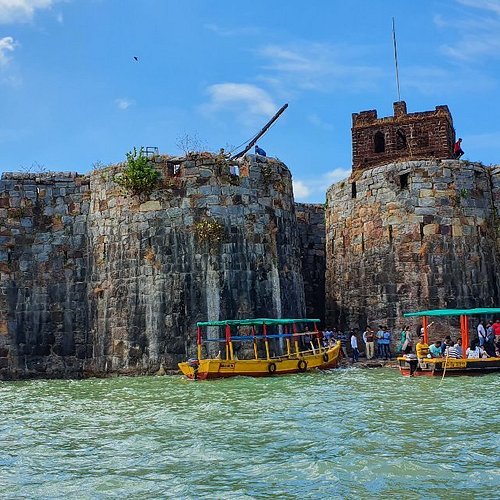
Sindhudurg
The word Sindhudurg literally translates to “Fortress of the Ocean” (derived from Sindhu meaning sea, and Durg meaning fort). Located in the southern Konkan region of Maharashtra, its history is deeply intertwined with maritime trade, naval warfare, and the visionary strategy of the Maratha Empire.
1. Ancient & Medieval Era
Long before the forts were built, the Konkan coast was referenced in ancient Indian epics. Local legends suggest that the Pandavas passed through these lush hills during their exile. Over the centuries, the region was governed by various powerful dynasties, including the Mauryas, the Nalas, the Chalukyas, and the Silaharas (who ruled from Goa and Ratnagiri). By the 16th century, the Sultanate of Bijapur held sway over the region, while European powers like the Portuguese began dominating the sea routes.
2. The Rise of the Maratha Navy (17th Century)
The turning point for Sindhudurg came with Chhatrapati Shivaji Maharaj, the founder of the Maratha Empire. Shivaji Maharaj was one of the few Indian rulers of his era to recognize the immense strategic importance of naval power, earning him the title “Father of the Indian Navy.”
To protect the Konkan coastline from foreign traders (the British, Portuguese, Dutch, and French) and to counter the undefeated African Siddis of Janjira fort, Shivaji Maharaj ordered the construction of a massive sea fortress.
3. Engineering a Sea Fortress (1664–1667)
- The Foundation: The foundation stone of the Sindhudurg Fort was laid on November 25, 1664, on a rocky islet known as Kurte Island, just off the coast of Malvan.
- The Architect: Under the supervision of chief architect Hiroji Indulkar, over 3,000 workers labored round-the-clock for three years. To ensure the foundation could withstand the relentless pounding of the Arabian Sea waves, over 4,000 pounds of molten lead were used to anchor the base stones.
- The Design: Spanning 48 acres, the fort features a 3 km (2-mile) long zigzag rampart wall that stands 30 feet high and 12 feet thick. It was built with 52 bastions equipped with cannons.
4. Later History & British Rule
After Shivaji Maharaj’s era, the fort passed through the hands of various Maratha factions (including Kanhoji Angre’s naval forces and the Peshwas). The British Royal Navy briefly captured it in 1765 and renamed it Fort Augustus, but returned it via a treaty. However, following the final defeat of the Marathas in 1818, the British assumed complete control of the Konkan region and dismantled parts of the fort’s primary defensive structures.