
Srisailam, nestled deep within the lush Nallamala Hills on the banks of the Krishna River in Andhra Pradesh,
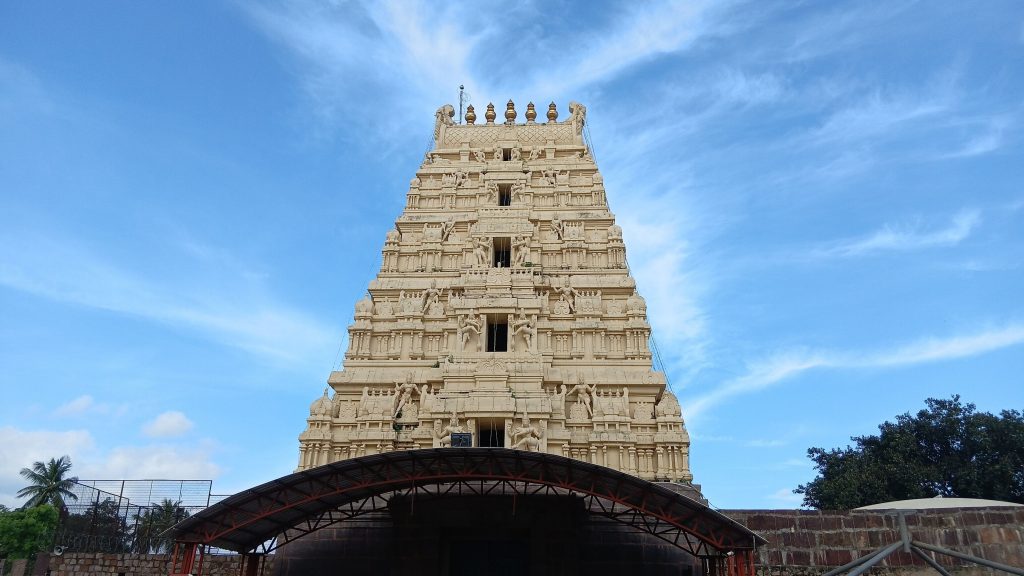
Srisailam, nestled deep within the lush Nallamala Hills on the banks of the Krishna River in Andhra Pradesh, holds a unique and incredibly sacred position in Hinduism. The Sri Bhramaramba Mallikarjuna Temple here is one of the very few temples in India that simultaneously serves as both a Jyotirlinga (one of the 12 supreme shrines of Lord Shiva) and a Shakti Peetha (one of the 18 premier shrines of Goddess Parvati).
The Historical Content
The spiritual and political history of Srisailam spans over a millennium, heavily documented in stone inscriptions, classic literature, and royal decrees.
Mythological Origins
Puranic lore states that when Lord Ganesha married before his elder brother Kartikeya (Subrahmanya), a frustrated Kartikeya left Mount Kailash and isolated himself on Mount Krauncha. To comfort him, Shiva and Parvati traveled to the region and took up an eternal abode here.
Shiva manifested as Mallikarjuna (named after the wild jasmine flowers, or Malli, used by a local princess to worship him).
Parvati manifested as Bhramaramba (taking the form of a Bhramari, or mother bee, to eliminate a powerful demon named Arunasura).
2. A Chronology of Royal Patronage
While ancient texts mention Srisailam as far back as the Mahabharata, its structural evolution is deeply tied to the major empires of the Deccan Plateau:
The Satavahanas & Ikshvakus (2nd–4th Century CE): The earliest architectural and operational footprints trace back to these ancient rulers, who recognized the site as a potent center of Shaivite faith.
The Kakatiya Dynasty (12th–14th Century CE): The Kakatiyas transformed the temple into a massive stone complex. Prominent rulers like King Prataparudra and Queen Rudrama Devi made extensive land grants and funded the construction of the inner sanctum’s features.
The Vijayanagara Empire (14th–16th Century CE): King Harihara Raya II built the prominent Mukha Mandapam (pillared assembly hall) in 1405 CE. The legendary Emperor Sri Krishnadevaraya also visited Srisailam after successful military campaigns, commissioning the majestic Rajagopuram (main entrance tower) and gifting gold to the deity.
Chhatrapati Shivaji Maharaj (1677 CE): In the late 17th century, the Maratha ruler visited Srisailam to seek the blessings of Goddess Bhramaramba. He built a grand northern gateway gopuram, known to this day as the Shivaji Gopuram, and a rest house for pilgrims.