
study tour across India & tour itinerary and accomodations
A study tour across India balances educational value, historical/cultural immersion, institutional visits, and safety. Below is a complete guide covering popular study tour itineraries, student-friendly accommodation options, infrastructure logistics, and essential FAQs.
1. Popular Educational Study Tour Itineraries
Option A: North India – History, Governance & Science (7 Days / 6 Nights)
Best For: High school and university students focusing on History, Political Science, Architecture, and STEM.
Route: Delhi → Agra → Jaipur.
Overview:
Days 1–3 (Delhi): Historical tours (Qutub Minar, Red Fort, Humayun’s Tomb), government infrastructure (Parliament House, Rashtrapati Bhavan Museum), and science exploration at the National Science Centre.
Day 4 (Agra): Study Mughal architecture at the Taj Mahal, Agra Fort, and Fatehpur Sikri.
Days 5–6 (Jaipur): Explore astronomical instruments at Jantar Mantar (UNESCO site), study Rajput fort architecture (Amber Fort), and visit a local textile/handicraft manufacturing unit.
Day 7 (Return): Wrap-up session and departure from Delhi.
Option B: South India – Technology, Ecology & Culture (8 Days / 7 Nights)
Best For: Engineering, Environmental Science, Botany, and Business Management students.
Route: Bengaluru → Mysuru → Wayanad/Munnar → Kochi.
Overview:
Days 1–2 (Bengaluru): Industrial/Tech visits (Visvesvaraya Industrial & Technological Museum, IISc/tech parks), HAL Aerospace Museum, and Lalbagh Botanical Garden.
Days 3–4 (Mysuru): Mysuru Palace, Silk Weaving Factory, and environmental study at Ranganathittu Bird Sanctuary.
Days 5–6 (Western Ghats – Wayanad or Munnar): Tea/spice plantation ecology, biodiversity research, and sustainable agriculture studies.
Days 7–8 (Kochi): Study maritime trade at Cochin Port/Shipyard, Fort Kochi heritage walk, and departure.
2. Student Accommodation Options Across India
When housing large student groups, properties must prioritize safety, hygiene, capacity, and group dining space:
Accommodation TypeCapacity & SetupKey FeaturesBest Used For
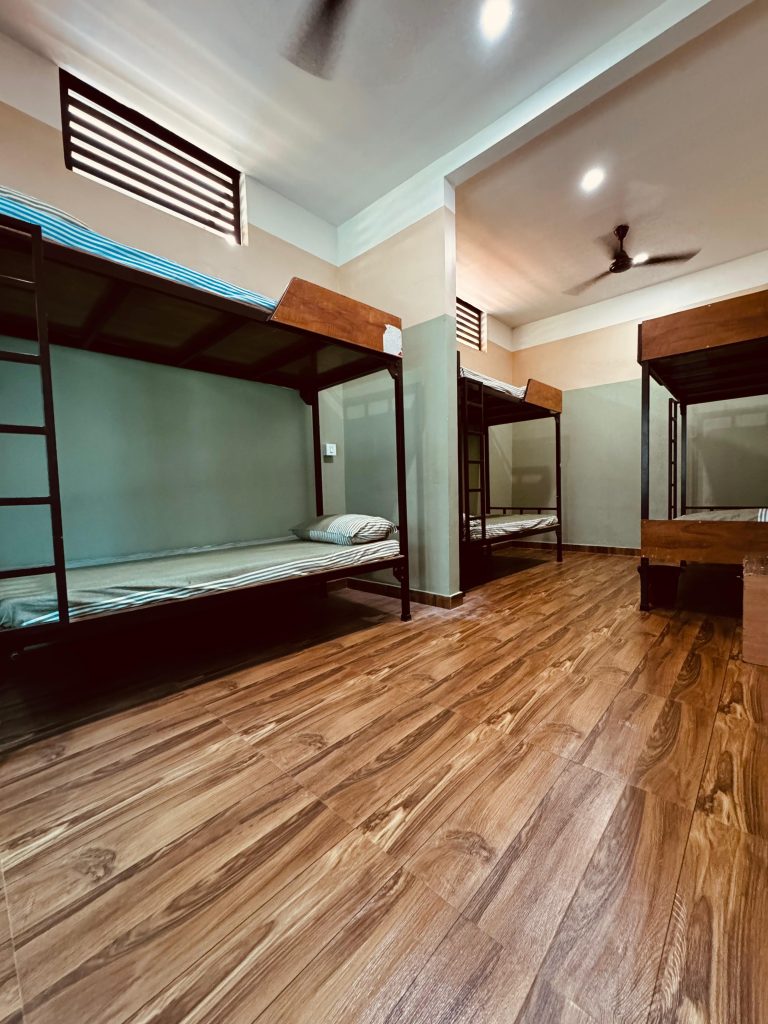
Youth Hostels / YWCA / YMCAQuadruple or dormitory sharing with bunk beds.Multi-bed dorms, strict security, common assembly halls, affordable pricing.Budget student trips & large school batches.
3-Star & Budget Chain HotelsTwin or triple sharing (extra bed setup).En-suite bathrooms, buffet dining halls, 24/7 front desk, bus parking.College/University study tours requiring higher comfort.
Institutional / University Guest HousesStandard double or triple rooms.Gated campus security, proximity to academic halls, affordable mess food.Academic conferences, campus immersion programs.
3. Infrastructure & Logistics Facilities
Managing a study tour smoothly requires robust transportation and safety infrastructure:
Group Transport Fleet:
Coaches: 35 to 49-seater air-conditioned luxury buses equipped with PA systems (for faculty/tour guide lectures), GPS tracking, and speed governors.
Rail Transit: Indian Railways offers group reservations and special train coaches for educational institutions (via IRCTC group booking). High-speed Vande Bharat trains are ideal for day transfers.
Safety & Security Protocols:
Dedicated female and male faculty/chaperone room allocations on separate floors.
Medical kits on coaches and pre-mapped emergency healthcare centers along the travel route.
Gated accommodations with 24/7 CCTV surveillance.
Group Meals & Catering:
Pre-arranged buffet meals (Breakfast, Lunch, Dinner) in private hotel dining sections or verified highway plazas.
Clean drinking water (RO/packaged) supplied on buses during long road journeys.
4. Frequently Asked Questions (FAQs)
Q1. How far in advance should an educational study tour be planned?
It is best to plan 3 to 5 months in advance. This provides sufficient time to secure institutional permissions (NOCs), arrange IRCTC railway group concessions, book site/museum entry passes, and finalize hotel room blocks.
Q2. Are institutional concession rates available for travel and monument entries?
Yes.
Monuments: Archeological Survey of India (ASI) sites and science centers often grant discounted or free entry for student groups with an official letter head from the school or college head.
Railways: IRCTC provides student concession schemes for educational tours when booked through official channels.
Q3. How are special dietary needs or food allergies handled for large student groups?
All meals are arranged in a buffet format through pre-approved vendors. Faculties can submit a list of dietary requirements (e.g., pure vegetarian, Jain food, specific food allergies) to the tour manager prior to departure so the kitchen staff can prepare separate dishes.
Q4. What documents do students need to carry during the tour?
Every student must carry:
Valid School/College Photo ID Card (Mandatory for entry tickets & railway verification).
Government ID (Aadhaar Card, Passport, or Voter ID).
Parental Consent Form signed by guardians.
Copy of personal emergency medical details/prescriptions.
Q5. What is the ideal teacher-to-student ratio for supervision?
A standard safety ratio is 1 faculty member for every 10 to 15 students. It is advisable to have at least one male and one female faculty chaperone for mixed-gender student groups.