
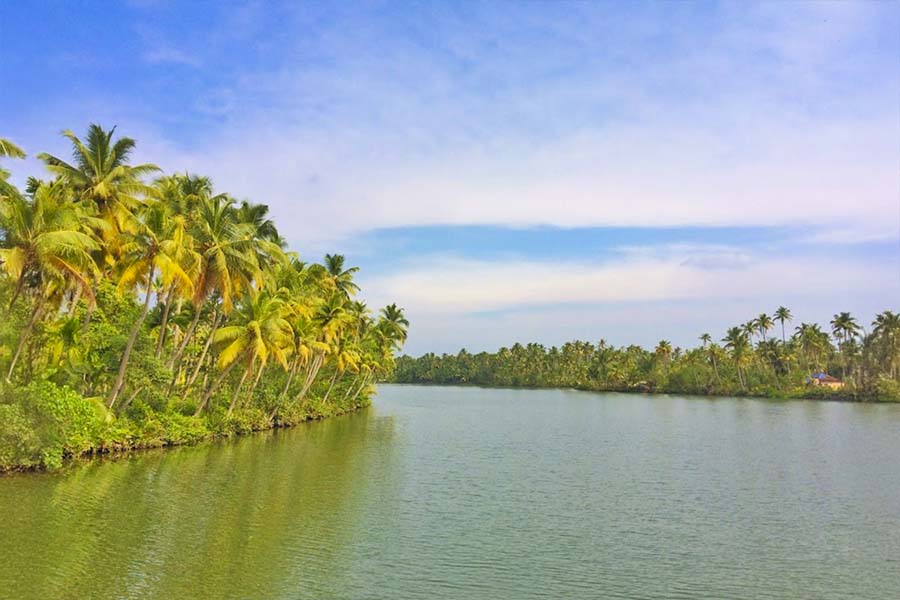
Tranquil Backwaters of Kerala
The “Tranquil Backwaters of Kerala”—often described as a labyrinthine paradise of palm-fringed canals, quiet lagoons, and serene inland lakes—are celebrated worldwide as the ultimate destination for slow travel and relaxation. While they are famous today for peaceful luxury houseboat cruises, this massive ecosystem possesses a rich historical legacy shaped by royal engineering, ancient global trade, and unique local customs.
Historical Content & Origins
1. The Ancient Trade Highways
Long before they became a paradise for travelers, the backwaters were the commercial veins of ancient and medieval Kerala. Kingdoms like Venad and Kochi depended entirely on these water highways to transport high-value cargo like black pepper, cardamom, and coir (coconut fiber) from deep inland to prominent trading ports like Muziris and Kollam. For centuries, these waterways connected rural farmers directly to global maritime spice traders from Rome, Arabia, and China.
2. Evolution of the Kettuvallam
The iconic houseboats seen today evolved directly from Kettuvallams—traditional cargo boats.
- The Craft: Remarkably, traditional Kettuvallams are constructed without using a single nail. Planks of Anjili (wild jackwood) are sewn tightly together using durable coir ropes and sealed with a caustic black resin boiled from cashew nut shells.
- The Shift: Originally built to transport up to 30 tons of rice and spices across long distances, the expansion of modern road networks in the late 20th century rendered cargo barges obsolete. In the early 1990s, visionary local boatmen retrofitted these massive wooden hulls with thatched roofs, sleeping quarters, and eco-friendly amenities, giving birth to modern houseboat tourism.
3. The Legacy of Waterfront Warfare
The spectacular annual snake boat races (Chundan Vallams) held in regions like Alleppey have deep military roots. Around 400 years ago, rival feudal kings of the backwater regions (such as Chembakassery and Kayamkulam) commissioned these ultra-sleek, 100-foot-long wooden vessels to transport soliders swiftly through narrow channels during naval skirmishes. The raised prow, mimicking a hooded cobra, was engineered for tactical speed and intimidation.
The Kerala backwaters are a magnificent 900 km labyrinth of brackish lagoons, lakes, and canals running parallel to the Arabian Sea coast. Formed naturally by the action of shore currents and wave barriers blocking the mouths of rivers flowing down from the Western Ghats, this delicate ecosystem is a living piece of history.