
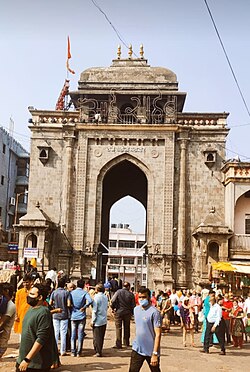
Tuljapur

Tuljapur

The historical and spiritual legacy of Tuljapur, located on the Yamunachala Hill (Balaghat mountain range) in the Dharashiv district of Maharashtra, is deeply intertwined with the ancient temple of Goddess Tulja Bhavani.

As one of India’s 51 sacred Shakti Peethas and a cornerstone of Maratha history, Tuljapur carries centuries of cultural significance.

Historical Highlights of Tuljapur

​1. Architectural Foundations (12th Century)

​While ancient texts suggest the area has been a spiritual hub for thousands of years, historical records attribute the construction of the main stone temple to Mahamandaleshwara Māradadeva of the Kadamba dynasty in the 12th century CE. It was built using the Hemadpanti style of architecture, characterized by interlocking black stones without the use of mortar. Later expansions by the Yadavas and Marathas blended Deccan and Maratha architectural styles.

2. The Patron Deity of the Maratha Empire

​Tuljapur’s historical importance peaked during the 17th century due to its close ties with the Bhonsle dynasty. Goddess Tulja Bhavani is revered as the Kuldevi (clan deity) of the Marathas.

According to legendary historical lore, Chhatrapati Shivaji Maharaj was an ardent devotee who regularly sought blessings here before launching military campaigns. It is widely believed that the Goddess herself bestowed upon him the divine ‘Bhavani Talwar’ (Bhavani Sword) to aid his mission of establishing Hindavi Swarajya.

3. Destruction and Resilience (1659–1661)

​Because of its strategic and cultural value to the Marathas, Tuljapur became a target for rival powers. In 1659, Afzal Khan, a general from the Bijapur Sultanate, desecrated the temple and damaged parts of the complex to provoke Shivaji Maharaj. However, by 1661, the sanctuary was completely restored, and the idol of the Goddess was ceremonially re-enthroned, cementing Tuljapur as a symbol of Maratha resilience.

4. Evolution into Modern Civic Administration (1854–Present)

​In 1854, the British administration established the Tuljapur Municipal Council, making it one of the earliest official civic administrations in the region. This shifted the town from a purely feudal religious site to a planned civic township. Following India’s independence and the reorganization of states in 1960, Tuljapur officially integrated into Maharashtra, transitioning into a highly visited tourism and spiritual cluster.

FAQs

Where is Tuljapur located and how do I reach it?
Tuljapur is located in the Dharashiv (formerly Osmanabad) district of Maharashtra, India. It is approximately 45 km from Solapur, which is the nearest major railway junction. The closest domestic airport is in Solapur, while larger commercial airports are located in Pune and Hyderabad. It is exceptionally well-connected by Maharashtra State Road Transport (MSRT) buses.
What is unique about the idol of Goddess Tulja Bhavani?
The 3-foot-tall idol is carved out of non-perishable Shaligram (black granite) stone. Unlike static idols in most Hindu temples, the idol here is dynamic (Chala Murti). It is not permanently fixed to the base; it is mindfully moved from its throne thrice a year for a holy circumambulation (Pradakshina). The Goddess is depicted with eight arms holding various weapons, standing over the vanquished buffalo-demon Mahishasur.
What are the main points of interest inside the temple complex?
Aside from the main sanctum, visitors frequently stop at: ​Kallol Teerth & Gomukh Teerth: Sacred water tanks where pilgrims take ritual dips before entering. The Main Gates: The Sardar Nimbalkar Gate (main entry), along with the Raja Shahaji Gate and Rajmata Jijau Gate (named after Shivaji Maharaj's parents). The Silver Bed (Palang): A special silver cot where the Goddess is symbolically laid to rest during night rituals.
When is the best time to visit the Tulja Bhavani Temple?
The ideal time to visit Tuljapur is between October and March when the weather is pleasant. However, the most vibrant and crowded time is during the Navratri festival (September/October), when the entire temple complex is beautifully illuminated, hosting massive cultural processions.
What are the daily Darshan and Aarti timings at Tuljapur?
The temple generally opens early in the morning around 4:00 AM and closes at night around 10:00 PM. The daily rituals feature four main Aartis that draw massive crowds: Kakad Aarti (Dawn prayer) Madhyanha Aarti (Noon prayer) ​Sandhya Aarti (Evening prayer) ​Shej Aarti (Night rest prayer)
Are there accommodation facilities for tourists in Tuljapur?
Yes. The temple trust operates highly affordable lodging complexes known as Bhakta Niwas for large groups of pilgrims. Additionally, Tuljapur has seen a massive growth in its tourism cluster over the last decade, offering various budget-friendly private hotels and lodges within walking distance of the main temple gates.
Create a scannable 2-day travel itinerary for a family visiting Tuljapur, focusing on historical spots and temple timings?
This family-friendly, 2-day travel itinerary balances early-morning temple rituals with explorations of the town's legendary Maratha and spiritual history. ​ Day 1: The Spiritual Heart & Maratha Legacy ​Shri Tuljabhavani Temple The day begins at the iconic Shri Tuljabhavani Temple, the centerpiece of Tuljapur’s history and spiritual devotion. Arriving early lets your family beat the heaviest midday crowds and experience the temple's legendary 12th-century Hemadpanti architecture in the softer morning light. ​Morning Ritual (4:30 AM – 6:30 AM): Witness the powerful Kakad Aarti (dawn prayer) and the Charantirtha (holy washing of the deity's feet). ​Historical Elements: Walk through the massive historic entrance gates—the Raja Shahaji Mahadwar and Rajmata Jijau Mahadwar—named in honor of Chhatrapati Shivaji Maharaj's parents. ​Sacred Tanks: Stop by the Kallol Teerth and Gomukh Teerth, ancient water tanks built directly into the stone complex where pilgrims historically gathered prior to prayer. ​Bharati Buwa Math Located nearby, the Bharati Buwa Math is an essential historical monastery tied tightly to Maratha lore. This site offers a peaceful environment for families to rest and learn about the local heritage after a busy morning. ​The Shivaji Connection: According to historical accounts, this math is dedicated to a sage whom Chhatrapati Shivaji Maharaj regularly consulted before setting off on regional military operations. ​What to See: Look for ancient artifacts and historic structures that highlight the close link between the monastery's ascetics and the royal Maratha court. ​Shri Tuljabhavani Temple (Evening Rest Ritual) ​Return to the main temple complex in the evening to experience its final historic ritual. The atmosphere shifts to a quieter, deeply traditional setting that is highly memorable for families. ​Night Ritual (8:00 PM – 9:30 PM): Attend the Shej Aarti (night rest ritual). During this time, the Goddess is symbolically invited to rest on a historic, beautifully crafted silver bed (Palang). ​Day 2: Panoramic Views & Ancient Footprints ​Ghatshil Temple Perched on a rugged hill on the outskirts of the town, Ghatshil Temple is a beautiful rock-hewn structure offering expansive, panoramic views of the entire Balaghat mountain range. It provides a perfect, breezy morning location for family photography and storytelling. ​Mythological History: Local tradition holds that Lord Rama passed through these rocky hills while searching for Goddess Sita, and stood on this very spot to receive directions from Goddess Bhavani. ​What to See: Explore the ancient open-air stone platforms and enjoy the elevated vantage point showcasing the geographic landscape that helped defend the region for centuries. ​Chintamani Mahadwar & Old Town Exploration ​Spend your final afternoon winding through the historic bazaars and lanes neighboring the temple district to pick up traditional keepsakes. ​The Chintamani Stone: Visit the historic Chintamani site near the outer walls, where a sacred stone is traditionally believed by locals to help guide choices by tilting subtly to indicate answers. ​Local Shopping: Walk down the old market paths together to buy local Khanda (traditional textiles), authentic brass items, and regional sweets like Puran Poli mix or Pedas. ​💡 Quick Tips for Families ​Dress Code: Traditional, modest attire is preferred for both adults and children when entering any active prayer halls. ​Footwear Management: You will need to leave shoes at designated counters outside the main gates; bringing along wet wipes or extra socks can make walking across the stone courtyards much more comfortable for young children. ​Passes: For families traveling with seniors or young kids, look into the paid VIP Darshan passes available through the official temple trust website to drastically cut down on line waiting times.

Price From : ₹4500/-

Address

Near Avaloormadam temple, thathampally po, pin code 688013, Alleppey, Kerala, India