
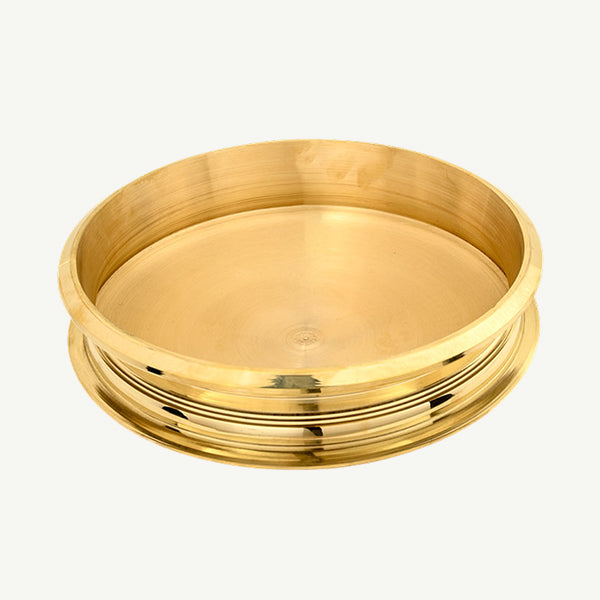
Uruli (Uruly) – Home Decor
An Uruli (also spelled Urli or Uruly) is a traditional, wide-mouthed, shallow vessel deeply rooted in South Indian heritage. Once the backbone of large-scale traditional cooking and Ayurvedic medicine preparation, it has evolved into one of Kerala’s most popular home decor pieces.
1. Etymology & Historical Context
Etymology: The word Uruli comes from the Malayalam word “Urunda” (meaning round/spherical), referring to its wide, circular basin shape.
Ancient Cookware & Feasts: Historically, large bronze Urulis were indispensable in royal kitchens (Oottupura), temples, and traditional ancestral homes (Tharavads). Because bronze conducts heat evenly, it was used to prepare massive quantities of rice, curries, and sweet Payasam during festivals.
Ayurvedic Significance: In traditional Ayurveda, herbal decoctions (Kashayams) and medicated oils (Thailams) were prepared exclusively in heavy bell-metal Urulis. The copper-tin bronze alloy was believed to impart subtle medicinal benefits while remaining non-reactive to herbs.
Ritualistic Role: An Uruli filled with raw rice, golden cucumber, flowers, and coins forms the central base of the Vishukkanani arrangement during the Kerala New Year (Vishu).
2. Infrastructure, Crafting & Materials
The epicenter of traditional Uruli making is Mannar (known as the “Bell Metal Town of Kerala” in Alappuzha district), along with artisanal clusters in Thrissur.
Core Materials
Bronze / Bell Metal (Odu / Kansa): An alloy composed primarily of copper (~78%) and tin (~22%). Authentic bronze Urulis have a sonorous ring when struck and age into a rich patina.
Brass (Pithala): A bright golden copper-zinc alloy commonly used for decorative indoor Urulis due to its shine and lighter weight.
Terracotta / Clay: Budget-friendly, rustic alternatives used for indoor gardens and contemporary minimalist spaces.
Key Design & Structural Features
Wide Shallow Basin: Engineered for rapid evaporation when cooking, and maximum surface area when displaying floating flowers.
Thick Rolled Rim: Provides structural integrity to prevent warping under high heat or weight.
Side Ring Handles (Kanni): Heavy cast handles riveted or welded on opposing sides for carrying heavy liquids or mounting chains for hanging Urulis.
Embellished Borders: Modern decor Urulis frequently feature relief hand-cast motifs such as Mayil (peacocks), Anayum (elephants), or lotus petal rims along the edges.
Functional Evolution: In traditional architecture, large water-filled Urulis were placed in central courtyards (Nalukettu) to naturally cool indoor air through evaporation. Today, they serve a similar role in luxury resorts, living rooms, and entrance foyers as symbols of hospitality and tranquility.
3. Frequently Asked Questions (FAQs)
Q1: How do I style an Uruli for home decor?
Fill the vessel with fresh, clean water up to 80% capacity.
Float fresh natural flower petals—such as yellow marigolds, red roses, jasmine, or lotus blossoms—on the surface.
Add floating tea-light candles for evening lighting, or a few drops of natural essential oils (or camphor) to disperse a soft fragrance.
Q2: What is the best Vastu direction to place a decorative Uruli?
According to Vastu Shastra principles, water represents flow and prosperity:
Northeast (Ishan Kon): The ideal placement for water elements to harmonize energy and attract prosperity.
Main Entrance / Foyer: Facing the front door to welcome guests, absorb negative energies, and foster a calm ambiance.
Q3: How do I prevent water from turning slimy or tarnishing the metal?
Change Water Regularly: Replace the water every 2–3 days to prevent algae buildup, mosquito breeding, or staining.
Avoid Stagnant Flowers: Remove decaying petals promptly.
Cleaning Metal: Clean brass/bronze Urulis using a mild dish soap or a traditional paste made of Pitambari powder or tamarind paste and salt. Wipe completely dry after rinsing.
Q4: What is the difference between a cooking Uruli and a decor Uruli?
Cooking/Ayurvedic Uruli: Made of heavy, unlacquered pure bronze (Kansa), thick-bottomed to withstand open flame, and plain without superficial lacquers.
Decor Uruli: Made of lighter brass or bronze, often coated with a clear protective lacquer to prevent tarnishing, and frequently embellished with intricate carvings, pedestals, or hanging chains.