
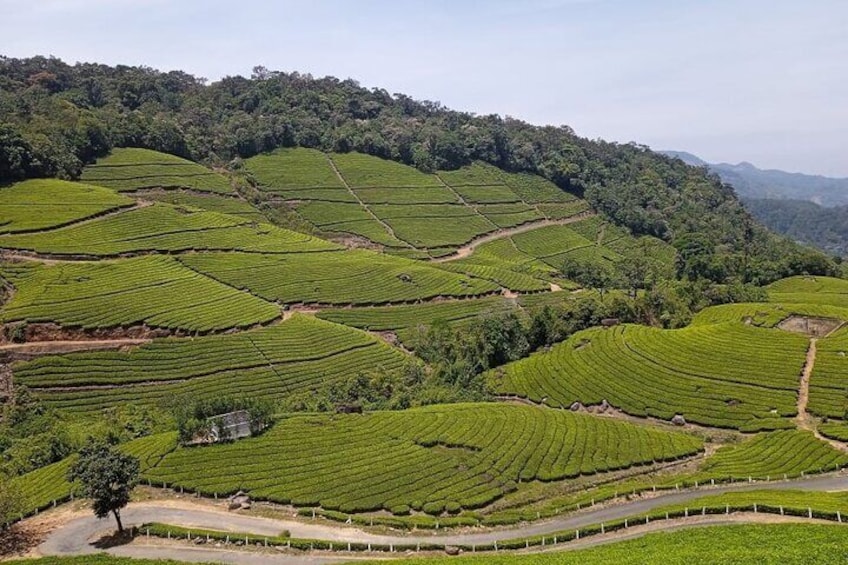
Vandanmedu
Vandanmedu (often spelled Vandenmedu) is a sprawling hill village located in the Idukki district of Kerala, along the Munnar-Thekkady route. Positioned on the high-altitude ranges of the Western Ghats, it stands globally renowned as one of the world’s largest auction centers and primary production hubs for premium green cardamom.
Historical Context & Background
1. The High Range Capital of Cardamom (Etymology)
The name Vandanmedu is derived from local linguistic roots, where Medu means a hillock or elevated high ground, and Vandan historically ties back to local rulers or travelers who marked it as a primary resting station.
As part of the historic Cardamom Hills Reserve (CHR) established under the Travancore Kingdom, Vandanmedu evolved from an impenetrable evergreen rainforest into a highly organized agricultural colony. The unique climatic conditions here—constant humidity, elevations between 3,000 to 4,000 feet, and filtered sunlight through towering forest canopies—offered the absolute perfect biological breeding ground for the “Queen of Spices.”
2. The Colonial Lease Era
During the late 19th and early 20th centuries, British planters recognized the massive economic potential of the native cardamom growing wildly in the undergrowth of these hills. While tea took over the cleared slopes of Munnar, Vandanmedu was systematically organized into massive spice estates. British companies established trade rules, sorting standards, and initial processing units (bhattis) that laid the groundwork for today’s massive export markets.
3. The Modern Auction Identity
Following Indian independence, the trade infrastructure shifted entirely into domestic and corporate ownership. Vandanmedu became the geographical headquarters for major spice trade associations, including the Cardamom Planters’ Association (CPA). The town pioneered formal, competitive bidding systems that set the daily international benchmark prices for cardamom, drawing spice traders and merchants from across the Middle East, Europe, and Asia.