
Vijayawada
Historical Context of Vijayawada
Vijayawada’s history spans over two millennia, evolving from an ancient religious sanctuary into a powerful political and trade center.
Mythological Roots: According to legend, Arjuna performed deep penance on the Indrakeeladri Hill. Impressed by his devotion, Lord Shiva granted him the Pasupatastra (a divine weapon). The city was named Vijayawada (Place of Victory) to mark this triumph. Another legend attributes the name to Goddess Kanaka Durga, who rested here after defeating the demon Mahishasura.
Ancient Rock-Cut Architecture: The region boasts incredible rock-cut architecture dating back to the 4th–5th centuries AD. The Mogalarajapuram Caves and the nearby Undavalli Caves (across the river) showcase early Hindu cave architecture, heavily influenced by the Vishnukundina dynasty.
Dynastic Rule: Vijayawada was a key strategic point for several prominent empires. It flourished under the Eastern Chalukyas, the Cholas, and later became an integrated trade outpost for the Kakatiya kingdom and the Vijayanagara Empire.
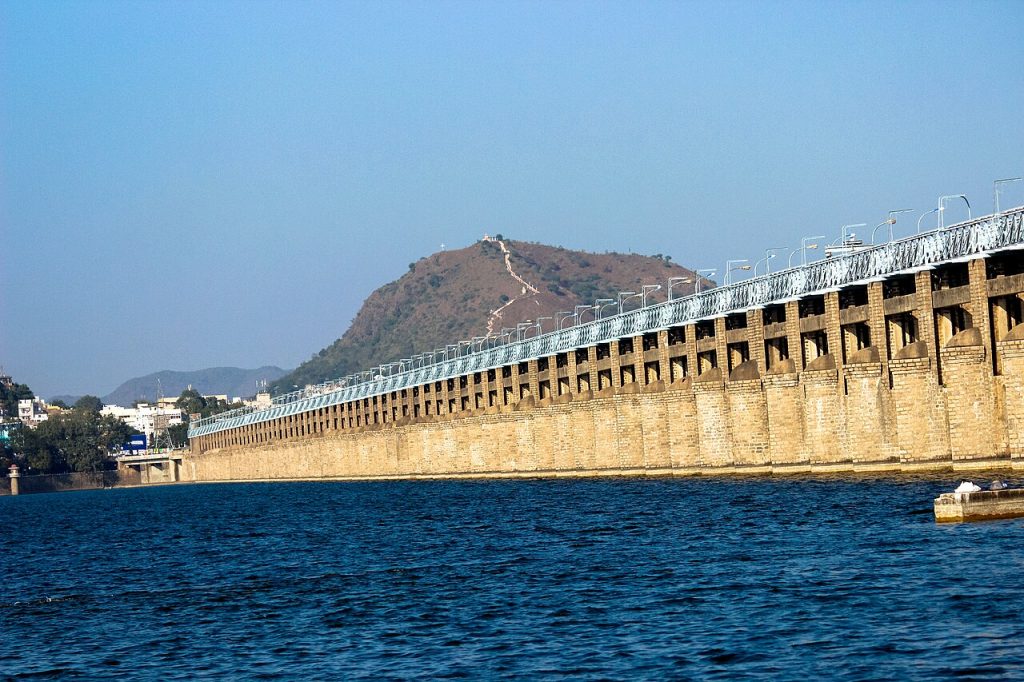
The British Era & Industrialization: In the 19th century, the British recognized its potential as a geographical gateway connecting North and South India. The construction of the Prakasam Barrage across the Krishna River (engineered initially by Sir Arthur Cotton) transformed the region into a fertile agricultural bowl, paving the way for its growth into the major trading hub it is today.