
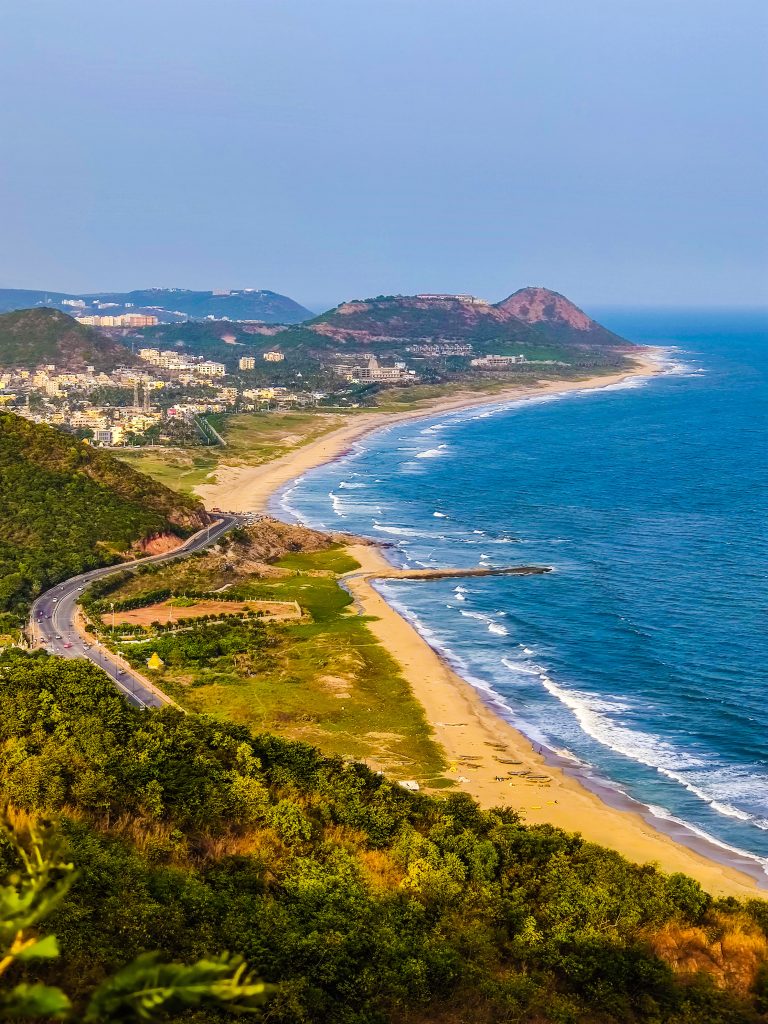
Visakhapatnam
Visakhapatnam, affectionately called Vizag, is a breathtaking coastal city nestled between the walls of the Eastern Ghats and the dynamic waves of the Bay of Bengal. Known as the “City of Destiny” and the “Jewel of the East Coast,” it blends a deep ancient heritage with modern maritime significance.
🏛️ The History of Visakhapatnam
Ancient Beginnings & Buddhist Era (6th Century BCE – 3rd Century CE)
Vizag’s history stretches back over 2,500 years. It was originally a core part of the ancient Kalinga Empire.
Following the legendary, bloody Kalinga War (~261 BCE), King Ashoka renounced violence and embraced Buddhism, transforming the region into a major hub for the faith.
Beautiful hilltop monastic ruins like Thotlakonda, Bavikonda, and Bojjannakonda still stand today as silent witnesses to this spiritual era.
Medieval Dynasties (7th Century – 16th Century CE)
Control over this highly valued coastal strip shifted over the centuries through some of India’s most powerful empires:
The Chalukyas & Cholas: In the 11th century, Chola King Kulottunga I heavily developed the city as a fortified trade town. Around this era, the legendary Varaha Lakshmi Narasimha Temple at Simhachalam was constructed and expanded.
The Gajapatis & Vijayanagara Empire: The territory later transitioned to the Gajapati Kingdom of Odisha, until the legendary emperor Sri Krishnadevaraya of the Vijayanagara Empire conquered it in the early 15th century, leaving behind a famous victory pillar (Vijayasthupa) at Potnuru.
Colonial Shifts & Modern Era (17th Century – 19th Century)
Because of its unique natural geography, Visakhapatnam caught the eye of European trading powers. The Dutch established an early presence, followed by the French. In 1804, British forces seized complete control after the Battle of Visakhapatnam.
The British recognized its potential and laid the groundwork for the Visakhapatnam Port, which officially opened in 1933. Post-independence, the city rapidly scaled into a powerhouse, housing the Hindustan Shipyard, the Visakhapatnam Steel Plant, and becoming the strategic headquarters of the Eastern Naval Command.