
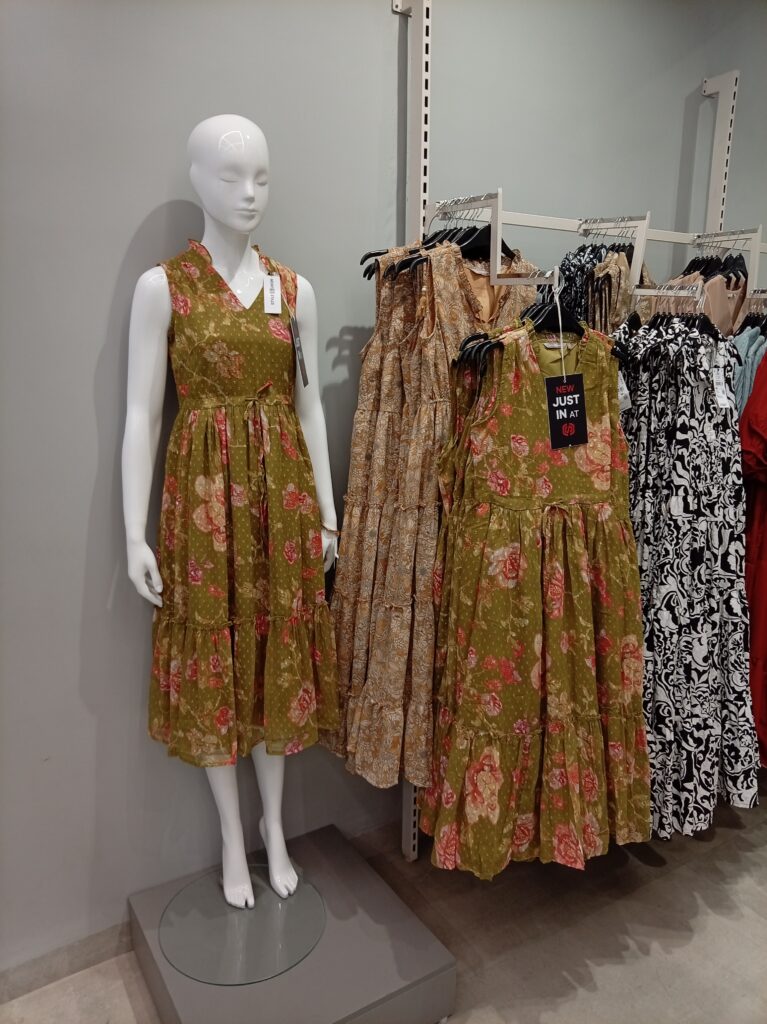
Women’s Apparel Manufacturers – Wholesalers and Retailers Across In India
The women’s apparel market encompasses a vast spectrum ranging from traditional ethnic wear (sarees, kurtis, lehengas) to modern western wear, athleisure, and corporate attire. Sourcing relies on integrated textile mills, specialized stitching hubs, design houses, and multi-channel wholesale and retail networks.
1. Women’s Apparel Manufacturers & Brands
Manufacturing is split into Ethnic & Fusion Wear, Western & Casual Wear, and Knits/Athleisure, alongside private-label contract exporters.
Prominent Brands & Manufacturing Leaders
Ethnic & Festive Wear Leaders:
Biba, W for Woman, Aurelia (TCNS Clothing): Key players in ready-to-wear kurtis, co-ord sets, and fusion wear.
Manyavar / Mohey (Vedant Fashions): High-end bridal, festive, and occasion-wear manufacturing.
Kesaria Textile Company & Ajmera Fashion: Massive Surat-based manufacturers supplying sarees, suits, lehengas, and printed materials at bulk scale.
Western Wear & Casuals:
AND & Global Desi (Ochre and Black): Contemporary western and Indo-western apparel.
Forever New, Zara, H&M, Mango: Global fashion brands relying on OEM/ODM manufacturing networks across South Asia.
FabAlley / Indya (High Street Essentials): Fast-fashion D2C and retail manufacturers specialized in western dresses and partywear.
Knits, Activewear & Loungewear:
Jockey Women (Page Industries): Leader in innerwear, loungewear, and activewear.
BlissClub & Clovia: Fast-growing activewear, shapewear, and casual loungewear manufacturers.
OEM / Private Label Manufacturers:
Shahi Exports, Gokaldas Exports, Pearl Global: Mega garment manufacturers producing white-label collections for global brands like Target, Gap, and Next.
2. Wholesale & Retail Channels
Channel TypePrimary FunctionsKey Regional Markets / Platforms
B2B Wholesale HubsHigh-volume procurement for boutique owners, regional resellers, and shopkeepers.• Surat (Gujarat): Synthetic textiles, sarees, printed dress materials, kurtis
• Delhi NCR: Gandhi Nagar (Asia’s largest garment market), Chandni Chowk (Lehengas/Sarees), Tank Road (Denim)
• Jaipur (Rajasthan): Sanganeri & Bagru block prints, cotton kurtis, bandhani
• Mumbai (Maharashtra): Ulhasnagar, Dadar Market, Zaveri Bazaar
Digital B2B SourcingOnline platforms connecting factory lines directly to small retailers.IndiaMART, Udaan, Thread Factory, TradeIndia, WholesaleBox.
Organized Retail (MBOs & EBOs)Physical storefronts offering curated brand experiences and trial facilities.Shoppers Stop, Lifestyle, Westside (Trent), Reliance Trends, Pantaloons, Max Fashion.
E-Commerce & Social CommerceHigh-speed distribution channel driving trend-based fast fashion.Myntra
3. Infrastructure Facilities & Industrial Clusters
Garment manufacturing operates within dedicated geographic clusters that bundle spinning mills, dyeing plants, embroidery units, and logistics.
Key Manufacturing Clusters
Surat Textile Cluster (Gujarat): The undisputed capital for synthetic fabrics, polyester weaving, digital fabric printing, and mass-market ethnic wear manufacturing.
Tiruppur Cluster (Tamil Nadu): Globally renowned for cotton knitting, T-shirt production, loungewear, and eco-friendly dyeing infrastructure.
Jaipur Cluster (Rajasthan): Specialized in pure cotton apparel, hand-block printing, screen printing, and casual kurti manufacturing.
NCR (Noida, Gurgaon, Faridabad): High-end export houses equipped with automated cutting rooms, CAD design studios, and garment washing units.
Ludhiana (Punjab): Primary hub for acrylic knits, woolen cardigans, winter wear, and thermal wear manufacturing.
Technical Facilities & Equipment
Computer-Aided Design (CAD) & Pattern Grading: Software systems used to digitally lay patterns and optimize fabric consumption to minimize cutting waste.
Automated Spreading & CNC Cutting Machines: High-speed fabric layers cut with laser precision for large batch manufacturing.
Computerized Multi-Head Embroidery Machines: Allows complex embroidery, zari work, and sequin work on bulk ethnic uppers.
Quality & Compliance Testing Labs: Facilities for checking GSM (Grams per Square Meter), color fastness, fabric shrinkage, seam slippage, and AZO-free dye certification.
4. Frequently Asked Questions (FAQs)
FAQ 1: What is a “Tech Pack” and why is it essential for custom women’s wear manufacturing?
Answer: A Tech Pack (Technical Packet) is a blueprint created by fashion designers detailing every aspect of the garment—including flat sketches, measurement spec sheets, size grading, fabric type, GSM, Pantone color codes, seam finishes, trims, labels, and packaging specifications. Factories require a tech pack to provide accurate costing and build precise proto-samples.
FAQ 2: What is the typical Minimum Order Quantity (MOQ) when sourcing women’s apparel?
Answer: MOQs vary significantly based on category and customization:
Wholesale Ready-Stock Catalogs: 1 set/catalog (usually 4–8 pieces in mixed sizes).
Custom Private-Label Orders (Stock Fabric): 100 – 300 pieces per style/color.
Custom Mill-Dyed / Custom Printed Fabric: 500 – 1,000 pieces per order to meet the minimum fabric dye-lot requirements.
FAQ 3: What does GSM mean in fabric selection, and how does it affect garment choice?
Answer: GSM (Grams per Square Meter) measures the weight and density of the fabric.
120 – 150 GSM: Lightweight fabrics ideal for summer tops, scarves, or sheer kurti overlays.
160 – 200 GSM: Mid-weight standard fabrics used for cotton T-shirts, daily-wear dresses, and casual kurtis.
220 – 320+ GSM: Heavyweight fabrics used for activewear leggings, hoodies, sweatshirts, and structured winter apparel.
FAQ 4: What quality inspection standards (e.g., AQL) are followed in garment manufacturing?
Answer: Garment factories use the AQL (Acceptable Quality Limit) standard—typically AQL 2.5 for general apparel. Under AQL 2.5, a mathematically determined sample size from the final batch is inspected for critical, major (e.g., missed stitching, sizing error), and minor defects (e.g., loose thread ends) before shipment approval.
Provide a detailed guide on creating a garment Tech Pack and calculating fabric GSM requirements for women’s apparel?
A Garment Tech Pack (Technical Packet) serves as the master contract between a fashion brand and a apparel factory. Without a complete tech pack, production risks sizing errors, wrong trim choices, and costly sample revisions.
Part 1: How to Build a Garment Tech Pack
A production-ready tech pack consists of 6 core sections:
1. Cover Page & General Details
Sets the project context and version history to track design changes.
Header Details: Brand name, style name/number, season (e.g., SS27), garment category (e.g., Women’s Casual Tops), created date, revised date, lead designer, sample size (typically Small or Medium).
High-Res Flat Sketch: Front and back line drawings in black and white (no shading).
2. Technical Drawings & Construction Notes
Detailed CAD sketches with callout pointers highlighting construction details.
Seam Callouts: Specify seam types (e.g., 4-thread overlock, 1/4″ double-needle topstitch, French seams for delicate fabrics).
Construction Details: Collar shape, placket width, pocket placement, slit length, hem finishing (e.g., 1/2″ folded hem), zipper/closure positions.
3. Bill of Materials (BOM)
An exhaustive list of every component required to manufacture the garment.
ComponentDescription / Fiber ContentColor / PantoneSupplier / CodePlacementQuantity / Unit
Main Fabric100% Linen, 160 GSMTTP 14-1106 (Linen)Fabric Co. / #L-201Main Body, Sleeves1.4 meters
Lining100% Viscose TaffetaTTP 19-4005 (Black)Lining Corp / #V-09Front Body Only0.6 meters
ButtonsReal Shell, 18 Ligne (4-hole)Natural PearlTrim Source / #BS-44Center Front Placket6 pieces
Thread100% Spun Polyester (Core)Color-matchedCoats / Tex 27All Outer Seams~120 meters
Main LabelWoven Satin, 30×50 mmOff-White / BlackLabel Maker / #W-12Center Back Neck1 piece
Care LabelPrinted PolyesterWhite / BlackLabel Maker / #C-01Inside Left Side Seam1 piece
4. Measurement Spec Sheet & Size Grading
Defines the garment dimensions for the base size and specifies increments/decrements for other sizes.
Points of Measure (POM):
Total Length: HPS (High Point Shoulder) to bottom hem.
Chest/Bust: 1″ below armhole, edge to edge (flat).
Waist: Measured at natural waistline (e.g., 15″ below HPS).
Across Shoulder: Shoulder point to shoulder point.
Sleeve Length: Center back neck or shoulder point to sleeve opening.
Sweep / Hem Opening: Flat width along the bottom edge.
Grading Scale: Define the step-increment per size (e.g., +2″ around chest per size jump from S to M to L).
Tolerance: The allowable margin of error for production (e.g., pm 0.5 text{ cm} for chest, pm 0.25 text{ cm} for collar height).
5. Colorway / Lab Dip Page
Displays the garment in all approved color schemes with corresponding Pantone Fashion, Home + Interiors (FHI) codes (e.g., TCX or TPG suffixes) for main fabrics, linings, and trims.
6. Packaging & Labeling Instructions
Defines folding instructions, hangtag placement (e.g., “Attach hangtag with 3″ black string to care label”), polybag specs (e.g., self-adhesive warning polybag), inner carton pack count, and outer shipping box labeling.
Part 2: Fabric GSM & Consumption Calculations
GSM (Grams per Square Meter) measures the weight and density of a fabric. It directly impacts fabric cost, garment drape, and total order weight.
1. How to Calculate Fabric GSM Directly
Method A: Using a Swatch & GSM Cutter (Laboratory Method)
Cut a circular sample using a standard 100 text{ cm}^2 GSM cutter.
Weigh the circular specimen on a digital precision scale in grams.
Multiply the sample weight by 100:
text{GSM} = text{Sample Weight (g)} times 100
Method B: Calculated from Woven Fabric Construction Specifications
When you know the yarn counts and thread density (EPI and PPI):
2. How to Calculate Fabric Consumption from GSM
In garment manufacturing, knit fabrics are frequently bought by weight (Kilograms) rather than length (Yards/Meters). To convert garment measurements and fabric GSM into weight per garment or per dozen, use the following industry standard formulas.
Step-by-Step Formula (For Knit Tops/Kurtis)
To calculate the weight in grams (G) required for one garment:
3. Practical Example: Women’s Basic T-Shirt Calculation
Garment Specifications (Size M):
Body Length (HPS to Hem + Hem Allowance): 70 text{ cm}
Chest Width (1/2 Chest + Seam Allowance): 52 text{ cm}
Sleeve Length (+ Allowance): 22 text{ cm}
Fabric Weight: 180 text{ GSM} Single Jersey
Fabric Width (Roll): 160 text{ cm} (Open width)
Cutting & Shrinkage Wastage: 10% (0.10)
Step 1: Calculate Body Fabric Area Consumption