
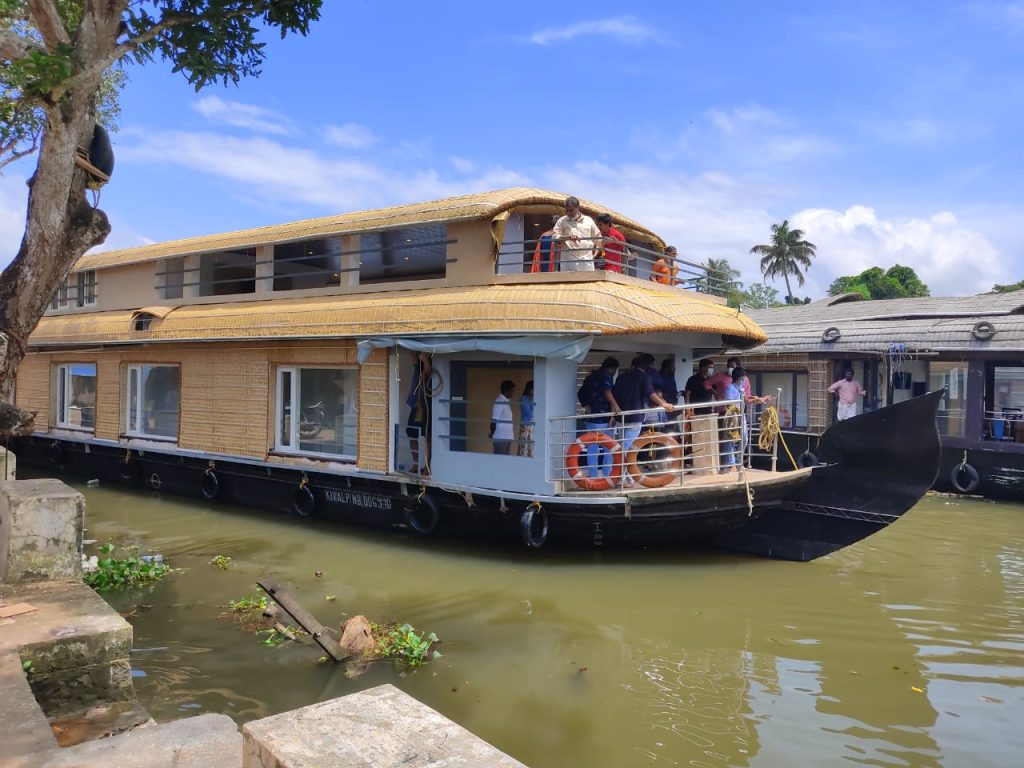
Infrastructure Facilities for Boat Building & Operations
Boat building and houseboat operations in India are governed by the Inland Vessels Act, 2021 (which updated the older IV Act of 1917) along with state-specific regulations like the Kerala Inland Vessels Rules enforced by statutory bodies such as the Kerala Maritime Board (KMB), Inland Waterways Authority of India (IWAI), and local Port Departments.
1. Maritime Boat Building & Houseboat Regulations
A. Structural & Construction Standards
Material Compliance: Hulls must be constructed using steel, FRP (Fiber-Reinforced Plastic), high-density wood, or composites tested to Indian Register of Shipping (IRS) or Class Society standards.
Traditional Kettuvallam Architecture: For heritage houseboats, traditional wooden hulls joined with coconut fiber ropes and resin (anjili or wild jackwood) must feature an inner waterproof lining and fire-retardant structural treatments.
Subdivision & Watertight Bulkheads: Vessels must feature a collision bulkhead forward and watertight engine room bulkheads to ensure the vessel remains buoyant even if one compartment is breached.
Stability Tests: Every new or converted houseboat must undergo inclining experiments and intact stability checks supervised by an approved naval architect before receiving a survey certificate.
B. Environmental & Pollution Control
Zero-Discharge Mandate: Raw sewage cannot be dumped into rivers or backwaters. Houseboats must be fitted with government-certified biotech toilets, bio-digesters, or effluent holding tanks.
Solid & Bilge Waste: Onboard waste segregation bins are mandatory. Engine bilges must have oil-water separators or collection sumps to prevent fuel leaks into backwater ecosystems.
Solar & Clean Power: State regulations encourage or mandate hybrid solar-electric setups to power light, fan, and air-conditioning loads to reduce diesel generator usage.
C. Safety & Safety Equipment (LSA/FFA)
Life-Saving Appliances: Marine-grade life jackets must be provided for 100% of passenger capacity plus crew, alongside lifebuoys with buoyant lifelines.
Fire Fighting Equipment: Portable CO_2 and dry chemical powder (DCP) fire extinguishers installed near the engine room and kitchen/galley. Engine spaces must have thermal insulation.
Night Navigation Restrictions: In backwaters like Alleppey and Kumarakom, houseboats are strictly prohibited from cruising between 5:30 PM and 6:00 AM to safeguard local fishing nets and ensure safe anchoring.
2. Statutory Licensing & Registration Workflow
To legally build and launch a commercial houseboat or inland passenger vessel, operators must complete a multi-step compliance process:
Design & Plan Approval: Submission of structural blueprints, stability calculations, and layout plans to the State Surveyor / IRS.
Keel & Hull Inspection: Periodic survey by a qualified marine surveyor during the construction phase at a recognized boat yard.
Survey Certificate: Issuance of the Certificate of Survey confirming seaworthiness, engine horsepower, and passenger capacity limits.
Official Registration: Registration under the central Jalyaan/NAVIC portal or State Maritime Board to receive a unique registration mark carved/painted on the hull.
Manning & Crew Certification: Master (Driver), Engine Driver, and Lashkar/Crew must hold valid Certificates of Competency issued by the Maritime Board.
3. Infrastructure Facilities for Boat Building & Operations
CategoryInfrastructure Details
Boat Building Yards & Dry DocksMarine slipways, dry docks, and fabrication yards equipped with hull-welding setups, FRP molding bays, and crane hoists for vessel launching/maintenance.
Pumping Out & Waste ReceptionSewage suction stations at major boat jetties (e.g., Finishing Point in Alleppey) for pumping bio-tank waste to municipal sewage treatment plants (STPs).
Boarding & Mooring FacilitiesFloating jetties, concrete walkways, passenger waiting lounges, and dedicated night-anchoring bays with shore power connection points.
Fueling & Charging StationsDedicated lakeside marine fuel outlets and fast-charging infrastructure for solar-electric catamarans and hybrid houseboats.
Frequently Asked Questions (FAQs)
Q1: Who approves the design and construction of houseboats in India?
A: Designs must be certified by a recognized Naval Architect or an approved Classification Society (such as the Indian Register of Shipping – IRS) and submitted to the state authority (e.g., Kerala Maritime Board) for technical plan approval before construction begins.
Q2: Is night cruising allowed on tourist houseboats?
A: No. Inland vessel rules strictly prohibit houseboat cruising after sunset (typically 5:30 PM to 6:00 AM) in inland backwater channels. Houseboats must anchor at designated safe zones along the shore to allow traditional fishermen to lay their nets and ensure passenger safety.
Q3: What crew qualifications are required to operate a houseboat?
A: Every commercial houseboat must carry a certified crew that includes:
A First/Second Class Master (holding a valid certificate of competency to steer the vessel).
A certified Engine Driver.
Trained deckhands/lashkars equipped in life-saving procedures and basic firefighting.
Q4: What are the penalties for operating an unregistered or over-capacity houseboat?
A: Operating a houseboat without a valid Certificate of Survey, valid insurance, or exceeding the permitted passenger capacity leads to immediate impounding of the vessel, heavy financial penalties, and revocation of the owner’s commercial license under the Inland Vessels Act.