
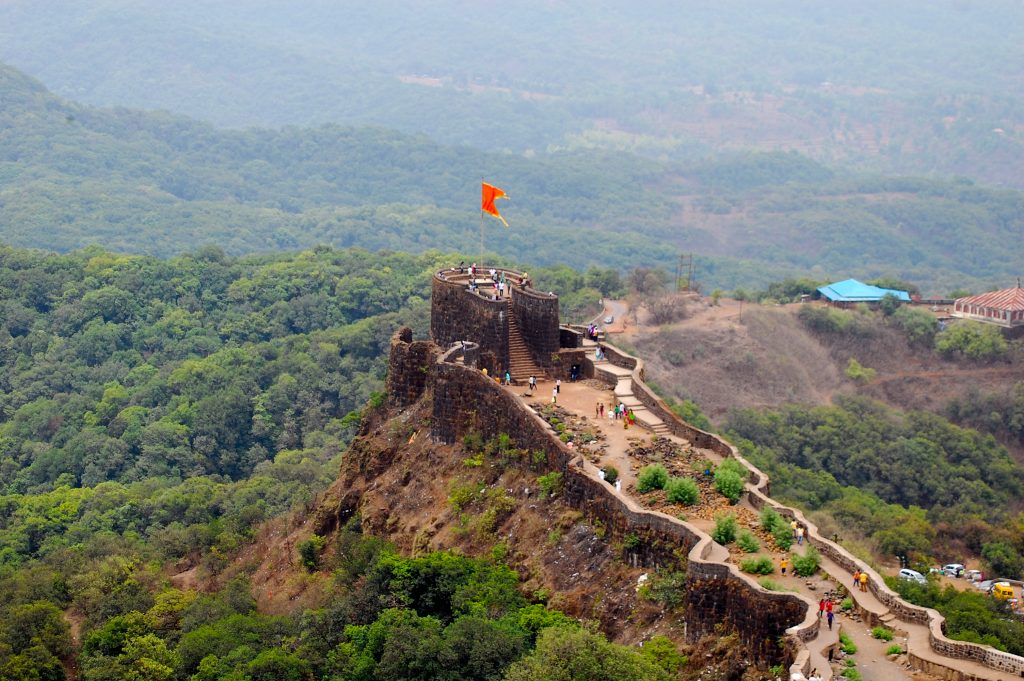
Satara
Nestled in the rugged Sahyadri ranges of Maharashtra, Satara holds an incredibly proud place in Indian history. Its name is derived from the “Saat Tara” (Seven Stars), referencing the seven hill forts that physically guard and surround the city.
Nestled in the rugged Sahyadri ranges of Maharashtra, Satara holds an incredibly proud place in Indian history. Its name is derived from the “Saat Tara” (Seven Stars), referencing the seven hill forts that physically guard and surround the city.
From ancient mythological connections to serving as the powerful capital of the Maratha Empire, Satara’s timeline is packed with legendary warriors, strategic fortresses, and pivotal political shifts.
Chronological History of Satara
1. Ancient & Mythological Roots (Up to 13th Century CE)
- Epic Lore: Local folklore links the town of Wai in Satara to the ancient Viratnagari mentioned in the Mahabharata, where the Pandavas are said to have spent their 13th year of exile.
- Early Dynasties: Inscriptions dating back to 200 BCE in Karad reveal that the region was a bustling hub under the Mauryan Empire. It was subsequently ruled by powerful early Deccan dynasties, including the Satavahanas, Chalukyas of Badami, and the Rashtrakutas.
- The Shilaharas: Between 1178 and 1193 CE, Raja Bhoj II of the Shilahara dynasty constructed several crucial hill forts in the region, including the famous Ajinkyatara.
2. The Golden Era: The Maratha Empire (17th – 18th Century)
Satara became the epicenter of Deccan politics during the rise of the Maratha Empire under Chhatrapati Shivaji Maharaj.
- The Strategic Conquest: In 1673, Shivaji Maharaj conquered the Satara and Parali forts from the Adil Shahi Sultanate of Bijapur.
- The Capital of an Empire: Following years of brutal Mughal-Maratha conflicts (during which Emperor Aurangzeb personally besieged the city), Chhatrapati Shahu Maharaj (grandson of Shivaji Maharaj) was crowned here in 1708. He officially made Satara the seat of the Chhatrapati and the capital of the Maratha Empire.
3. British Rule & The “Doctrine of Lapse” (19th Century)
Following the collapse of the Peshwa administration and the Third Anglo-Maratha War in 1818, the British established Satara as a princely rump state under Chhatrapati Pratap Singh.
- The Annexation: In 1848, when Raja Shahaji died without a natural male heir, British Governor-General Lord Dalhousie applied the controversial Doctrine of Lapse. Satara became the very first princely state in India to be aggressively annexed by the British East India Company using this policy.
4. The Freedom Struggle & “Patri Sarkar” (1942)
Satara didn’t accept colonial rule quietly. During the 1942 Quit India Movement, legendary freedom fighter Krantisinha Nana Patil established a parallel, underground government here called the Patri Sarkar. They successfully ousted British administration across parts of Satara for nearly three years, running their own courts, markets, and supply lines.
- Ajinkyatara Fort: Perched at 3,300 feet right above Satara city, this “Impregnable Star” was the central seat of power where Chhatrapati Shahu Maharaj held court.
- Pratapgad Fort: Located near Mahabaleshwar, this is the historic site where Shivaji Maharaj famously defeated the giant Bijapuri commander Afzal Khan in 1659 using tiger claws (wagh nakh).
- Sajjangad Fort: Formerly called Parali Fort, Shivaji Maharaj gifted this fortress to his spiritual guru, Samarth Ramdas Swami. It serves as a peaceful pilgrimage site and houses the saint’s final resting place (Samadhi).